Bodyweight Standing Pulse Calf Raise
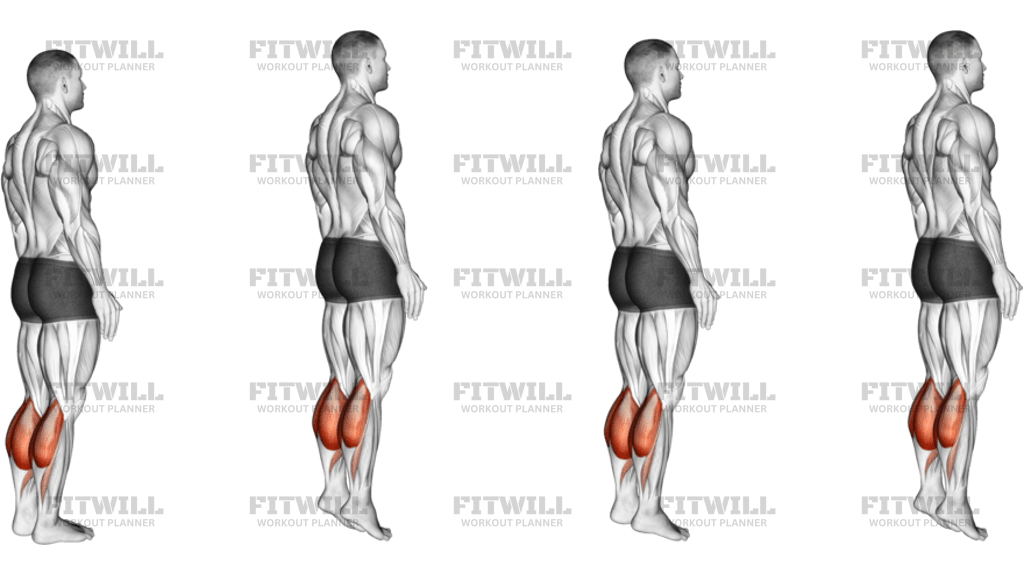
Bodyweight Standing Pulse Calf Raise is a simple standing calf exercise that keeps constant tension on the lower legs through short, deliberate pulses. It is useful when you want to train the calves without extra equipment, build better ankle control, or finish a leg session with a high-tension bodyweight movement that is easy to scale.
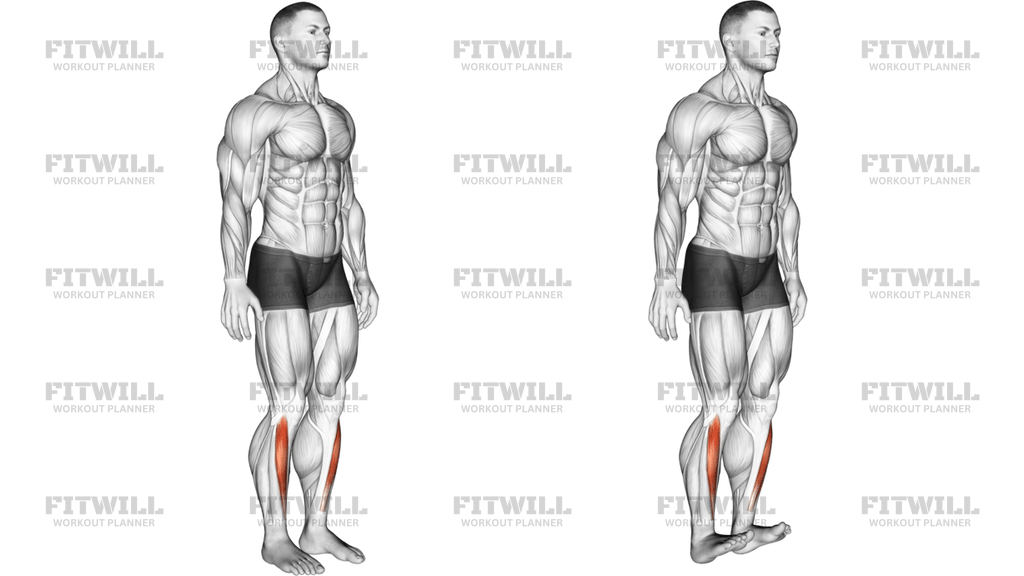
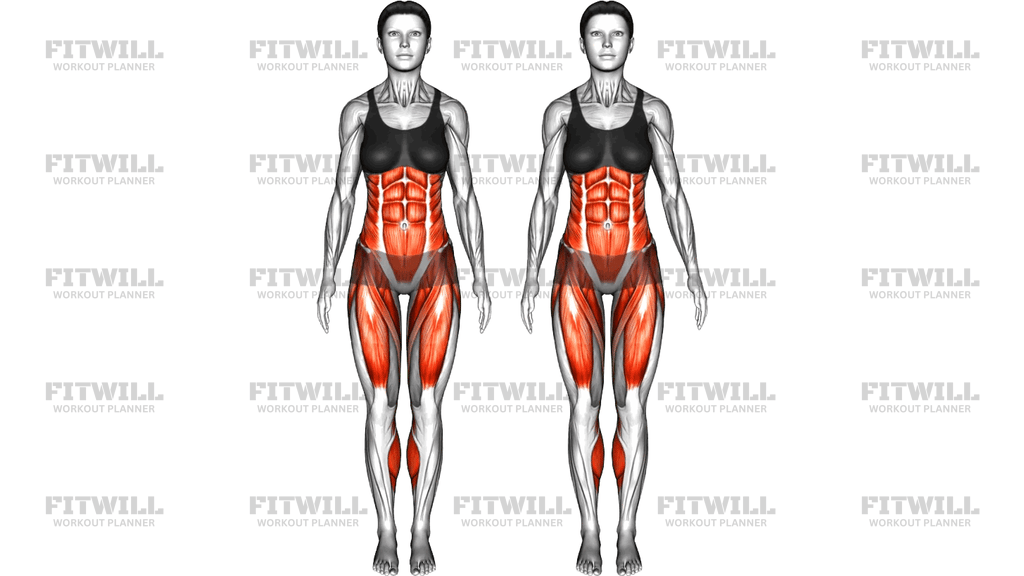
The exercise mainly targets the calves, especially the gastrocnemius and soleus, while the feet, ankles, and deep core help you stay balanced. Because you are working on a narrow base of support, the quality of the setup matters more than speed. A steady stance, even pressure through the forefoot, and a quiet torso make the movement feel much more targeted and less wobbly.
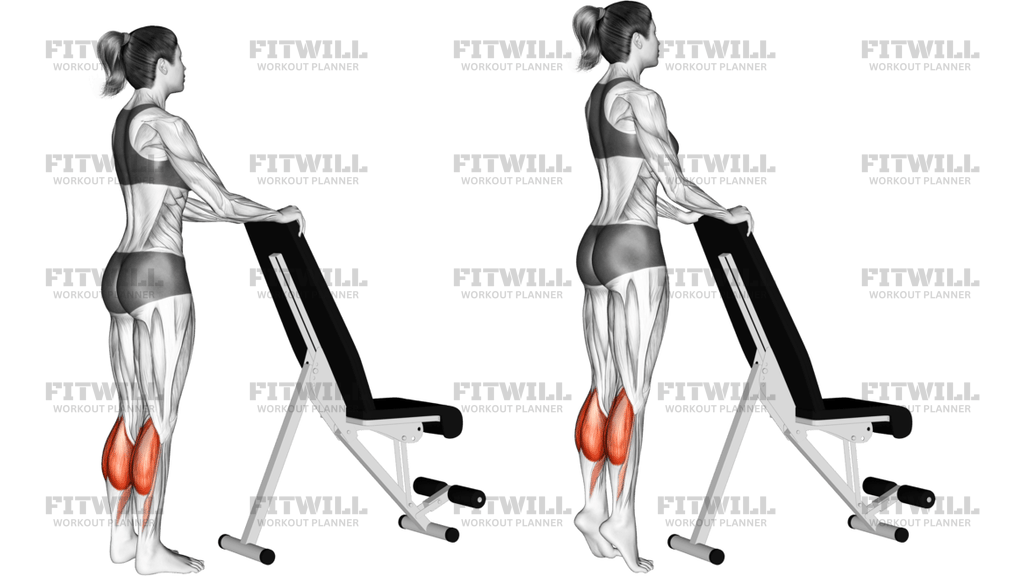
Start by standing tall with your feet about hip-width apart, knees soft but not bent deeply, and your weight centered over the balls of your feet. Lift both heels until you are up on your toes, then use small pulses in the top portion of the range instead of bouncing from the floor. That top-end tension is what makes Bodyweight Standing Pulse Calf Raise different from a regular calf raise and is also what creates most of the training effect.
Keep the motion controlled enough that your ankles do the work, not your hips or spine. If you let the knees lock hard, the movement turns rigid; if you dip too low between pulses, the calves lose tension. The best reps stay smooth, with the heels hovering high, the arch of the foot active, and the body staying stacked over the midfoot.
This is a practical choice for warmups, accessory work, or higher-rep calf training when you want to build endurance, balance, and a stronger squeeze at the top. Beginners can use it easily, but the exercise still demands precision because small mistakes show up quickly. Keep the range deliberate, stay upright, and finish the set before you start leaning, swinging, or collapsing through the ankles.
[ Workout Log & Planner ]
Put your next workout in Fitwill
Keep your plan and training log ready when you are.


Instructions
- Stand on a flat floor with your feet about hip-width apart and your toes pointed straight ahead or slightly out.
- Stack your ribs over your pelvis, keep your knees softly unlocked, and let your arms hang at your sides or lightly touch a wall for balance.
- Press through the balls of your feet and raise both heels until you are high on your toes.
- Hold the top position for a brief squeeze so the calves stay loaded.
- Pulse a small distance down and back up without letting the heels fully settle on the floor.
- Keep the ankles moving while your torso stays tall and your weight remains centered over the forefoot.
- Breathe out through the pulses and avoid holding your breath through the top range.
- Finish the set by lowering the heels under control and stepping out of the stance if you need to reset.
Tips & Tricks
- Keep the pressure on the big toe, second toe, and little toe so the foot does not roll outward as you pulse.
- Use a mirror or wall the first few times to make sure your shoulders do not sway while the heels move.
- Think of the rep as a top-half hold with tiny ankle pulses, not a full drop and rebound.
- If your Achilles or heel cords feel irritated, shorten the range and stop just below the point where the ankle pinches.
- Pause one second at the top before each cluster of pulses to keep tension on the calves.
- Do not let the knees snap straight at the top; a soft knee keeps the load on the calves instead of the joints.
- A slower pulse usually burns the calves more than fast bouncing, even with no added weight.
- If balance limits the set, keep one fingertip on a wall instead of turning the movement into a wobble.
Frequently Asked Questions
What muscle does Bodyweight Standing Pulse Calf Raise target most?
It mainly targets the calves, with the gastrocnemius and soleus doing most of the work.
Can beginners perform this exercise?
Yes. Beginners usually do well with a wall or rack nearby for balance and a smaller pulse range at first.
Do I need any equipment for Bodyweight Standing Pulse Calf Raise?
No. Your body weight is enough, although a wall or post can help you stay steady.
How high should I rise during the pulse?
Get all the way onto the balls of your feet first, then pulse only a small distance below that top position.
Should my heels touch the floor between pulses?
Not if you want to keep constant tension. Lower only partway and keep the calves loaded throughout the set.
Why does my balance feel shaky during Bodyweight Standing Pulse Calf Raise?
The exercise uses a narrow base of support, so light fingertip assistance and a slower pace can help until your ankles adapt.
Where should I feel the exercise most?
You should feel a strong squeeze through the lower back of the lower leg and the arch of the foot working to keep you stable.
What is the biggest mistake to avoid?
Do not bounce through the reps or let the ankles roll outward, because that turns the set into sloppy momentum instead of calf work.