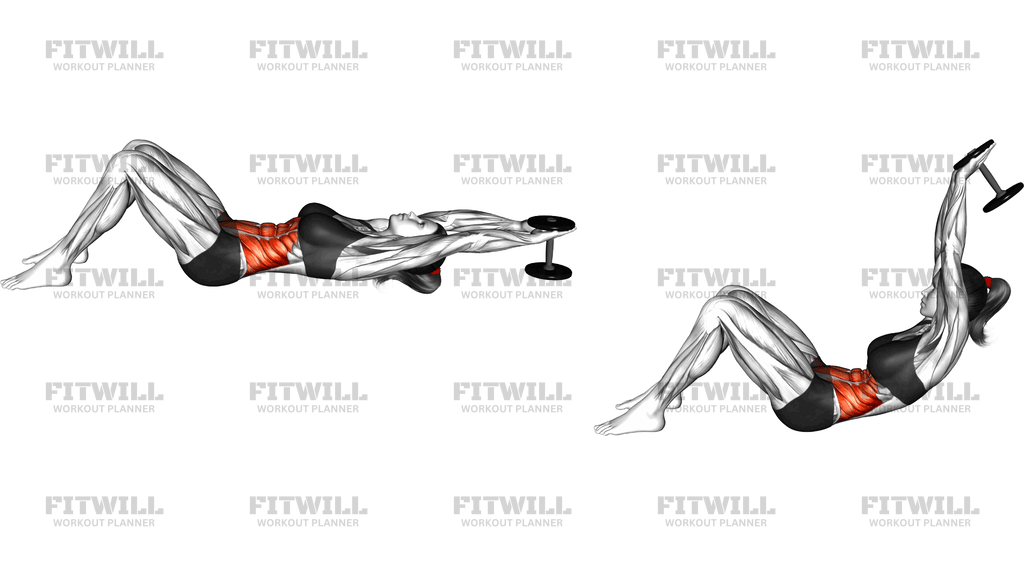
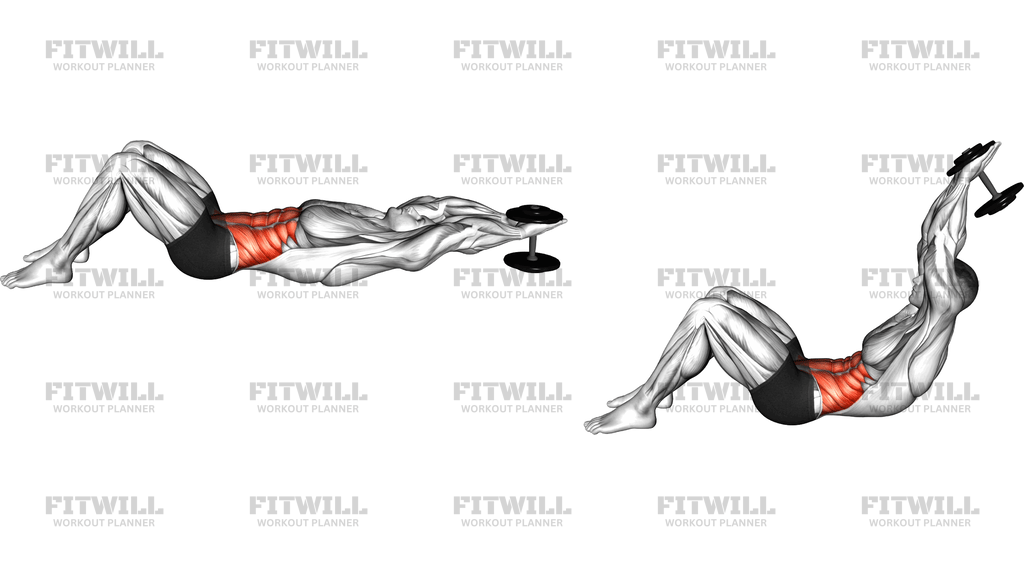
Dumbbell Incline Y-Raise
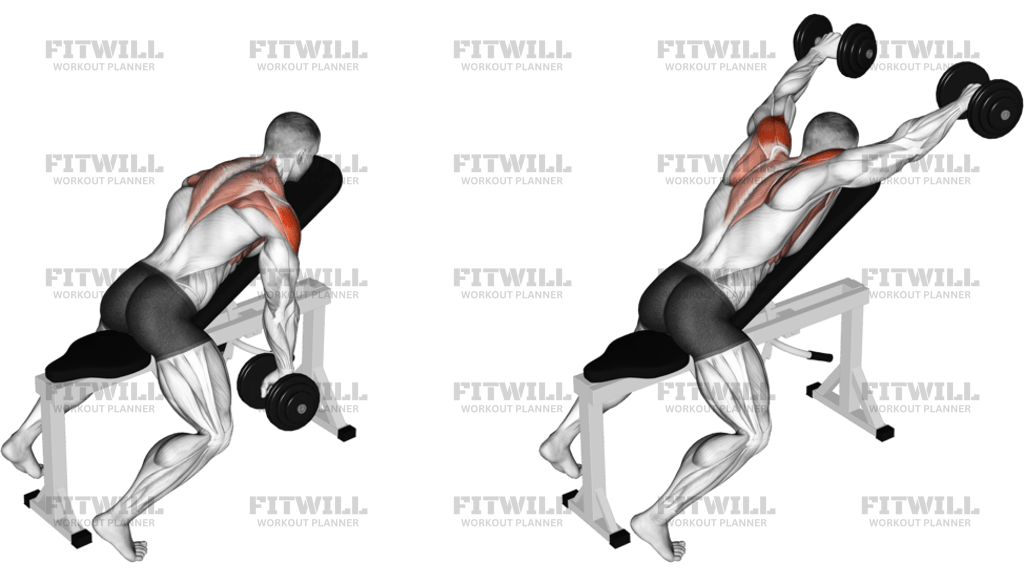
Dumbbell Incline Y-Raise is a chest-supported shoulder and upper-back exercise where you lie face down on an incline bench and lift the dumbbells in a wide Y shape. The bench support removes most of the body English, so the movement stays focused on clean shoulder motion, scapular control, and a steady lifting path instead of momentum.
This variation is especially useful for the rear delts, lower and mid traps, rhomboids, and the small muscles that help the shoulder blade rotate and stabilize overhead. Because the arms travel on a diagonal instead of straight out to the sides, the exercise teaches controlled upward rotation and a more coordinated finish than a basic raise. It is often used to improve posture, warm up the shoulders, or reinforce better mechanics for overhead pressing and pulling.
The setup matters. A moderate incline gives the arms room to move while still keeping the chest supported, the neck long, and the ribs from flaring. If the bench is too steep, the motion turns into a pressing pattern; if it is too flat, the shoulders lose a clean line and the range becomes awkward. Keep the dumbbells hanging under the shoulders at the start, then lift along the same diagonal path on every rep.
During each repetition, think about reaching long through the fingertips while keeping the shoulders away from the ears. The dumbbells should rise under control until the arms form a clear Y, usually near ear level or slightly below if your shoulder mobility is limited. Lower them slowly on the same path and keep the chest glued to the pad so the rep stays strict from start to finish.
Use a light load and treat this as a precision movement, not a strength lift. It fits well in a warm-up, accessory block, or rehab-friendly shoulder session where quality matters more than weight. If you feel pinching at the front of the shoulder, shorten the range, reduce the incline, or lighten the dumbbells until the movement feels smooth and pain-free.
[ Workout Log & Planner ]
Put your next workout in Fitwill
Keep your plan and training log ready when you are.


Instructions
- Set an incline bench to about 30 to 45 degrees and lie chest-down with your sternum supported, feet planted, and a dumbbell in each hand hanging below the shoulders.
- Let your head stay in line with your spine, keep your ribs on the bench, and brace your abs and glutes so the torso does not shift.
- Start with your arms slightly in front of your shoulders, elbows softly bent, and thumbs angled up or slightly forward.
- Raise both dumbbells in a wide Y toward ear level while keeping the chest on the pad and the shoulders away from the ears.
- Pause for a moment at the top without shrugging or arching your lower back.
- Lower the dumbbells along the same diagonal path until they hang under the shoulders again.
- Keep the rep smooth and let the shoulder blades move naturally instead of forcing them flat.
- Repeat for the planned number of reps with controlled breathing.
Tips & Tricks
- Use very light dumbbells first; the long lever and incline angle make this harder than it looks.
- Keep the thumbs up or slightly turned out so the shoulders stay in a friendlier overhead line.
- If your upper traps take over, lower the weight and stop just below the point where the shoulders start to shrug.
- Let the chest stay glued to the bench instead of lifting the rib cage to buy extra range.
- Think about reaching away from the bench rather than swinging the hands upward.
- Lower the dumbbells slowly so the rear delts and mid-back stay under tension.
- A 30 to 45 degree bench usually gives a cleaner Y path than a steep incline.
- Exhale as the dumbbells rise and reset the breath at the bottom before the next rep.
Frequently Asked Questions
What muscles does the Dumbbell Incline Y-Raise work?
It mainly trains the rear delts and lower trap pattern, with the mid-back muscles helping to control the shoulder blades.
Why use an incline bench for this Y-raise?
The incline supports your chest and keeps the rep strict, which makes it easier to isolate the shoulder and upper-back motion.
How high should the dumbbells go?
Lift until your arms form a clear Y near ear level, or slightly lower if your shoulders start to shrug or pinch.
Should my palms face forward or down?
Thumbs up or slightly forward is usually the cleanest position because it keeps the shoulders from internally rotating too much.
Is this the same as a rear delt raise?
No. A rear delt raise is usually more of a straight-out lateral path, while this version uses a diagonal Y path with more upward rotation demand.
Can beginners do the Dumbbell Incline Y-Raise?
Yes, if they use very light weights and keep the range short enough to stay smooth and pain-free.
What usually goes wrong first?
Most people shrug the shoulders, arch the lower back, or swing the dumbbells instead of keeping the chest anchored to the bench.
Where does this fit in a workout?
It works well in a warm-up, shoulder accessory block, or posture-focused session after your main compound lifts.