Dumbbell Renegade Row To Squat
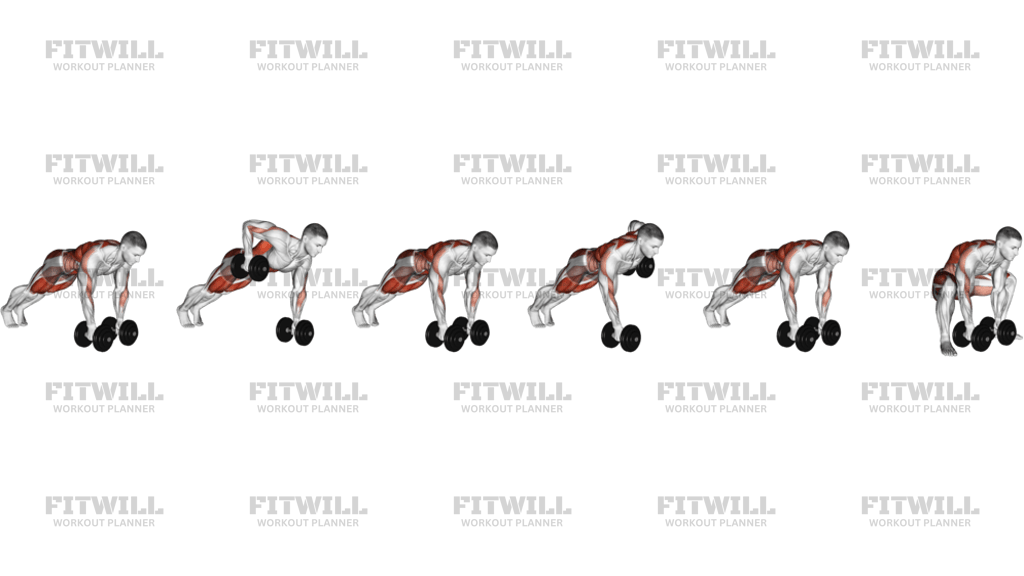
Dumbbell Renegade Row to Squat is a compound bodyweight-and-dumbbell pattern that links an anti-rotation row with a lower-body squat. It is built for total-body control: the plank position asks the trunk to resist twisting while one arm rows, and the squat transition challenges hip, knee, and ankle coordination as you move out of the floor support and back into a standing-friendly position.
The exercise is especially useful when you want upper-body pulling work without losing core tension. The rowing portion loads the lats, upper back, rear shoulder, and arms, while the plank position forces the abs and obliques to keep the torso square to the floor. When you transition into the squat, the legs and glutes take over to bring the body back underneath you. That combination makes the movement more demanding than a standard renegade row.
Setup matters because the dumbbells, foot width, and hand position determine how stable the plank will feel. A stable base makes it easier to keep the hips level while you row and gives you room to step or jump the feet forward into a solid squat. If the stance is too narrow or the weights are too far apart, the torso tends to sway and the row becomes a rotation exercise instead of a controlled pull.
Each repetition should start in a strong high plank with the dumbbells under the shoulders. Row one dumbbell toward the hip without letting the opposite side collapse, set it back down softly, then bring the feet forward into a squat with the chest lifted. The best repetitions look smooth, not rushed: the row is crisp, the transition is deliberate, and the squat finishes with the heels rooted and the knees tracking in line with the toes.
Use this movement as a conditioning-strength hybrid, an accessory lift, or a full-body finisher when you want to train pulling strength and coordination at the same time. It works best with moderate or light dumbbells and a pace you can repeat cleanly. If the hips bounce, the low back arches, or the feet land awkwardly, the load or the speed is too aggressive for the current set.
Fitwill
Log Workouts, Track Progress & Build Strength.
Achieve more with Fitwill: explore over 9600 exercises with images and videos, access built-in and custom workouts, perfect for both gym and home sessions, and see real results.
Start your journey. Download today!




Instructions
- Place the dumbbells on the floor shoulder-width apart and start in a high plank with your hands gripping the handles and your feet set wide behind you.
- Stack your shoulders over the dumbbells, squeeze your glutes, and keep your body in a straight line from head to heels before you begin the row.
- Shift a little weight into one hand and row the opposite dumbbell toward your lower ribs without letting the hips twist open.
- Lower the dumbbell back to the floor with control and re-center your weight over both handles.
- Bring your feet forward into a low squat between or just outside the dumbbells, keeping your chest up and your heels grounded.
- Settle into the squat with your knees tracking over your toes and your spine tall rather than rounded.
- Drive back to the plank start position, resetting your feet wide and your shoulders over the dumbbells.
- Exhale during the row and the squat drive, then repeat on the opposite side if the set calls for alternating reps.
Tips & Tricks
- Use dumbbells that let you hold a rigid plank while one arm rows; if your hips swing, the weights are too heavy.
- Set your feet wider than hip width in the plank to make it easier to resist rotation during the row.
- Press the non-working hand hard into the handle so the shoulder stays packed and the rib cage does not spill open.
- Keep the row tight to the torso and finish toward the lower ribs or hip line instead of pulling the elbow straight out to the side.
- Lower the dumbbell under control; dropping it fast makes the plank unstable and can pull the shoulder forward.
- Step the feet forward if jumping into the squat makes your landings noisy or collapses your torso.
- In the squat, keep the dumbbells close to the floor and use the legs to drive up instead of yanking with the lower back.
- If your wrists are sensitive, rotate the handles so the grip stays neutral and the palm pressure feels even.
- Stop the set when the plank turns into a side-to-side sway or when the squat no longer reaches a stable depth.
Frequently Asked Questions
What muscles does Dumbbell Renegade Row to Squat train?
It hits the lats and upper back during the row, then adds a strong core, glute, and quad demand during the squat transition.
Is the row supposed to twist my torso?
No. A small amount of shift is normal, but the goal is to keep the hips square and resist rotation while the working arm pulls.
Should I step or jump my feet into the squat?
Either is acceptable, but stepping is usually better for beginners or for anyone who wants cleaner control and quieter landings.
Where should the dumbbell row finish?
Pull the dumbbell toward the lower ribs or hip line so the shoulder blade can move back without the elbow flaring excessively.
Can beginners do this exercise?
Yes, but only with light dumbbells and a wide, stable plank stance. If the plank breaks down, regress to a standard renegade row first.
What is the safest way to keep my lower back comfortable?
Keep the ribs down in the plank, brace before each row, and step the feet forward instead of arching to rush the squat.
How heavy should the dumbbells be?
Choose a load that lets you row without hip sway and still squat with control. This movement usually works better with moderate or light weights.
What should I do if my shoulders feel unstable in the plank?
Widen your feet, slow the row, and reduce the load. If needed, keep both hands on the floor and practice the plank row portion separately.