High Knee Run
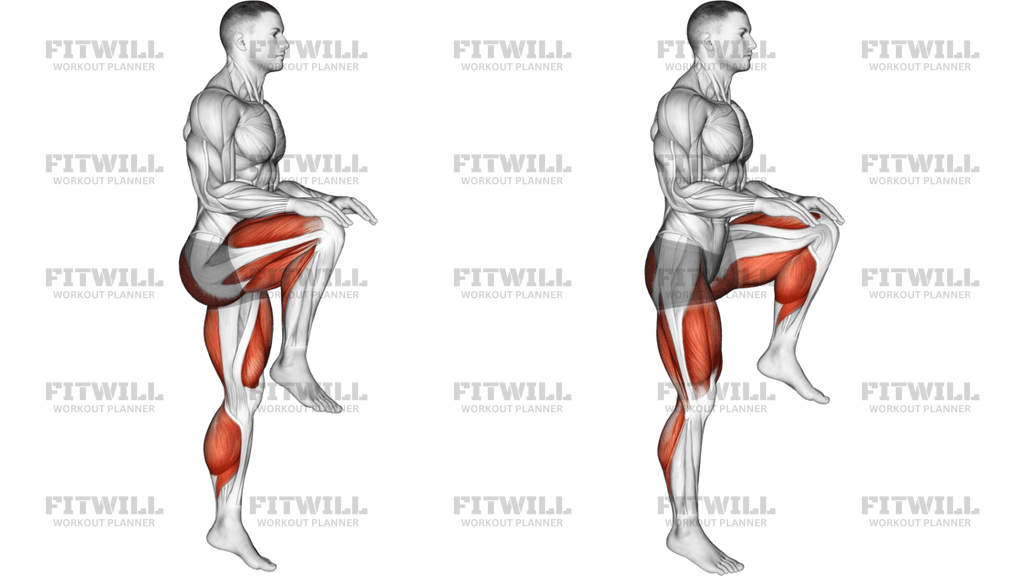
High Knee Run is a bodyweight running drill built around quick alternating knee drives, upright posture, and active arm swing. It is used to raise heart rate, reinforce sprint mechanics, and train the coordination needed to move the legs fast without letting the torso collapse or sway. Because the exercise is done in place, the quality of each rep depends on how well you keep the hips level, the ribs stacked, and the foot strike quick under the body.
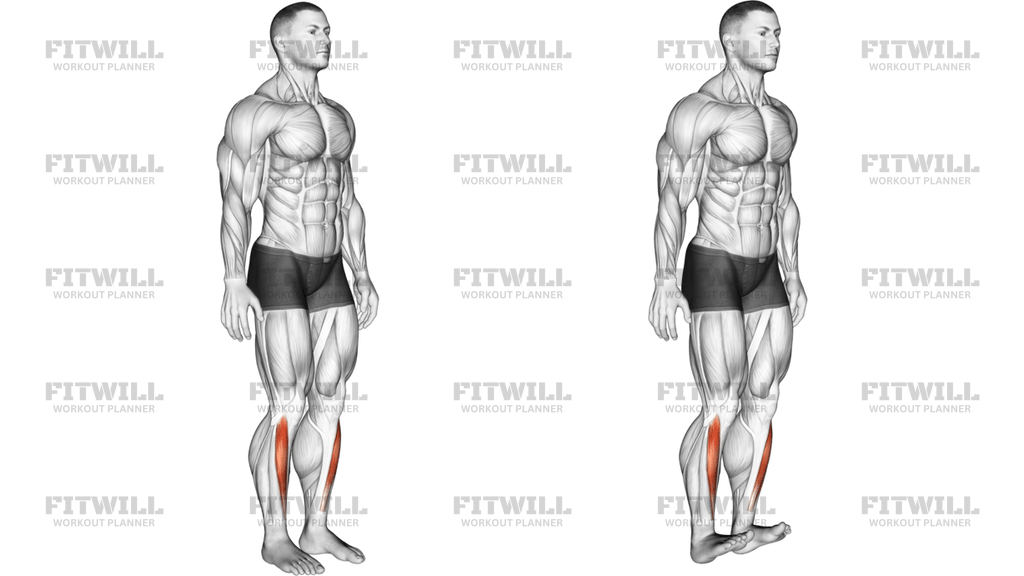
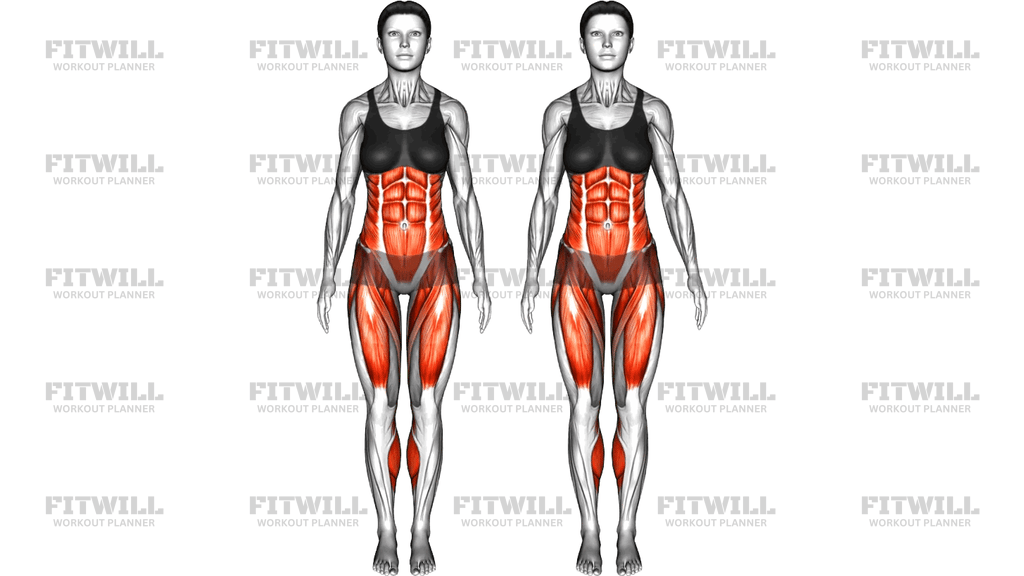
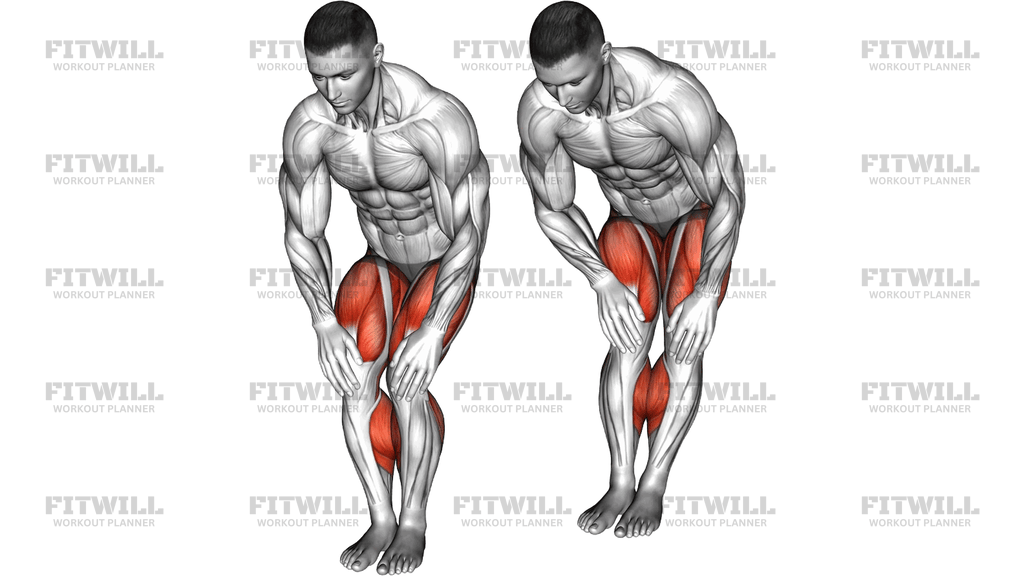
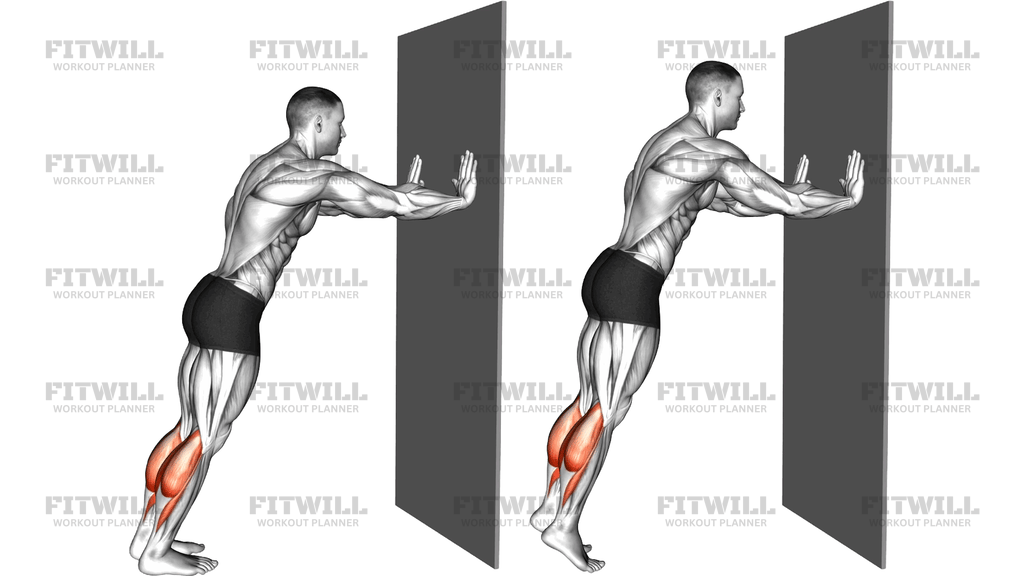
The image shows a tall stance with one knee lifted high while the opposite arm moves forward, which is the key pattern to preserve. The working side is not just the lifted leg: the standing leg, ankle, calf, hip, and trunk all help you stay springy and balanced. The calves remain highly involved because each landing and push-off is brief and reactive, but the drill also asks a lot from the hip flexors, glutes, and core to keep the run crisp instead of sloppy.
Setup matters more than it does in many cardio drills. Start with your feet under your hips, chest tall, eyes forward, and shoulders relaxed. From there, drive one knee upward without leaning back, then switch sides quickly while keeping the pelvis from twisting. The foot of the support leg should land under you with a light, fast contact rather than a long reach forward, because overstriding turns the drill into a bounce-and-brake pattern instead of an efficient run.
Use High Knee Run when you want a dynamic warm-up, an athletic conditioning interval, or a movement drill that builds rhythm and foot speed. It can be scaled from a controlled high-knee march to a fast run in place, but the standard should stay the same: clean posture, sharp knee lift, and an even breathing pattern that does not turn into frantic, shallow gasps. If the torso starts rocking side to side or the knees stop rising cleanly, the set is too fast for the current fitness level.
Treat it as a quality drill, not just a way to move faster. The best reps feel springy and coordinated, with the hips high and the landing quiet. That makes the exercise useful for beginners learning running mechanics and for experienced trainees who want a low-equipment conditioning option that still rewards precision.
Fitwill
Log Workouts, Track Progress & Build Strength.
Achieve more with Fitwill: explore over 9600 exercises with images and videos, access built-in and custom workouts, perfect for both gym and home sessions, and see real results.
Start your journey. Download today!




Instructions
- Stand tall with your feet under your hips, ribs stacked over your pelvis, and your hands relaxed in a running position.
- Lift one knee toward hip height while the opposite arm drives forward and the other arm swings back naturally.
- Keep the standing leg under your hip and land lightly on the ball of the foot instead of reaching your foot far in front of you.
- Switch legs quickly so the lifted knee replaces the other side without letting your torso lean backward.
- Keep your chest up and your gaze forward while the shoulders stay relaxed and away from your ears.
- Use a quick, springy rhythm and let the ankles and calves help you rebound off the floor.
- Breathe in a steady pattern as you alternate legs, keeping the tempo controlled rather than frantic.
- Finish the set by slowing the knee drive and returning to a balanced standing position.
Tips & Tricks
- Think "run tall" so the knee lift comes from the hips, not from leaning the torso back.
- Let the arms counterbalance the legs; if the hands cross the body, the drill usually gets too rotary.
- Keep contacts short and quiet, which is a better sign of quality than simply moving faster.
- Aim the lifted knee forward rather than out to the side to keep the stride line clean.
- If your hips drop on the landing leg, reduce speed until you can stay level through each switch.
- A high-knee march is a good regression when you lose rhythm or start stomping the floor.
- Use a fast but controlled cadence so the calves work reactively instead of absorbing a hard landing.
- Stop the set when your shoulders tense up, because upper-body tightness usually means the movement has turned into a sprinting shrug.
Frequently Asked Questions
What muscle does High Knee Run target most?
The calves are heavily involved, but the drill also works the hip flexors, glutes, and core as you drive the knees and stay upright.
Can beginners perform this exercise?
Yes. Beginners usually do best with a slower high-knee march first, then build toward a faster alternating run once the posture stays steady.
Should my knees come all the way to hip height?
Hip height is a strong target if mobility allows, but the real priority is clean mechanics: tall posture, quick turnover, and no torso lean.
What is the most common mistake in the high knee run?
Reaching the foot too far forward or leaning back to make the knee look higher. That breaks the running pattern and creates extra braking force.
How should my feet land during the run?
Land lightly under your hips on the ball of the foot, then rebound quickly. Heavy heel strikes usually mean the cadence is too slow.
Is this more of a cardio drill or a strength exercise?
It is mainly a conditioning and movement drill, though the calves, hip flexors, and trunk still have to work hard to keep the rhythm.
Where does High Knee Run fit in a workout?
It works well in a warm-up, speed prep block, circuit, or short conditioning interval where you want quick, athletic footwork.
How can I make the movement harder without equipment?
Increase cadence, hold the knees higher while keeping the torso stacked, or use timed intervals instead of counting reps.