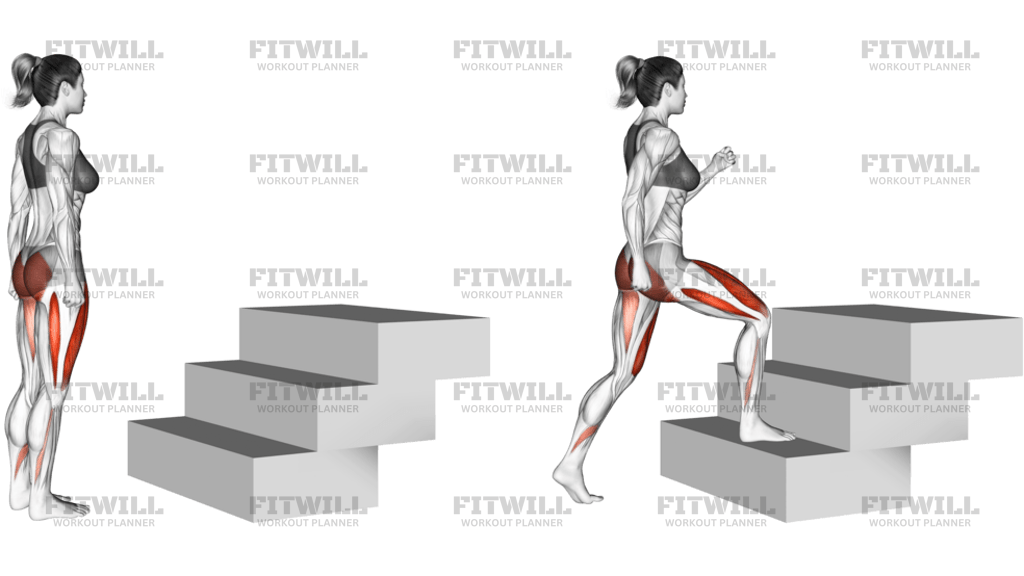
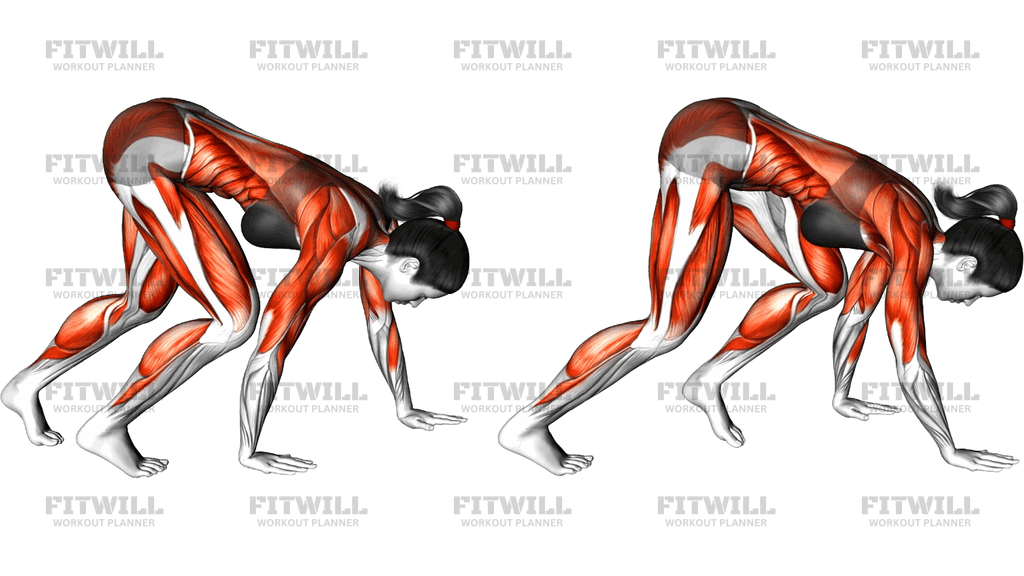
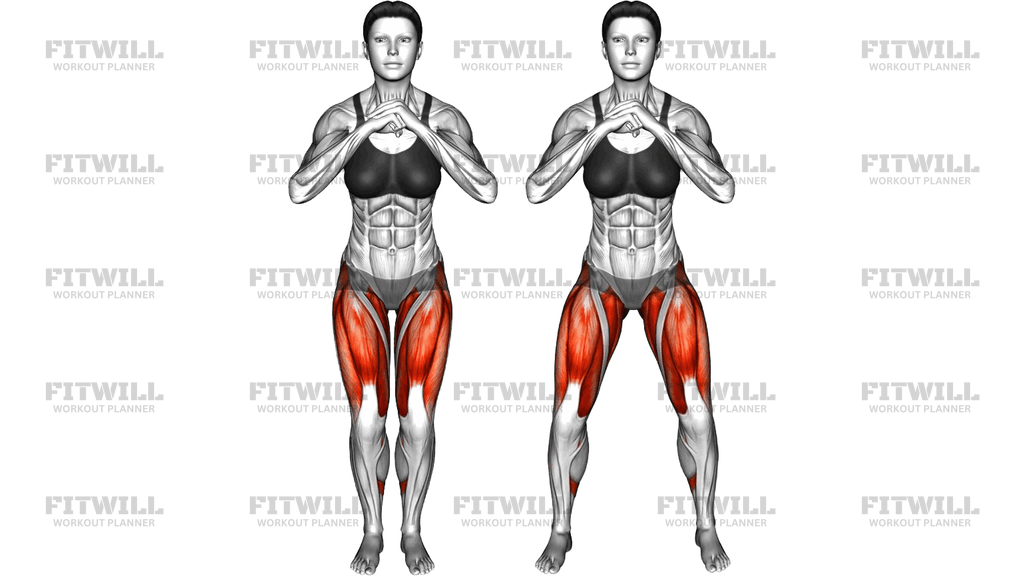
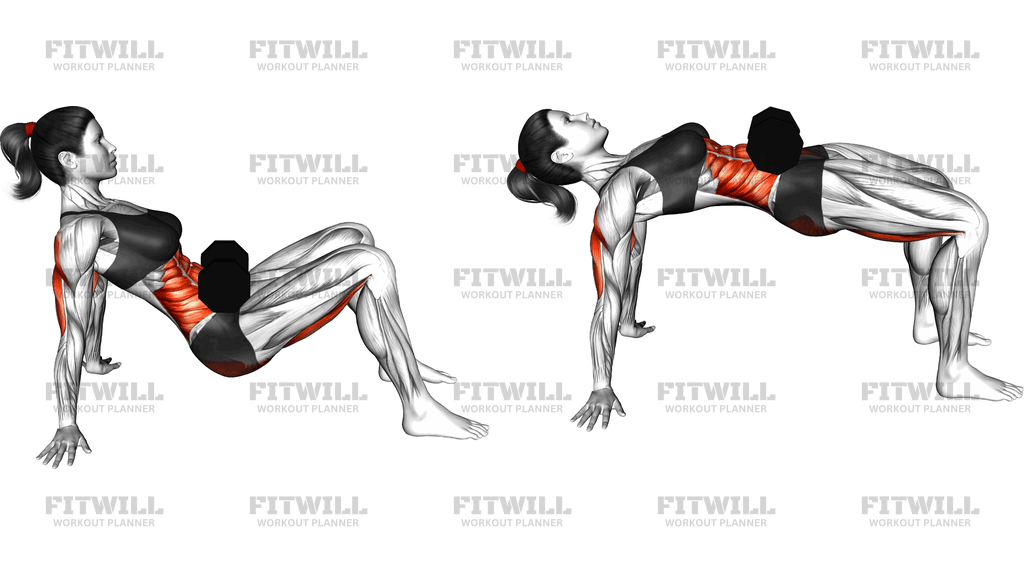
Lunge With Jump
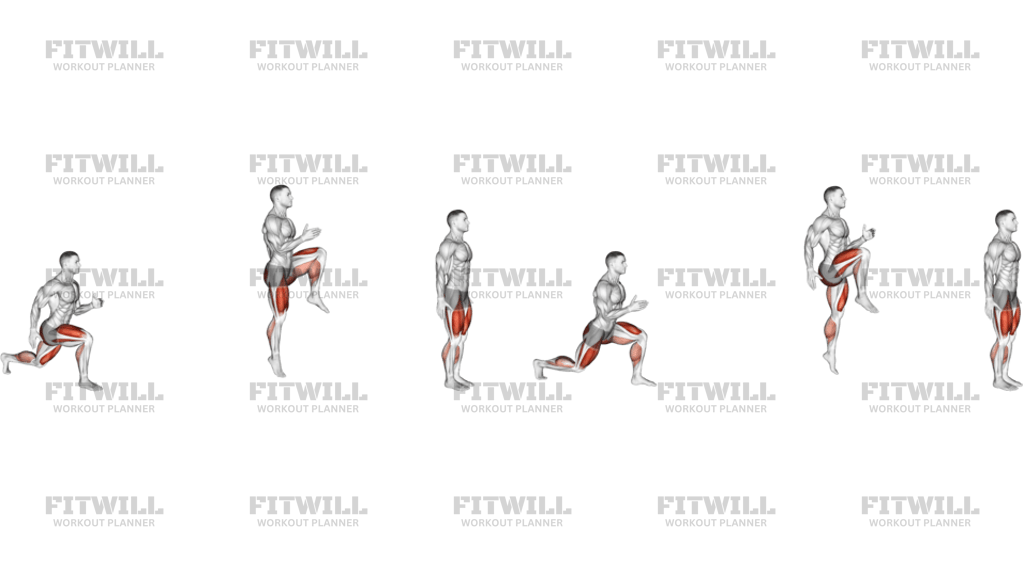
Lunge With Jump is a bodyweight plyometric that combines a split lunge with an explosive switch in the air. It is useful when you want lower-body power, quick force production, and better control through fast changes of direction. The movement asks the legs to load, drive, and land cleanly on every rep, so the quality of the takeoff and the landing matters as much as the jump itself.
The main training focus is on the glutes and thighs, with the quads, hamstrings, calves, and core helping to absorb force and keep the torso stacked. In anatomy terms, the primary work centers on the Gluteus maximus, while the Quadriceps, Hamstrings, Gastrocnemius, and Rectus abdominis assist during the load and landing. Because each rep starts in a split stance, the front leg has to handle most of the braking force before you explode upward and switch sides.
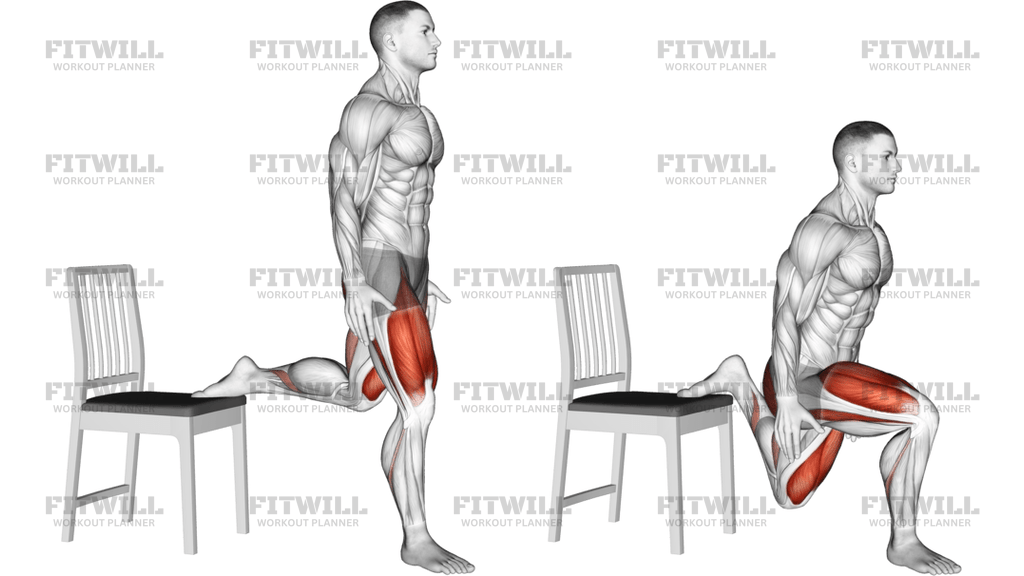
Set up in a long split stance with the front foot flat and the back heel lifted, as if you were about to perform a lunge. Keep the feet on separate tracks rather than a tightrope line so the hips stay stable, and lower only as far as you can keep the front knee tracking over the middle toes. A tall torso, level hips, and a quiet brace through the midsection help you stay balanced before the jump begins.
From the bottom of the lunge, drive through the front heel and the back toes to jump straight up, then switch the legs in the air and land with the opposite leg forward. Aim for a soft, springy landing with bent knees rather than a hard stomp, and sink right into the next lunge if you are continuing for reps. The best versions of this exercise look smooth and rhythmic, not rushed or chaotic, and the arms should help with balance without throwing the torso forward.
Lunge With Jump fits best in a power block, athletic warm-up, or conditioning circuit where you want fast lower-body work without external load. It is not an exercise to grind to fatigue, because tired landings usually turn into shallow reps, noisy contacts, or knee collapse. If the impact feels too sharp, shorten the jump, reduce the depth, or use a non-jumping lunge variation until you can land quietly and repeat the pattern with control.
Fitwill
Log Workouts, Track Progress & Build Strength.
Achieve more with Fitwill: explore over 9600 exercises with images and videos, access built-in and custom workouts, perfect for both gym and home sessions, and see real results.
Start your journey. Download today!




Instructions
- Start in a split stance with one foot forward and the other foot back, hips squared and feet on separate tracks.
- Keep the front foot flat, the back heel lifted, and your torso tall with your ribs stacked over your pelvis.
- Lower into a lunge until the front thigh is close to parallel and the back knee is hovering just above the floor.
- Brace your midsection and hold your arms in a balanced running position at your sides or in front of your chest.
- Drive through the front heel and back toes to jump straight up from the lunge.
- Switch the legs in the air so the opposite leg lands forward in the next split stance.
- Land softly with bent knees, level hips, and your front knee tracking over the middle toes.
- Absorb the landing, sink immediately into the next lunge, and repeat for the planned number of reps.
- Step back to a stable stance between sets if you need to reset your balance or breathing.
Tips & Tricks
- Keep the jump small and crisp; a clean switch matters more than how high you leave the floor.
- Land on two separate tracks so your feet do not line up like a tightrope.
- If your torso pitches forward, shorten the lunge and keep your chest stacked over the hips.
- Let the front heel stay grounded during the load so the front leg can absorb force instead of the toes.
- Use your arms as counterbalance, but avoid a wild swing that pulls the ribcage forward.
- Make the landing quiet; loud contact usually means you are dropping too hard or not bending enough.
- Stop the set when your knees cave inward or your switch starts drifting forward and backward.
- Treat this as power work, not a burnout finisher, and keep the reps snappy with full control.
Frequently Asked Questions
What muscles does Lunge With Jump work most?
It hits the glutes and thighs hardest, especially the quads, with the hamstrings, calves, and core helping to stabilize the switch and landing.
Is Lunge With Jump a plyometric exercise?
Yes. The jump and midair leg switch make it a plyometric movement, so the focus is on explosive force and soft landings.
How deep should I lunge before the jump?
Lower as far as you can while keeping the torso tall and the front knee tracking over the foot. You do not need to touch the back knee to the floor.
Can beginners do Lunge With Jump?
Yes, but many beginners should start with regular reverse lunges or small split squat hops before progressing to the full jump and switch.
Should my back knee touch the floor?
No. Hover it just above the ground so you keep tension in the legs and avoid bouncing off the floor.
Why do my landings feel noisy?
Usually the jump is too big, the stance is too narrow, or you are not bending enough on contact. Shorten the jump and land with more knee and hip bend.
Can I hold dumbbells during Lunge With Jump?
Only after you can switch and land cleanly with body weight. Add load cautiously, because extra weight makes the landing and balance demands much higher.
What is the best way to progress this exercise?
Start with controlled split squat jumps, then build to faster switches, more reps, or light external load only if your landings stay quiet and stable.