Standing Single Leg Calf Raise With Support
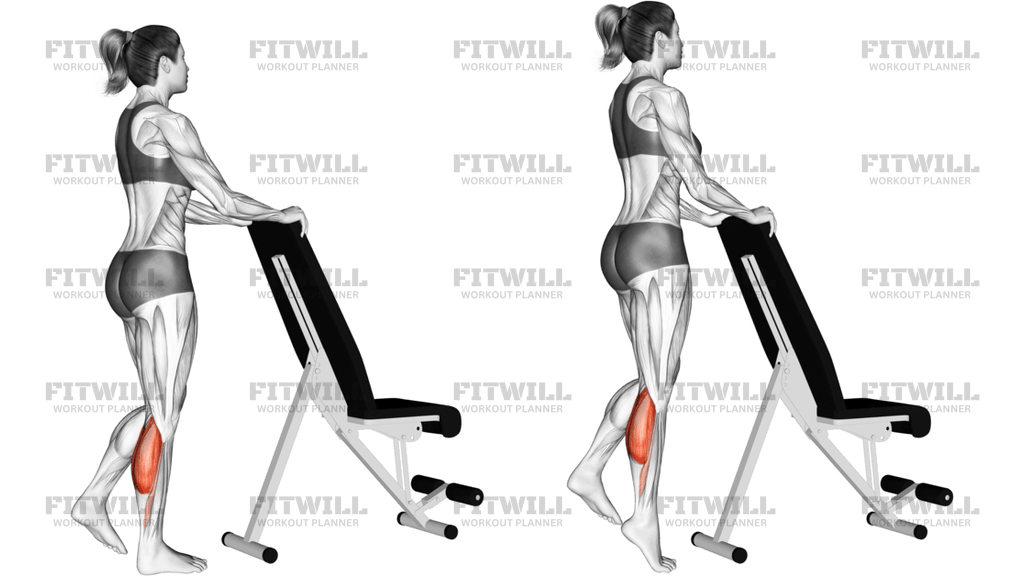
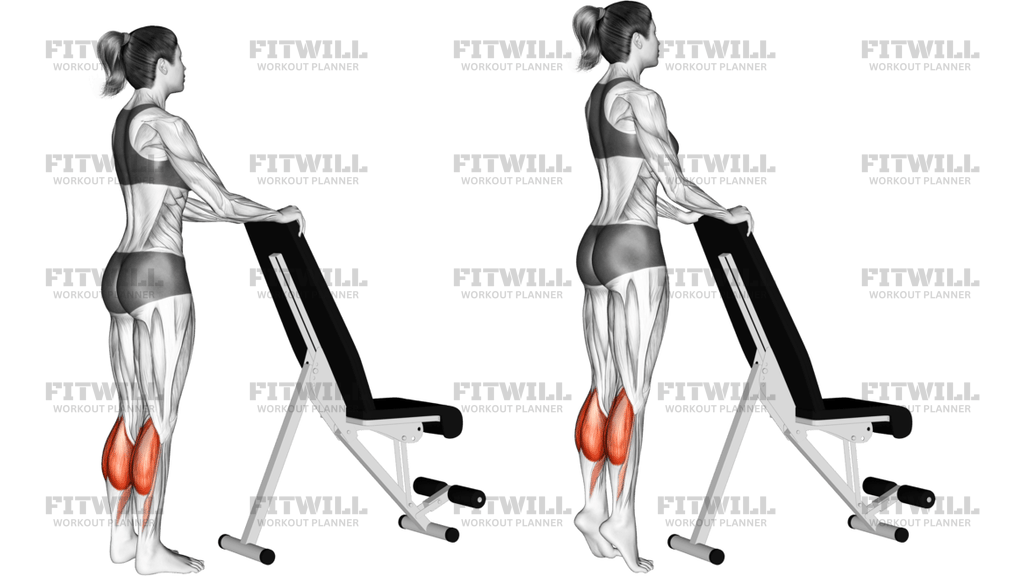
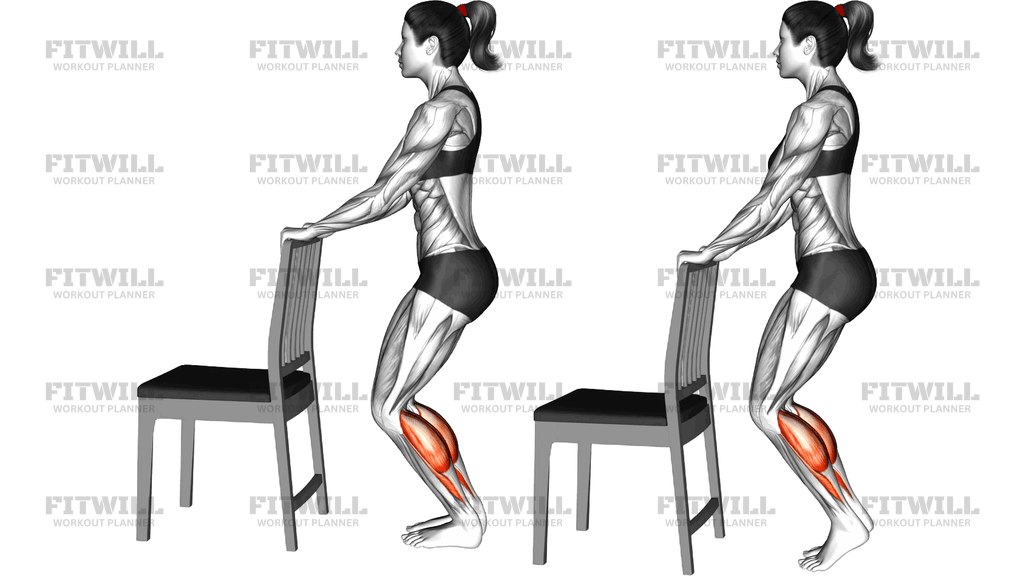
Standing Single Leg Calf Raise With Support is a bodyweight calf exercise performed on one leg while lightly holding a wall, rack, or post for balance. The support is there to steady the body, not to unload the working leg. That makes the exercise useful when you want the calves to do the work without balance, torso sway, or foot wobble taking over the set.
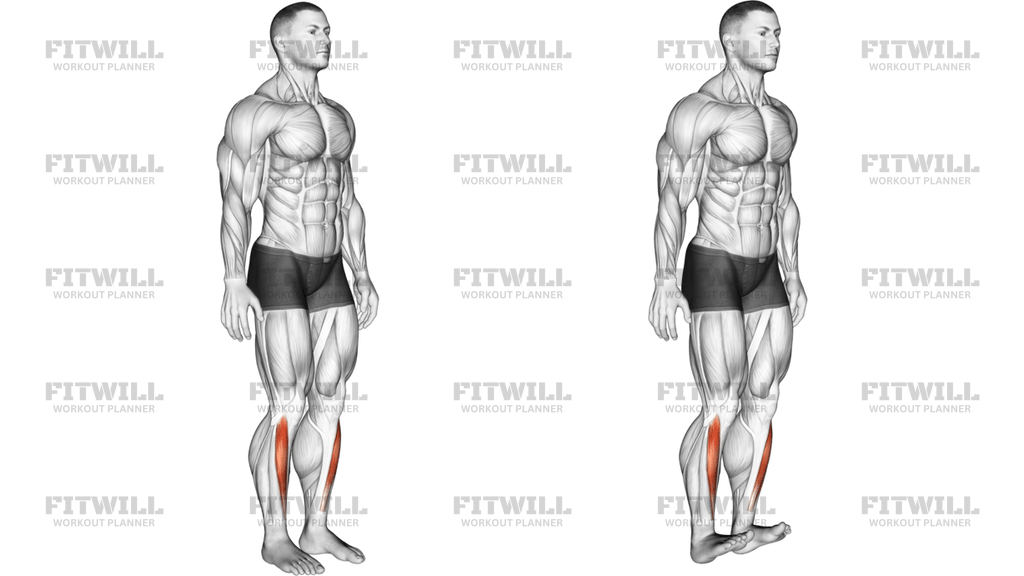
The movement mainly loads the gastrocnemius and soleus, with help from the small muscles of the foot and ankle that keep the arch, heel, and knee lined up. Because only one leg is working, each repetition also exposes side-to-side differences in ankle strength, calf endurance, and control. If one heel rises shorter, drifts inward, or collapses outward, the support hand should stay light while the working foot does the real job.
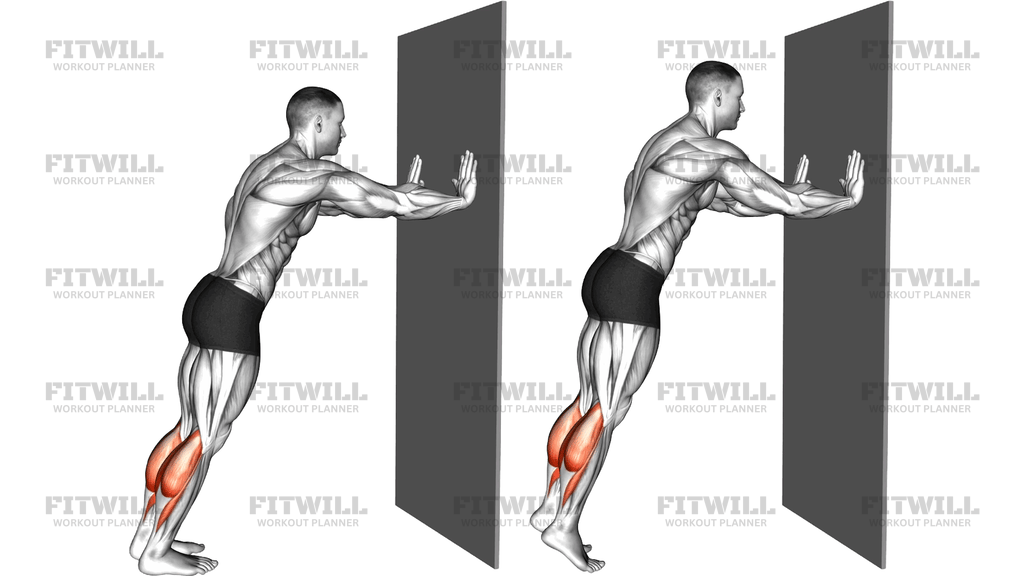
A good setup starts with the ball of the working foot planted firmly and the heel free to travel up and down. Hold the support with just enough contact to stay tall, keep the torso stacked over the hip, and aim the knee over the second toe. From there, rise onto the forefoot by driving through the big toe and the inside edge of the forefoot, then lower slowly until the calf is fully loaded again. The rep should look smooth, not bouncy.
This exercise fits well in calf-focused strength work, lower-body accessories, running or jumping prep, and rehab-style training when you need a simpler balance demand than an unsupported single-leg raise. The key safety point is to keep the movement in the ankle: do not swing the hip, lean hard into the support, or twist the foot to get extra height. Use a step if you want a deeper stretch, or stay on the floor if your ankle or Achilles prefers a smaller range. The target is controlled plantarflexion, not a fast hop through the rep.
Fitwill
Log Workouts, Track Progress & Build Strength.
Achieve more with Fitwill: explore over 9600 exercises with images and videos, access built-in and custom workouts, perfect for both gym and home sessions, and see real results.
Start your journey. Download today!




Instructions
- Stand on one foot with the ball of the working foot planted and the heel free to move; lightly hold a wall, rack, or post with the other hand.
- Keep the working knee pointed over the second toe and stack your ankle, knee, hip, and ribs over the standing foot.
- Set the free leg slightly behind or beside you so it does not touch the floor during the set.
- Brace gently through the midsection and keep most of your weight centered over the big toe and second toe.
- Press through the forefoot to raise the heel as high as you can without leaning into the support.
- Pause for a brief squeeze at the top while keeping the ankle tall and the heel turned straight back.
- Lower the heel slowly until you reach a full calf stretch or the bottom of your chosen range.
- Repeat for the planned reps, then switch sides and match the same range and tempo.
Tips & Tricks
- Keep the support hand light; if you are pulling on the wall or rack, the working calf is not doing enough.
- Press through the base of the big toe and the second toe so the ankle does not roll to the outside edge of the foot.
- Use a slow lowering phase of about 2 to 3 seconds to build calf tension instead of bouncing out of the bottom.
- Keep the heel tracking straight up and down; if it drifts inward or outward, reduce the range and reset the foot.
- A slight knee bend can reduce cramping, but do not turn the movement into a squat or hip hinge.
- Use a step only if your Achilles tolerates the extra stretch; floor reps are often better for beginners or irritated ankles.
- Exhale as you rise and inhale on the controlled descent so your torso stays relaxed and stacked.
- Stop the set when the heel height clearly drops, the ankle shakes, or the support hand starts carrying your bodyweight.
Frequently Asked Questions
What muscle does Standing Single Leg Calf Raise With Support target most?
It mainly trains the gastrocnemius and soleus, with the foot and ankle stabilizers helping keep the standing leg steady.
Why use support on a single-leg calf raise?
The support lets you focus on the calf itself instead of losing reps to balance, wobble, or grabbing momentum from the torso.
Should my working knee stay straight?
A mostly straight knee emphasizes the gastrocnemius, but a tiny soft bend is fine if it helps you keep the heel path smooth.
Do I need a step for this exercise?
No. A floor setup is great for learning the pattern, while a step gives a deeper stretch at the bottom if your ankle and Achilles tolerate it.
How much weight should I use?
Bodyweight is usually enough. If you add load, use only enough resistance to keep the heel high, the support hand light, and the descent controlled.
What if my ankle rolls outward during the rep?
Reset with pressure through the big toe and second toe, and reduce the range until the heel rises straight up without twisting.
Is this a good beginner calf exercise?
Yes. The support makes it more accessible than an unsupported single-leg raise, especially if balance is the limiting factor.
How do I progress it over time?
First clean up the range and tempo, then reduce how much you lean on the support, add a pause at the top, slow the lowering phase, or hold a light load.