Handboard Slope Hang
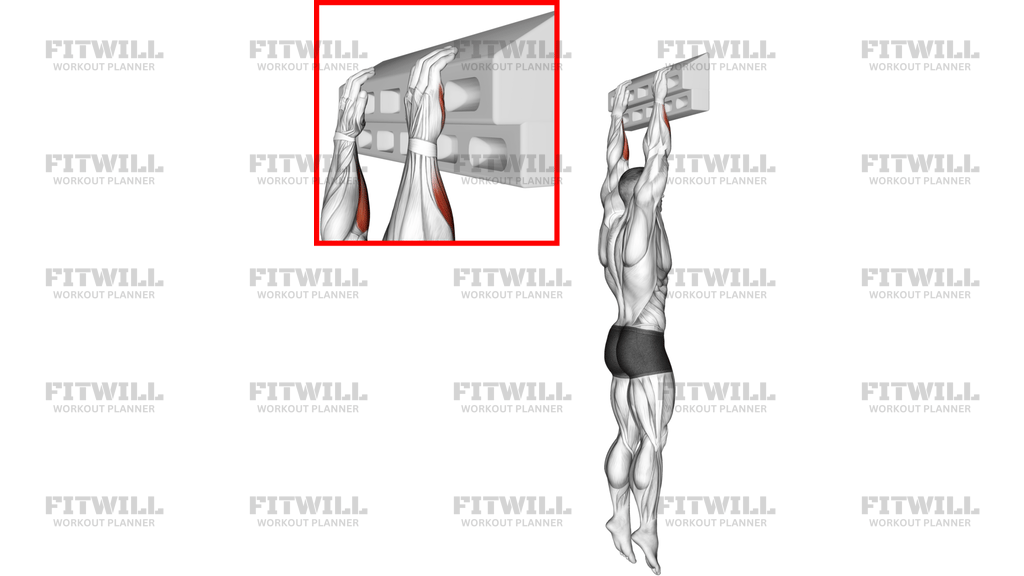
Handboard Slope Hang is a bodyweight grip exercise performed on a sloping handboard hold. It is especially useful for climbers and anyone trying to build stronger forearms, better open-hand strength, and steadier shoulder control without the dynamic fatigue of repeated pulling.
The sloped surface changes the demand compared with a flat bar hang. Your fingers have to stay organized on the rounded edge while the forearms, shoulders, and upper back keep the body from collapsing into the hold. That makes Handboard Slope Hang a good test of grip endurance, but also a useful drill for learning how to hang with tension instead of just dangling passively.
The setup matters more than most people expect. A clean Handboard Slope Hang starts with the hands placed evenly on the slope, wrists close to neutral, and the shoulders gently active before your feet leave support. If you shrug hard, twist, or let the chest cave as soon as you hang, the forearms will fatigue faster and the shoulders will take unnecessary strain.
Treat each hold as a short, controlled isometric effort. Keep the ribs down, breathe in small calm breaths, and maintain consistent pressure through the fingertips and palm contact on the board. Beginners can use foot assistance or a larger slope, while stronger trainees can make the hold harder by reducing foot support, increasing hold time, or progressing to a smaller edge.
Handboard Slope Hang is best used in climbing prep, grip-focused strength work, or accessory sessions where you want quality tension without a lot of body movement. Stop the set before the grip opens, the shoulders rise, or the body starts swinging. That keeps the work on the forearms and shoulder stabilizers where it belongs and reduces the chance of irritating the fingers, elbows, or front of the shoulders.
Fitwill
Log Workouts, Track Progress & Build Strength.
Achieve more with Fitwill: explore over 9600 exercises with images and videos, access built-in and custom workouts, perfect for both gym and home sessions, and see real results.
Start your journey. Download today!




Instructions
- Place a box or bench under the handboard, then set both hands evenly on the sloped holds with your fingers draped over the edge and your wrists close to straight.
- Step up and take your bodyweight into the grip so your feet can leave the support or just lightly assist the hang if you are using an easier version.
- Set your shoulders slightly down and away from your ears before you fully commit to the hang.
- Keep your ribs stacked over your pelvis so your body hangs in one long line instead of arching or twisting.
- Squeeze the board with steady pressure through the fingers and palm while keeping the neck relaxed.
- Hold the position for the planned time and breathe in short, quiet breaths without letting the shoulders shrug up.
- If the grip starts to open or the body begins to swing, place your feet back on the support and reset the hold.
- Step down under control, rest long enough to regain hand tension, and repeat for the next set.
Tips & Tricks
- Use an open-hand grip on the slope instead of cranking into a hard crimp unless the program specifically calls for it.
- Keep the shoulders gently active; a passive dead hang usually turns this into a bigger strain on the front of the shoulders.
- If your fingers peel off the hold early, shorten the hold time or keep one foot on a box for light assistance.
- A small amount of chalk can help on the sloper, but too much can make you overgrip and fatigue sooner.
- Keep the wrists as straight as the hold allows so the load stays centered through the forearms.
- Stop each hold before the body starts swinging, because sway steals tension from the fingers and shoulder stabilizers.
- Short, high-quality holds are more useful than long sloppy hangs that end in a shrug or a bounce.
- If the elbows feel irritated, use a larger slope and reduce total hang time before adding intensity.
- Progress this exercise by reducing foot help first, then by adding time, before you make the hold smaller or steeper.
Frequently Asked Questions
What does Handboard Slope Hang work most?
It mainly trains the forearms and grip, with the shoulders, upper back, and core helping you stay organized on the slope.
Is Handboard Slope Hang good for climbers?
Yes. It is a very direct way to practice open-hand grip strength and shoulder tension for climbing-specific positions.
Should I use an open hand or a crimp on Handboard Slope Hang?
Use the open-hand position shown by the sloped board unless your coach or program asks for a more aggressive grip. A hard crimp can overload the fingers quickly.
How long should I hold Handboard Slope Hang?
Most people start with 5-15 second holds for strength or 15-30 seconds for endurance, then adjust based on how well the shoulders and fingers stay stable.
Can beginners do Handboard Slope Hang?
Yes, but beginners should use a larger slope or keep light foot assistance. The goal is to hang with control, not to fight to failure on day one.
Why do my shoulders want to shrug during Handboard Slope Hang?
That usually means the hold is too hard or the set is too long. Lower the intensity and keep the shoulders gently depressed before the hang starts.
What is the safest way to progress Handboard Slope Hang?
Reduce foot assistance first, then add time, and only after that make the slope smaller or the hold more demanding.
What should I do if my fingers or elbows hurt on this exercise?
Stop the set and back off the intensity. A larger hold, shorter hang, or extra rest is better than forcing through pain on a fingerboard-style grip.