Jack Knife Sit-Up
Jack Knife Sit-Up is a bodyweight core exercise that brings the torso and legs up together into a compact V-shape. It trains the rectus abdominis hard, while the hip flexors, obliques, and deep stabilizers help control the fold and keep the movement smooth from the floor to the top position.
Unlike a basic crunch, Jack Knife Sit-Up asks you to lift both ends of the body at the same time. That makes the setup important: if your lower back is loose, your neck is tense, or your legs drift off line, the rep quickly turns into a swing instead of a controlled abdominal contraction. The exercise works best on a mat or other comfortable surface where you can keep your back flat at the start and reset cleanly between reps.
The movement should feel like a coordinated fold rather than a fast sit-up. As you rise, your ribs and thighs travel toward each other, and your hands reach toward your shins or toes depending on your mobility. The top position is strongest when you can hold the shape briefly without jerking the neck forward or throwing the legs upward to cheat the range.
Jack Knife Sit-Up is useful in core sessions, athletic warmups, and accessory work when you want a bodyweight drill that challenges trunk flexion and hip flexor control at the same time. It is also easy to scale: beginners can shorten the range or bend the knees slightly, while stronger lifters can keep the legs straighter and slow down the descent to make each rep more demanding.
Good reps finish the same way they start, with the torso and legs lowered under control until the back is back on the floor. That controlled return matters because it keeps tension on the abs instead of letting gravity do the work. If you feel the motion in your lower back or neck more than your midsection, reduce the range and slow the tempo until the Jack Knife Sit-Up is driven by the core again. When the rep is clean, the exercise becomes a useful finisher for abdominal endurance or a strict core-strength drill in programs that prioritize bodyweight control.
Fitwill
Log Workouts, Track Progress & Build Strength.
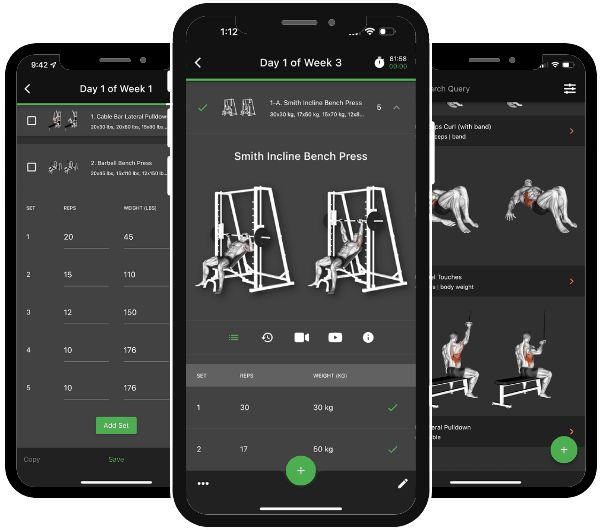
Achieve more with Fitwill: explore over 5000 exercises with images and videos, access built-in and custom workouts, perfect for both gym and home sessions, and see real results.
Start your journey. Download today!


Instructions
- Lie on a mat with your arms reaching overhead and your legs straight, then press your lower back gently into the floor.
- Set your feet together and keep your toes pointed or softly flexed so your legs stay long throughout the rep.
- Tighten your midsection before you move, then keep your chin slightly tucked so your neck stays relaxed.
- Exhale as you curl your shoulders and legs up at the same time, folding your body into a V-shape.
- Reach your hands toward your shins or toes while keeping the lift driven by your abs instead of a swing.
- Pause briefly at the top when your torso and legs are both raised and your core is fully shortened.
- Lower your upper body and legs back to the floor under control, keeping tension through the descent.
- Let your back touch down before the next repetition, then reset your arms overhead and repeat for the planned reps.
Tips & Tricks
- If your lower back lifts hard off the floor at the start, shorten the range and keep the first few inches of the rep slower.
- Keep the lift smooth; if your legs snap upward faster than your torso, the hip flexors are taking over the rep.
- Touching your toes is not the goal if it forces your neck forward. Reach as high as you can without losing the shape of the V.
- A slow lowering phase makes this exercise much harder and keeps the abs working after the top position.
- Use a mat or folded towel if your tailbone or mid-back feels pressured on the way down.
- Keep your legs together so the movement stays symmetrical and does not twist through the pelvis.
- If straight legs are too difficult, bend the knees slightly rather than swinging or yanking the torso.
- Exhale into the crunch and avoid holding your breath through the hardest part of the lift.
Frequently Asked Questions
What muscles does the Jack Knife Sit-Up work?
It mainly trains the rectus abdominis, with the hip flexors and obliques helping lift and stabilize the body as you fold.
Is the Jack Knife Sit-Up good for beginners?
Yes, but beginners usually need a smaller range of motion or slightly bent knees until they can control the lift and lowering phase.
How high should my hands reach in the Jack Knife Sit-Up?
Reach toward your shins or toes without forcing your neck forward. The best target is the highest position you can control, not the farthest reach.
Why do my hip flexors feel this exercise so much?
They help lift the legs as the torso comes up, so some hip flexor work is normal. If they dominate the set, slow the rep and reduce the leg height slightly.
How do I keep the Jack Knife Sit-Up off my lower back?
Start with your lower back lightly pressed into the floor, lift under control, and lower slowly instead of dropping back to the mat.
Should I keep my legs straight the whole time?
Straight legs make the movement harder and more levered. If you lose control, bend the knees a little and work back toward straighter legs over time.
What is a common mistake in the Jack Knife Sit-Up?
The biggest mistake is swinging the arms and legs to create momentum. The rep should look like a deliberate fold, not a fast kip.
Can I add weight to the Jack Knife Sit-Up?
You can, but only after you can control full reps with body weight. Adding load too early usually turns the exercise into a neck pull or a leg swing.