Frog Sit-Up
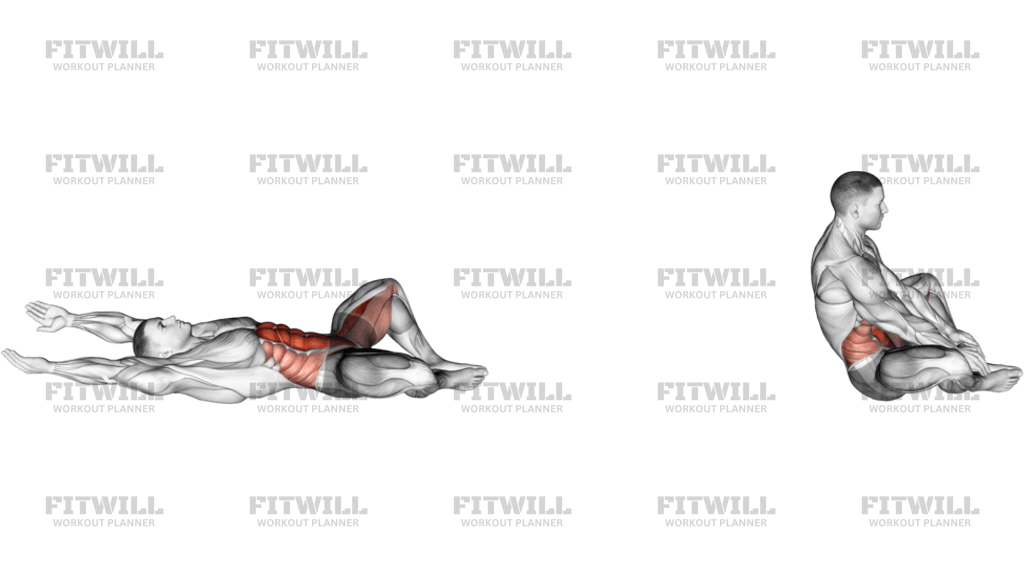
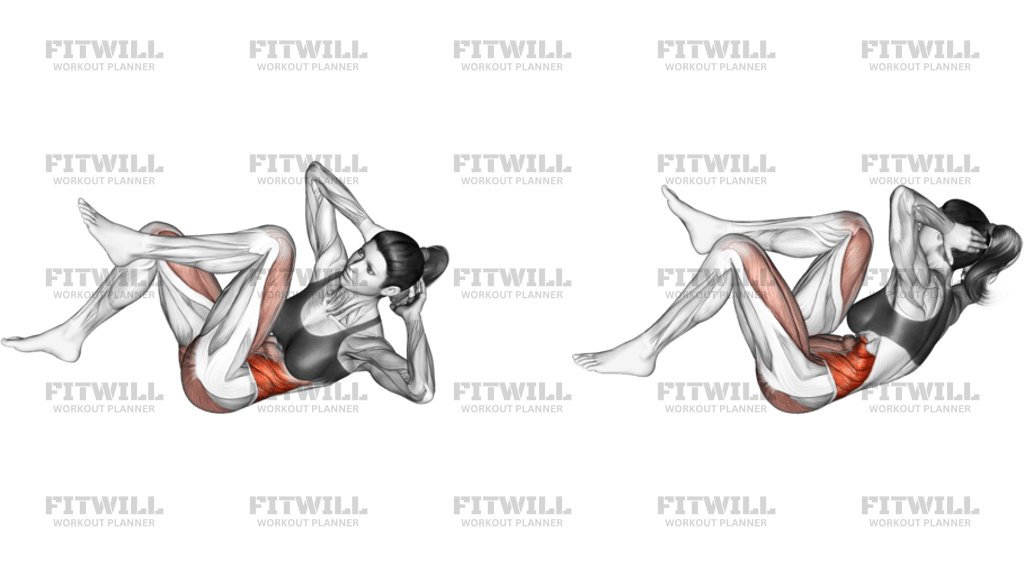
Frog Sit-Up is a bodyweight trunk-flexion exercise performed from a frog-leg setup: lie on your back with the soles of your feet together, knees dropped open, and your arms reaching overhead or lightly by your ears. From that position, you curl the ribcage toward the pelvis, sit up with control, then lower back to the floor without losing the shape of the legs. The movement is aimed at the abs, with the hips and deep trunk muscles helping to keep the pelvis steady.
The frog position changes the feel of the sit-up. Keeping the feet together and the knees open shortens the lever through the legs and can make it easier to keep the lower back from over-arching or the hips from taking over. That makes the exercise useful for people who want a controlled abdominal rep pattern instead of a fast, leg-driven sit-up. The setup also makes it easier to watch whether each rep starts from the same posture.
A good repetition begins by pressing the low back gently into the floor, bracing, and exhaling as the shoulders peel up first. Keep the chin slightly tucked, move through the spine instead of yanking the head forward, and finish by sitting tall with the ribs stacked over the pelvis. On the way down, reverse the motion slowly and stay in control until the shoulder blades touch down again. If the legs start to drift apart, the low back arches, or the neck does most of the work, the rep is too loose.
Frog Sit-Up is best used as a bodyweight core drill, a warm-up for trunk control, or an accessory movement when you want repeated abdominal tension without equipment. It works well for higher-rep sets, tempo work, or paused reps, but the range should stay pain-free and consistent. Stop the set once you lose the ability to keep the frog-leg position, breathe smoothly, and control the descent.
Fitwill
Log Workouts, Track Progress & Build Strength.
Achieve more with Fitwill: explore over 9600 exercises with images and videos, access built-in and custom workouts, perfect for both gym and home sessions, and see real results.
Start your journey. Download today!




Instructions
- Lie on your back on a mat with the soles of your feet together, knees opened out to the sides, and heels drawn in close enough that the position feels relaxed.
- Reach your arms overhead or keep your fingertips lightly beside your temples, then press your low back gently into the floor.
- Brace your abs and keep the ribs down before you start the first rep.
- Exhale and curl your head, shoulders, and upper back off the floor first.
- Continue sitting up by bringing your chest toward your thighs while keeping the feet together and the knees open.
- Finish tall at the top with your torso stacked over your hips and your abs squeezed.
- Lower yourself slowly, one vertebra at a time, until your shoulder blades touch down again.
- Reset the frog-leg shape and repeat for the planned number of reps without swinging or jerking.
Tips & Tricks
- Keep the soles of your feet touching the whole rep; if they separate, the frog setup is lost.
- Think about curling your ribcage toward your pelvis instead of trying to yank your head forward.
- Exhale as you start the sit-up and inhale on the way down so the trunk stays organized.
- If your hip flexors take over, slow the rep down and keep the heels a little closer to your hips.
- Do not pull on your neck; a light chin tuck is enough.
- Keep the descent controlled all the way to the floor instead of dropping the torso back quickly.
- Stop the rep if the low back arches hard off the floor or the knees start drifting inward.
- Use a smaller range of motion if you are training for clean abdominal tension rather than a full sit-up.
Frequently Asked Questions
What muscles does Frog Sit-Up work?
It mainly trains the rectus abdominis and obliques, with the hip flexors and deep trunk stabilizers helping to control the rep.
Why keep the soles of the feet together?
Keeping the feet together and the knees open changes the leverage of the legs and makes it easier to keep the torso doing the work.
Should my hands stay behind my head?
Not necessarily. Reaching overhead or lightly touching the sides of the head usually reduces the urge to pull on the neck.
How high should I sit up?
Go as high as you can while keeping the movement smooth and the abs in control; a tall seated finish is enough.
Is Frog Sit-Up beginner friendly?
Yes, if you keep the range small and lower yourself slowly instead of trying to force a big sit-up.
Where should I feel the exercise most?
You should feel the front of the abdomen working hardest, not strain in the neck or a big arch in the low back.
What is the most common mistake?
The biggest errors are swinging up, letting the knees drift inward, or letting the neck lead the movement.
How can I make it harder without adding weight?
Slow the lowering phase, pause briefly at the top, or keep your arms fully overhead for a longer lever.