Standing Air Bike
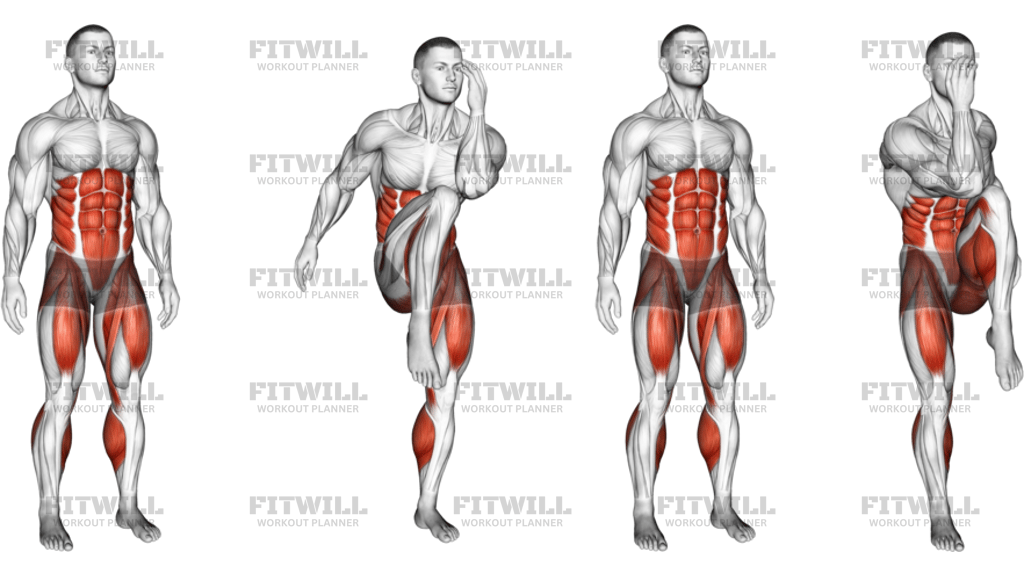
Standing Air Bike is a standing core drill that combines a knee drive with a cross-body crunch. It is useful for training the front of the trunk, the obliques, and the hip flexors while also challenging balance and posture. Because you are standing on one leg for each rep, the setup matters: a narrow stance, a tall torso, and a light touch behind the head make the movement feel controlled instead of rushed.
This exercise is not about speed. The real value comes from coordinating the torso curl with the opposite knee rising so the rib cage and pelvis close together on each rep. When done well, the standing leg stays grounded, the lifted knee comes up cleanly, and the elbows stay open instead of pulling the head forward. That keeps the work in the abs and hips rather than the neck.
Standing Air Bike is often used as a warm-up for trunk engagement, a low-load abdominal finisher, or a conditioning-style core movement. It can also fit well in circuits where you want a standing option instead of floor crunches. The alternating pattern keeps the reps smooth and rhythmic, but the torso should still fold with intent on every side so you feel the obliques doing more than just stabilizing.
The safest version is the one you can repeat without twisting hard through the low back or yanking on the neck. Keep the range of motion honest, pause briefly at the top if needed, and lower under control before switching sides. If the movement starts to turn into a hop or a swing, reduce the tempo and focus on clean knee lift, stable posture, and a strong exhale at the top.
[ Workout Log & Planner ]
Put your next workout in Fitwill
Keep your plan and training log ready when you are.


Instructions
- Stand tall with your feet about hip-width apart and place your hands lightly behind your head with your elbows open.
- Keep your chest lifted, shoulders down, and weight centered over one foot before the first rep starts.
- Brace your abs, then shift your balance onto the standing leg without leaning your torso backward.
- Drive the opposite knee up as you bring the same-side elbow across your body toward it.
- Crunch through the ribs and waist so the elbow and knee travel toward each other instead of forcing a big twist.
- Pause briefly at the top if you need control, then lower the knee and elbow back to the start with a slow return.
- Alternate sides in a steady rhythm while keeping your neck relaxed and your gaze forward.
- Exhale as the knee rises and the torso closes, then inhale as you lower and reset.
Tips & Tricks
- Keep your hands light behind your head so the neck does not do the work for the abs.
- Think elbow to knee, not elbow to shoulder, so the crunch comes from the trunk instead of a big arm swing.
- Lift the knee first if you need more balance; the torso can follow a split second later without losing the pattern.
- Keep the standing knee softly bent so you do not lock out the leg and bounce through the rep.
- Let the hip rise only as high as you can control without shrugging the shoulders or flaring the ribs.
- Use a slower lowering phase than lifting phase if your core tends to lose tension between reps.
- Stop the set if you start tugging your head forward or jutting your chin toward the knee.
- A smaller, cleaner crunch is better than a huge cross-body swing that twists the low back.
Frequently Asked Questions
What muscles does Standing Air Bike work most?
It mainly trains the abs, obliques, and hip flexors, with the standing leg and upper back helping you stay balanced.
Is Standing Air Bike the same as a bicycle crunch?
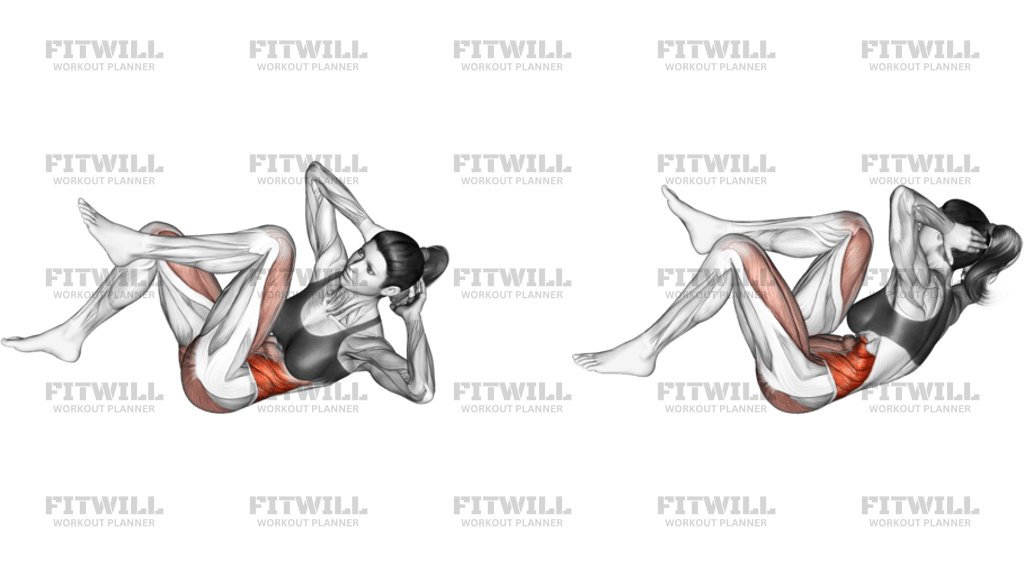
It is the standing version of that cross-body knee-to-elbow pattern. Instead of lying on the floor, you alternate from an upright stance.
Do my elbow and knee need to touch on every rep?
No. They should travel toward each other, but contact is optional. Keep the torso tall and the movement controlled rather than forcing a collision.
Why do my shoulders and neck feel this exercise more than my abs?
That usually means you are pulling on your head or crunching too fast. Keep the elbows open and let the rib cage move toward the lifted knee.
Can I do Standing Air Bike if I am a beginner?
Yes. Start with a slow marching rhythm, a smaller knee lift, and a light touch behind the head until you can keep your balance.
What is the biggest form mistake with this movement?
The most common mistake is twisting and swinging the torso instead of crunching the ribs toward the hip. That turns it into momentum work and takes tension off the abs.
Should I keep my standing foot flat?
Yes, keep the foot planted and the knee softly bent so you can balance without hopping or rolling onto the outside edge of the foot.
How can I make Standing Air Bike harder without adding weight?
Slow the lowering phase, add a brief pause at the top, and keep the knee drive and crunch perfectly synchronized on every rep.