Landmine Rear Lunge Version 2
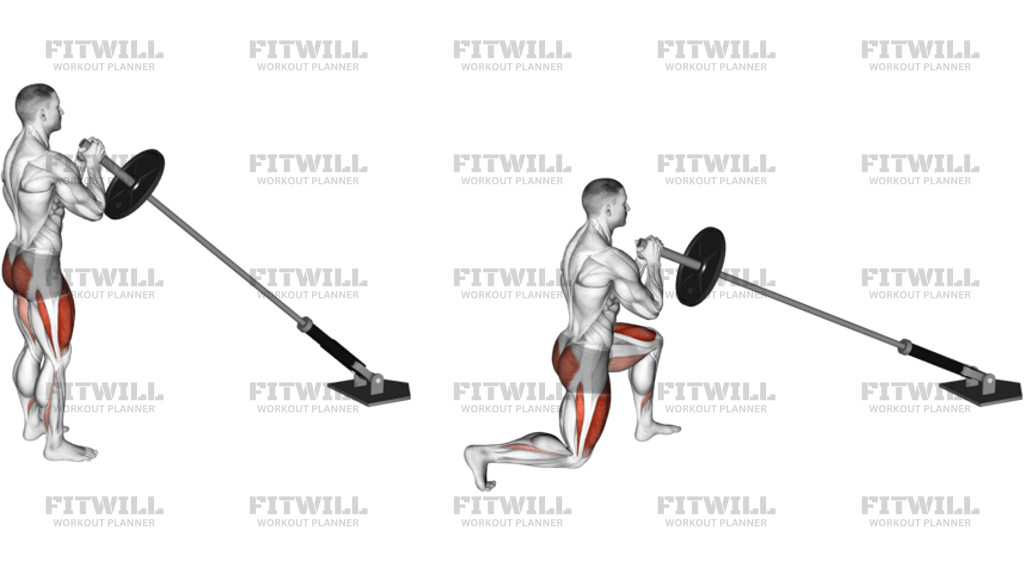
Landmine Rear Lunge Version 2 is a front-loaded unilateral lower-body exercise that builds glute strength, leg control, and trunk stability in a way that usually feels more natural than a barbell on the back. Holding the free end of the barbell at the chest shifts the load forward, which helps many lifters stay more upright and find the lunge pattern without needing aggressive shoulder mobility.
This movement puts the main demand on the glutes, with the hamstrings, core, and lower back helping you stay stacked and balanced as you step back. Because only one leg is doing most of the work at a time, Landmine Rear Lunge Version 2 is also useful for exposing side-to-side differences in hip drive, knee tracking, and foot control. It fits well in strength blocks, hypertrophy work, or accessory training when you want lower-body volume without the same shoulder or spinal loading as a back squat pattern.
The setup matters more here than in many bilateral lifts. Stand tall with the end of the bar held close to the chest, elbows tucked, and your front foot planted so the whole foot stays rooted when you descend. The bar should feel like a steady counterbalance, not something that pulls you forward; if it drifts away from the body, the lunge becomes harder to control and the torso usually folds too soon.
As you lower, step the rear leg back and let both knees bend while keeping the front heel down and the knee tracking in line with the toes. The rear knee should travel toward the floor under control instead of bouncing off it, and the front leg should take the load through the whole foot rather than collapsing onto the toes. On the way up, drive through the front midfoot and heel, squeeze the glute to stand, and keep the bar close enough that the rep finishes where it started instead of swinging out in front.
For most lifters, the best results come from smooth reps with a repeatable stance and a depth that does not force the pelvis to twist or the lower back to overextend. If the balance feels shaky, shorten the step, reduce the load, or use a paused bodyweight split squat before adding resistance. Landmine Rear Lunge Version 2 works best when the motion looks calm and deliberate from the first rep to the last, with enough control that each side can produce the same path, speed, and finish.
Fitwill
Log Workouts, Track Progress & Build Strength.
Achieve more with Fitwill: explore over 9600 exercises with images and videos, access built-in and custom workouts, perfect for both gym and home sessions, and see real results.
Start your journey. Download today!




Instructions
- Anchor one end of the barbell in a landmine setup and hold the free sleeve at your chest with both hands, elbows tucked close.
- Stand facing away from the anchor with your feet about hip-width apart and your front foot planted flat on the floor.
- Set your ribs over your pelvis, brace your midsection, and keep the bar touching or very close to the upper chest.
- Step one leg back into a staggered stance, keeping most of your weight over the front leg as you prepare to descend.
- Lower under control by bending both knees, letting the front knee travel in line with the toes while your torso stays tall and long.
- Bring the rear knee toward the floor without bouncing, and stop just before the front heel wants to lift or the bar starts to drift forward.
- Drive through the front midfoot and heel, squeeze the front glute, and stand back up on the same line you descended.
- Reset your feet between reps if needed, then repeat for the planned number of reps before switching sides.
Tips & Tricks
- Keep the bar sleeve pinned close to the chest; if it floats away from your body, the lunge turns into a forward-folding balance drill.
- Use your front foot as a tripod, with pressure on the big toe, little toe, and heel so the knee stays stable on the descent.
- Take the back leg far enough that the front heel stays down; a cramped stance usually forces the pelvis to tuck and the knee to pinch forward.
- Let the rear knee travel straight down instead of reaching backward, which keeps the rep centered under the hips.
- A small forward torso angle from the hips is fine, but roundness through the lower back means the load is too heavy or the step is too short.
- If the front knee caves inward, slow the lowering phase and think about pushing the floor apart with the front foot.
- Exhale as you stand up and finish the rep with the glute, not with a yank from the arms or upper back.
- Reduce depth if the back knee taps the floor hard, because bouncing steals tension and can shift the movement away from the front leg.
- Use lighter load and cleaner pauses before adding weight; this pattern rewards balance and position more than brute force.
Frequently Asked Questions
What does Landmine Rear Lunge Version 2 train most?
It mainly trains the glutes, with the hamstrings, quads, and core helping control the split stance and the return to standing.
How should I hold the bar in Landmine Rear Lunge Version 2?
Hold the free end of the barbell at your chest with both hands, elbows tucked in, so the load stays close and acts like a front counterbalance.
Should my front heel stay on the floor?
Yes. If the heel pops up, shorten your stance or reduce depth so the front leg can drive the rep without losing balance.
Is Landmine Rear Lunge Version 2 beginner-friendly?
Yes. Start with just the bar or a very light load and focus on stepping back, staying tall, and controlling the front knee.
What are the most common mistakes with this exercise?
The biggest errors are letting the bar drift away from the chest, bouncing the rear knee off the floor, and letting the front knee collapse inward.
How far back should I step?
Step back far enough that the front foot stays planted and you can lower without crowding the hip, but not so far that you lose tension or overreach.
Is this a good substitute for a barbell reverse lunge or split squat?
Yes. The landmine position often feels more stable and upright, so it is a useful alternative when you want less shoulder or upper-back demand.
What rep range works best for Landmine Rear Lunge Version 2?
Moderate reps usually work well, especially when each side stays smooth and controlled; heavier loads make sense only if the torso and front knee stay organized.