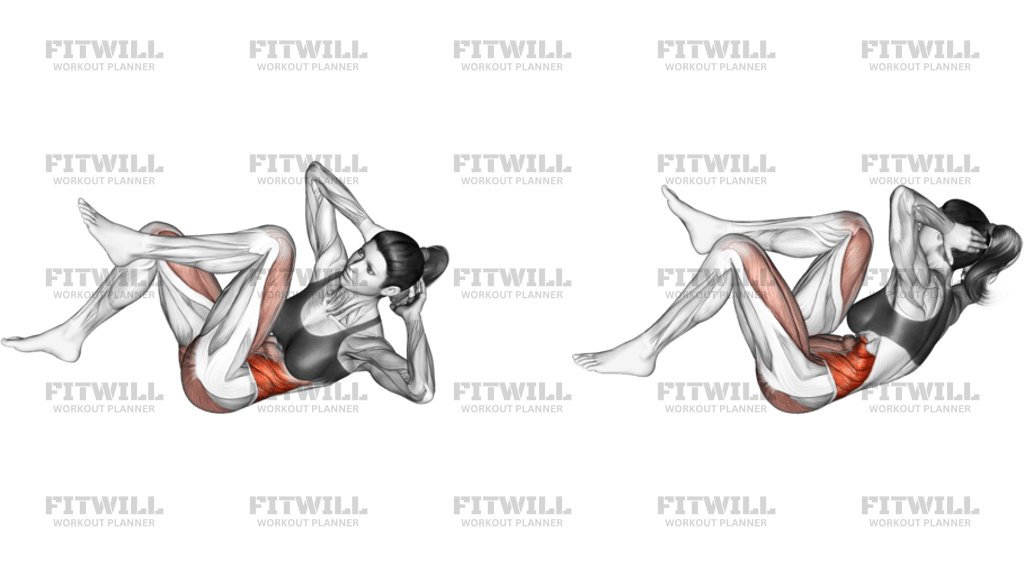
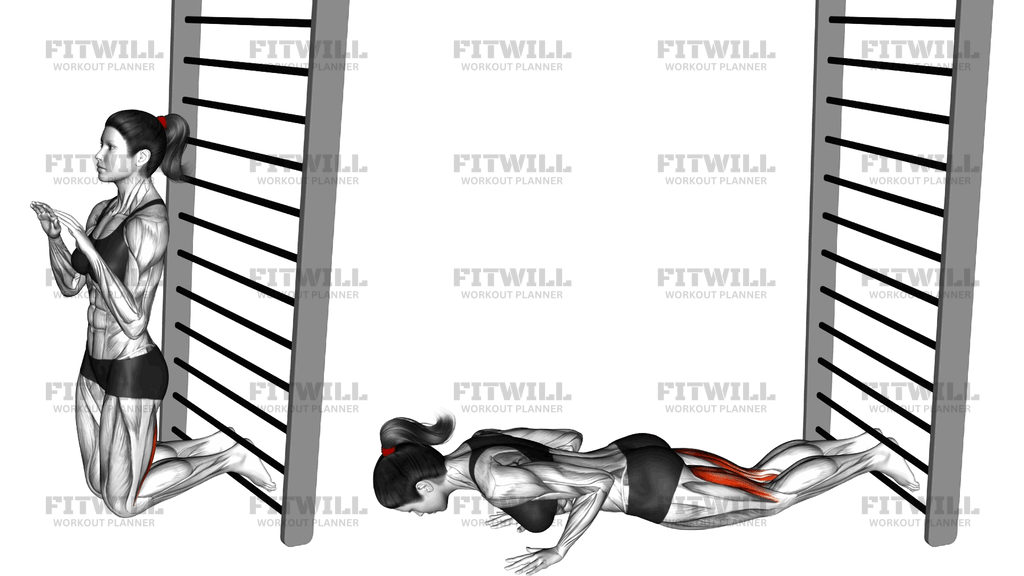
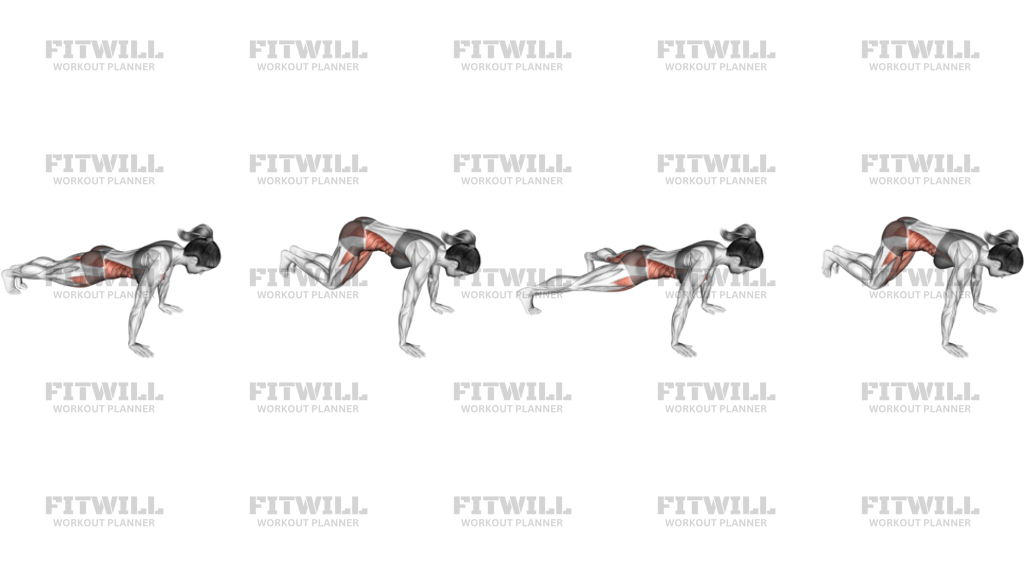
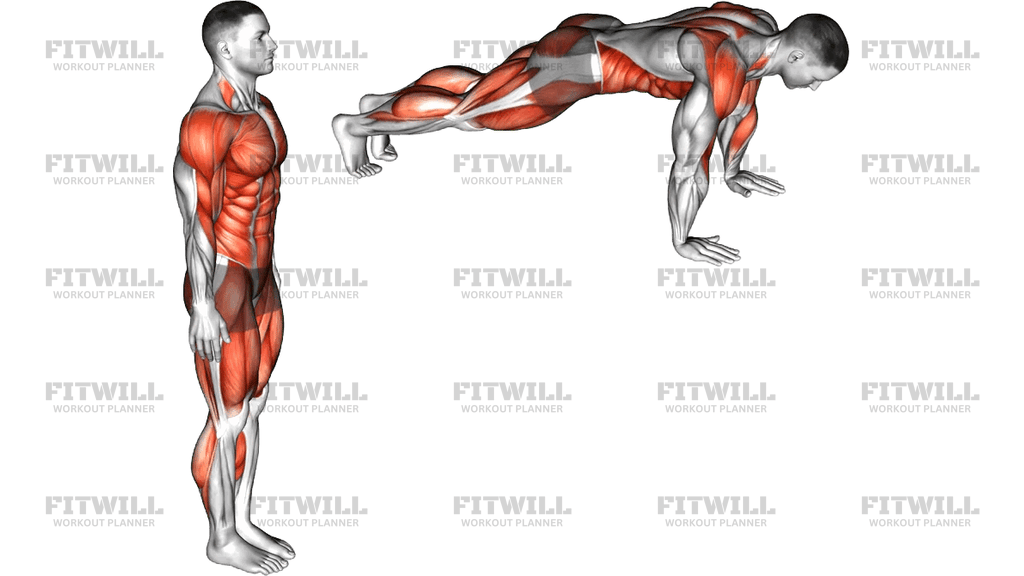
Reverse Crunch To Dead Bug
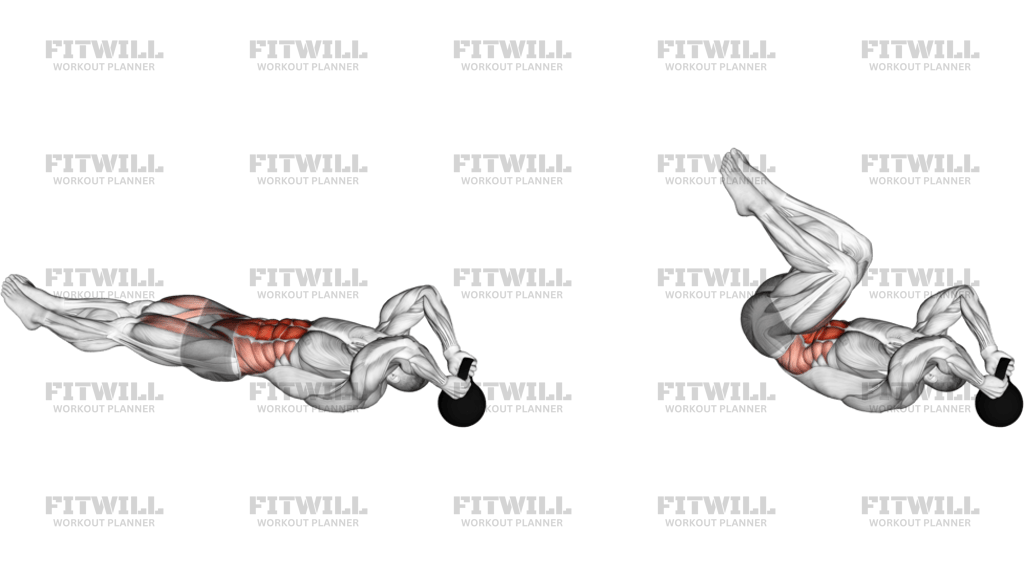
Reverse Crunch to Dead Bug is a floor-based core drill that links a posterior pelvic curl with a dead-bug reach. You start on your back, keep the ribs stacked, curl the pelvis off the floor, and then control the transition into a dead-bug pattern without letting the low back arch. It is a useful way to build abdominal control, trunk stiffness, and coordination between the lower body and opposite-side arm reach.
The exercise trains the deep abs, rectus abdominis, obliques, and hip flexors to work together while the spine stays organized. The reverse crunch portion emphasizes bringing the pelvis and knees toward the chest, while the dead-bug portion tests whether you can keep the rib cage quiet as one leg and the opposite arm move away from center. That combination makes the movement more demanding than a simple crunch or a simple dead bug because control has to carry from one position into the next.
Setup matters more than range. Lie flat on a mat, press the low back gently into the floor, and bring the hips and knees into a position you can hold without gripping through the neck. If the starting position is too low or too long, the lumbar spine will take over; if it is too compact, the motion becomes a hip-flexor swing instead of core work. A clean set begins with quiet shoulders, a tucked pelvis, and breathing that stays controlled.
On each rep, exhale as you curl the pelvis upward, then lower with control into the dead-bug phase by extending the working limbs only as far as the low back stays pinned. Pause long enough to remove momentum, then return to the start without bouncing. The goal is not a huge range but a stable trunk that can transition smoothly from crunch to extension and back again.
Use this drill in warm-ups, core circuits, or accessory work when you want anti-extension control and better pelvic awareness. It is a good option for beginners if the range is short and the pace stays slow. Stop the set if the neck starts to tug, the ribs flare, or the lower back lifts off the floor, because those are the signs that the core position is gone.
[ Workout Log & Planner ]
Put your next workout in Fitwill
Keep your plan and training log ready when you are.


Instructions
- Lie on your back on a mat, knees bent over your hips, feet off the floor, and arms reaching toward the ceiling or lightly braced by your sides if that helps you keep the ribs down.
- Press your low back into the floor and exhale to set a small posterior pelvic tilt before the first rep.
- Curl the tailbone and hips slightly off the floor, bringing the knees toward your chest without swinging.
- Pause at the top for a beat with the abs tight and the shoulders relaxed.
- Lower the pelvis back down under control until the low back touches the mat again.
- Transition into the dead-bug phase by extending one leg away from you while the opposite arm reaches back only as far as your spine stays flat.
- Bring the arm and leg back to the start, then switch sides or repeat the prescribed pattern without letting the rib cage pop up.
- Finish each rep with the same slow return and exhale before starting the next one.
Tips & Tricks
- Shorten the leg extension if your low back starts to arch off the mat.
- Keep your chin slightly tucked and your gaze up so you do not pull on the neck.
- Think 'curl the pelvis, then reach' instead of swinging the legs through the rep.
- If your hip flexors take over, bend the knees more and make the dead-bug reach smaller.
- Slow the lowering phase to keep the movement from turning into momentum work.
- Exhale through both the crunch and the opposite arm-and-leg reach.
- Keep the shoulders heavy and away from the ears instead of lifting the chest hard.
- Stop each rep before the heel or fingertips touch down if contact makes you lose trunk position.
Frequently Asked Questions
What does Reverse Crunch to Dead Bug work most?
It mainly trains the deep abs and lower abs, with the obliques and hip flexors assisting to keep the trunk organized.
Can beginners perform this exercise?
Yes. Beginners usually do best with a short range, bent knees, and a slow pace that keeps the low back flat.
Do I need equipment for the reverse crunch to dead bug?
No. This version is bodyweight on a mat, so the main challenge is body position and control.
How do I know the reverse crunch part is correct?
Your pelvis should curl upward and your tailbone should lift slightly, not just your knees swinging toward your chest.
What happens in the dead-bug part of the rep?
One leg extends away while the opposite arm reaches back, and the low back stays pressed into the floor.
What are the most common mistakes with this movement?
Letting the low back arch, yanking the head forward, and using momentum to throw the legs are the biggest problems.
Can I make Reverse Crunch to Dead Bug harder?
Yes. Slow the lowering phase, pause longer at the top, or extend the limbs farther only if your spine stays stable.
Should I feel this in my hip flexors?
Some hip flexor work is normal, but the set should be limited by core control, not by pinching or a tugging sensation in the front of the hips.