Trap Bar Jump Squat
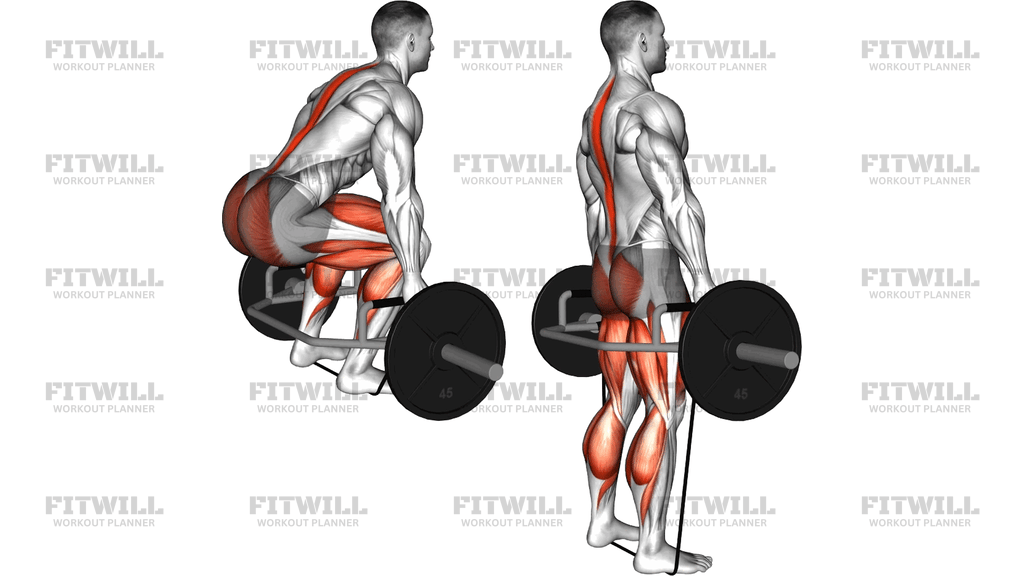
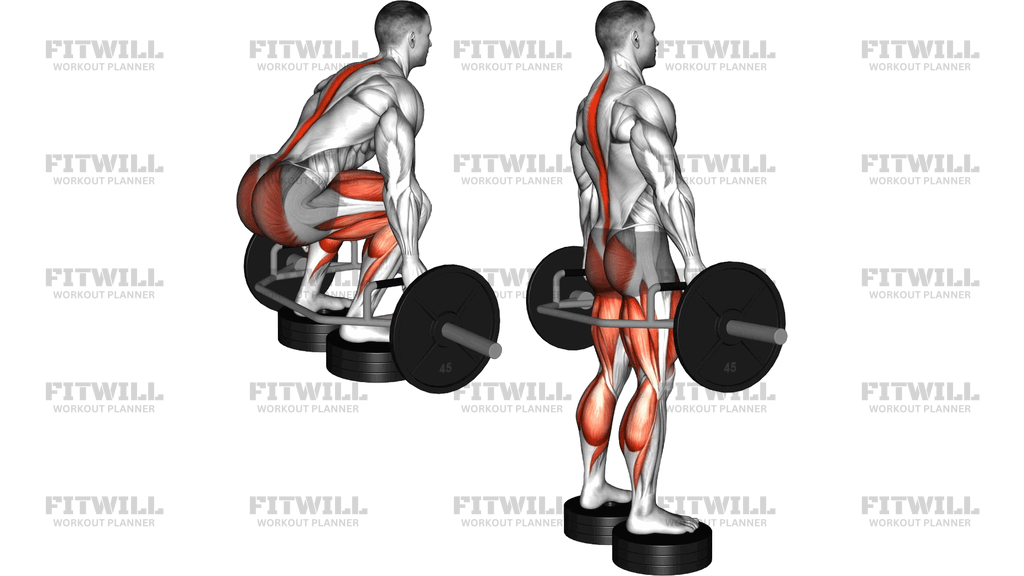
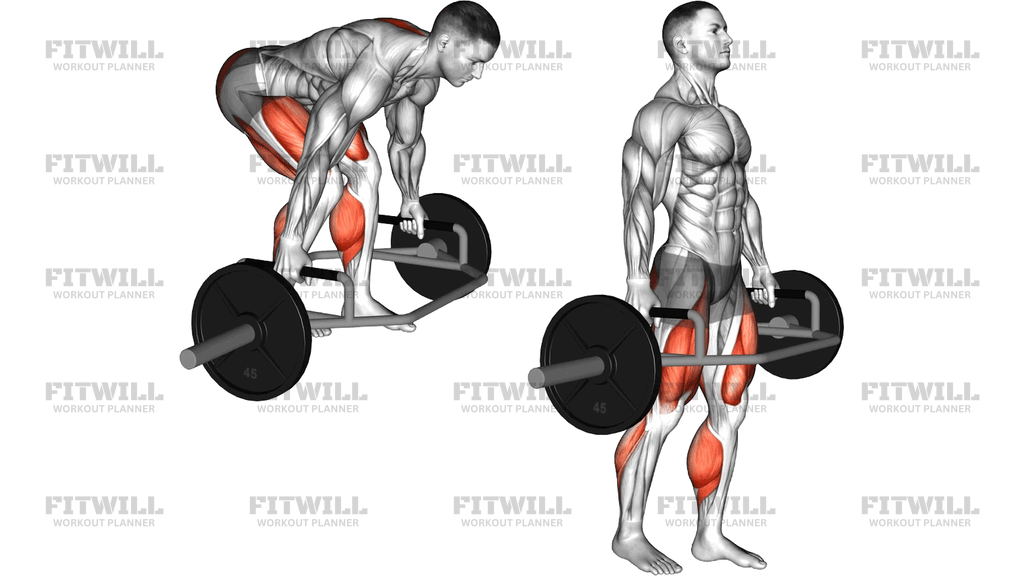
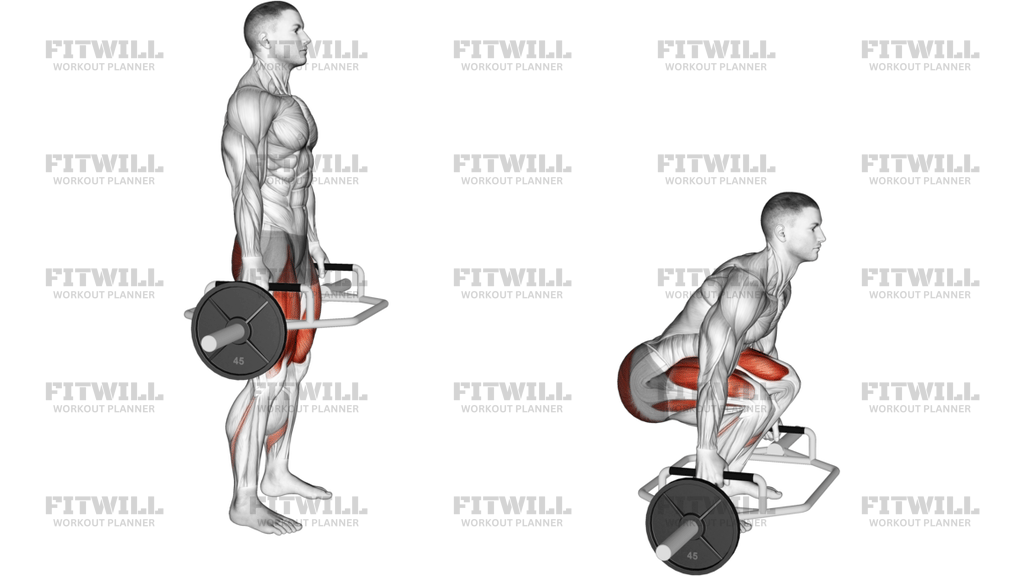
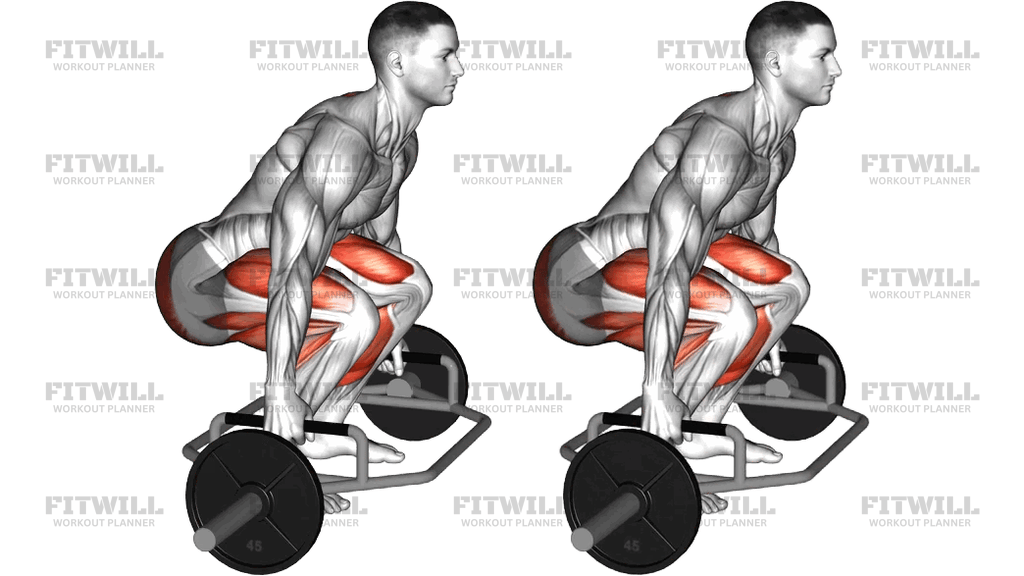
Trap Bar Jump Squat is a loaded power exercise that combines a squat pattern with an explosive jump using a hex or trap bar. The setup in the image shows the lifter starting in a deep athletic squat with the handles held at the sides, torso inclined forward, and the bar kept close to the body. That position lets the legs and hips produce force without the bar drifting forward or forcing the shoulders to do the work.
This movement trains the lower body for speed and triple extension, with the glutes, quads, calves, and hips doing most of the work while the trunk and upper back keep the bar path stable. It is a useful option when the goal is power development, athletic conditioning, or a lower-body stimulus that is less limited by grip and spinal loading than a conventional barbell jump squat. The trap bar also makes it easier to keep the load centered, which helps many lifters stay balanced during the jump and landing.
The key to the exercise is staying crisp from the first rep to the last. Each repetition starts with a controlled squat down, then a fast drive through the feet to leave the floor, and then a soft landing back into the same stance. The jump should feel explosive, but the landing should look quiet and organized. If the bar makes you slow down, shorten the range slightly or reduce the load so the takeoff stays snappy.
Because this is a power movement, the load should usually be lighter than what you would use for a regular trap bar squat or deadlift. The best sets look sharp, not grinding. If the knees cave, the heels pop early, the torso collapses, or the landing gets loud, the set is too heavy or too fatigued. Keep the neck long, the ribs stacked over the pelvis, and the handles under control so the legs can produce the force instead of the bar bouncing you out of position.
Trap Bar Jump Squat fits well in the warmup-to-power part of a session, in athletic training blocks, or as an accessory after main strength work. It is especially useful when you want lower-body explosiveness with a simpler setup than a barbell jump squat. Beginners can use it with very light load and small jumps, but only if they can squat, brace, and land consistently without losing balance.
[ Workout Log & Planner ]
Put your next workout in Fitwill
Keep your plan and training log ready when you are.


Instructions
- Set the trap bar on the floor and stand inside it with feet about shoulder-width apart, toes slightly turned out, and the handles beside your thighs.
- Hinge at the hips and bend the knees to grip the handles, keeping your chest proud, back flat, and weight balanced through the midfoot.
- Sink into a deep but stable squat position with your hips back, shins angled forward, and your arms straight so the bar stays close to your sides.
- Brace your trunk, then drive hard through the floor to stand and jump in one explosive motion.
- Leave the ground with the bar under control, keeping your torso tall and the handles steady rather than pulling them up with the shoulders.
- Land softly on the balls of your feet and roll into the whole foot, absorbing the impact by bending the hips and knees.
- Reset each rep by returning to the same squat depth and stance before the next jump instead of bouncing randomly off the landing.
- Breathe in before the descent, hold your brace through the drive, and exhale after you land and stabilize.
Tips & Tricks
- Use a light load that lets you actually leave the floor; if the jump becomes a slow calf raise, it is too heavy.
- Keep the bar centered beside your legs so it does not swing forward and pull you onto your toes.
- Think about pushing the floor away rather than yanking the handles upward with your arms.
- Land quietly. A loud landing usually means the knees are not bending enough or the load is too high.
- Keep the torso stacked and the ribs from flaring when you explode, especially at the top of the jump.
- Use the same stance for every rep so the knees track consistently over the toes.
- Stop the set as soon as jump height drops or the landing gets sloppy; power work should stay fast.
- If your heels leave the floor too early, start from a slightly higher squat and keep pressure through the whole foot.
Frequently Asked Questions
What does the trap bar jump squat train?
It mainly trains lower-body power through the hips, glutes, quads, and calves, with the trunk stabilizing the bar.
Is this the same as a regular trap bar squat?
No. The squat is slower and strength-focused, while the jump squat uses a quicker concentric drive and a brief takeoff.
How heavy should the trap bar be for jump squats?
Keep the load light enough that you can jump cleanly and land softly. If the bar slows the takeoff, reduce the weight.
Should my feet leave the floor on every rep?
Yes, the movement is meant to be explosive. If you are not actually jumping, the load or fatigue is probably too high.
What is the biggest form mistake in this exercise?
Letting the bar drift forward and turning the movement into a forward-leaning pull instead of a vertical jump.
Can beginners do trap bar jump squats?
Yes, if they already squat and land well. Beginners should start with very light load and small, controlled jumps.
Where should I feel the movement most?
You should feel the hips, glutes, quads, and calves working hard, with the core keeping the torso from collapsing.
When should I use this exercise in a workout?
Use it early in the session or after your main strength lift, when you are fresh enough to move explosively and land well.