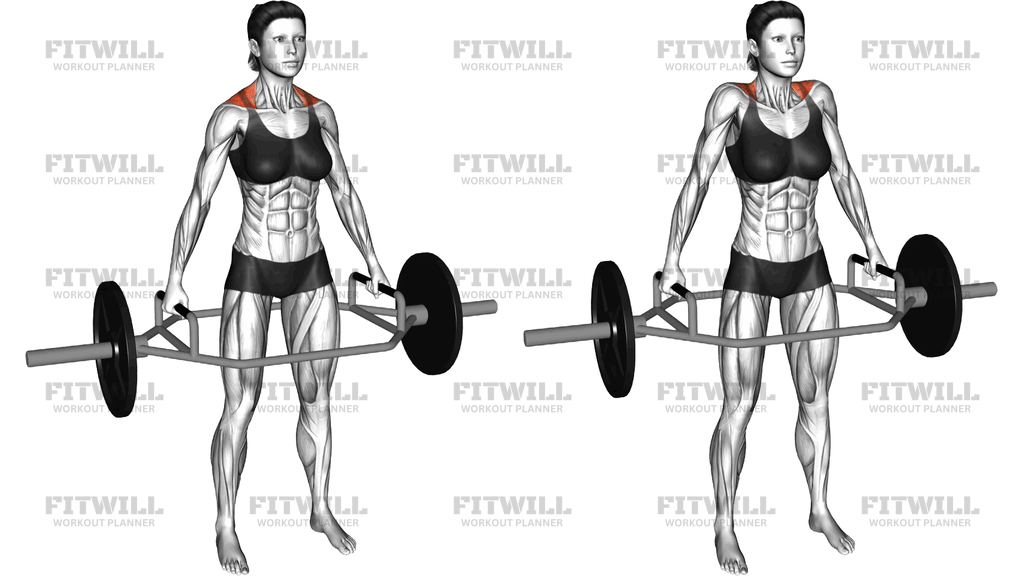
Trap Bar Banded Deadlift
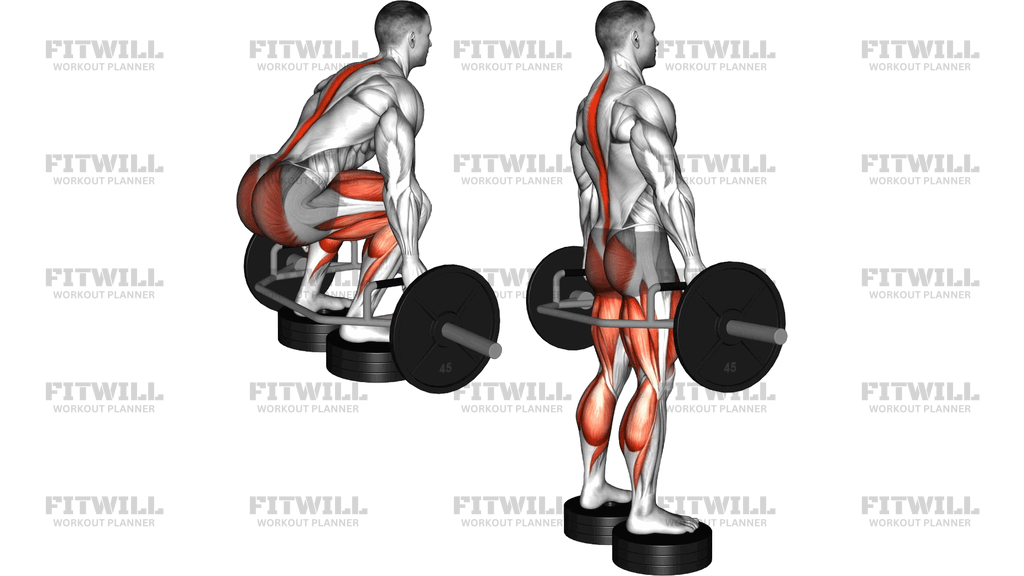
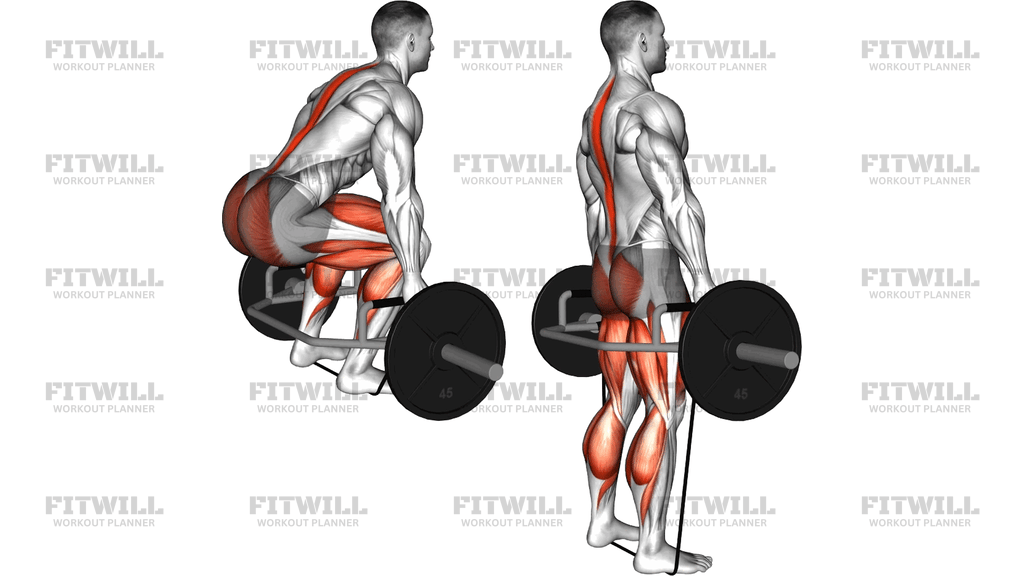
Trap Bar Banded Deadlift is a deadlift variation that combines the neutral grip of a trap bar with band tension that gets harder as you stand up. It is usually used to train hip extension, leg drive, and bracing without forcing the shoulders or spine into the same demands as a straight-bar deadlift. The bands change the resistance curve, so the lift feels lighter off the floor and heavier near lockout.
That changing load is the whole point of the exercise. When the bands are anchored evenly under the feet or to the floor, the bar wants to pull down harder as it rises, which makes the top half of the rep more demanding. This helps reinforce strong lockout mechanics, faster intent off the floor, and clean hip extension. It also means the setup has to be symmetrical, because even a small difference in band tension can tilt the bar and pull you out of position.
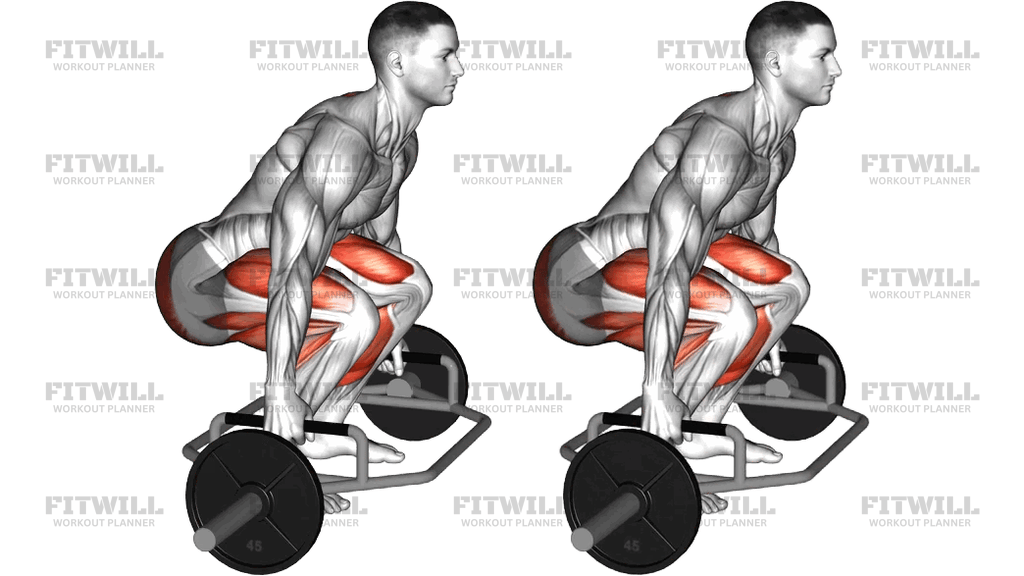
The best reps start with a solid hinge: feet planted inside the trap bar, shins close to the handles, hips set back, torso braced, and the bar centered over the mid-foot. From there, the lift should feel like you are pushing the floor away while keeping the handles close and the ribs stacked over the pelvis. If the chest shoots up too fast, the hips drift back too far, or the lower back does all the work, the band tension will expose that mistake immediately.
This variation fits well in strength blocks, posterior-chain work, or power-focused sessions where you want heavy intent without maxing out a straight bar. It can also be a useful progression for lifters who learn the trap bar pattern more easily than a conventional deadlift because the neutral handles usually feel more joint-friendly and easier to brace around. Use a band setup and bar load that let you own the start position, keep the bar path steady, and finish each rep with control instead of a backward lean.
Because the resistance increases near the top, the exercise rewards patience on the way down and crisp acceleration on the way up. Lower the bar under control, reset your breath, and make every rep look the same from setup to finish. If the bands start to jerk the bar, the feet shift, or the handles rise unevenly, reduce the load and rebuild the pattern before chasing more tension.
[ Workout Log & Planner ]
Put your next workout in Fitwill
Keep your plan and training log ready when you are.


Instructions
- Place the trap bar around your feet with the handles centered over the mid-foot, and anchor the bands evenly so both sides create the same pull.
- Stand with feet about hip-width inside the bar, grip the neutral handles, and lower your hips until your shins are close to the frame.
- Set your chest, keep a flat upper back, and take the slack out of the bar and bands before you leave the floor.
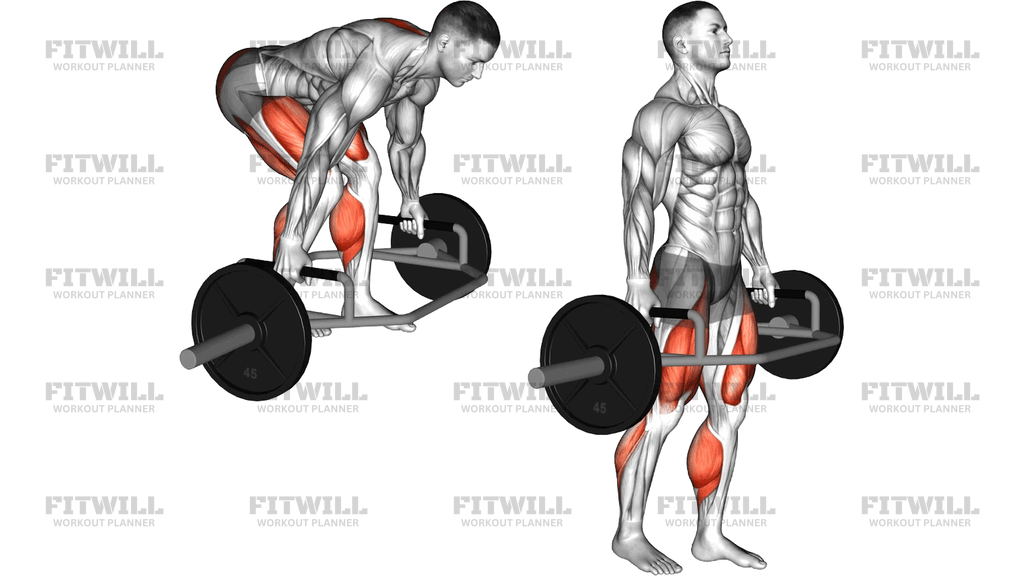
- Brace your torso hard, then drive through the floor so the knees and hips rise together instead of the hips shooting up first.
- Keep the handles close to your legs as you stand, and finish with the glutes rather than leaning back.
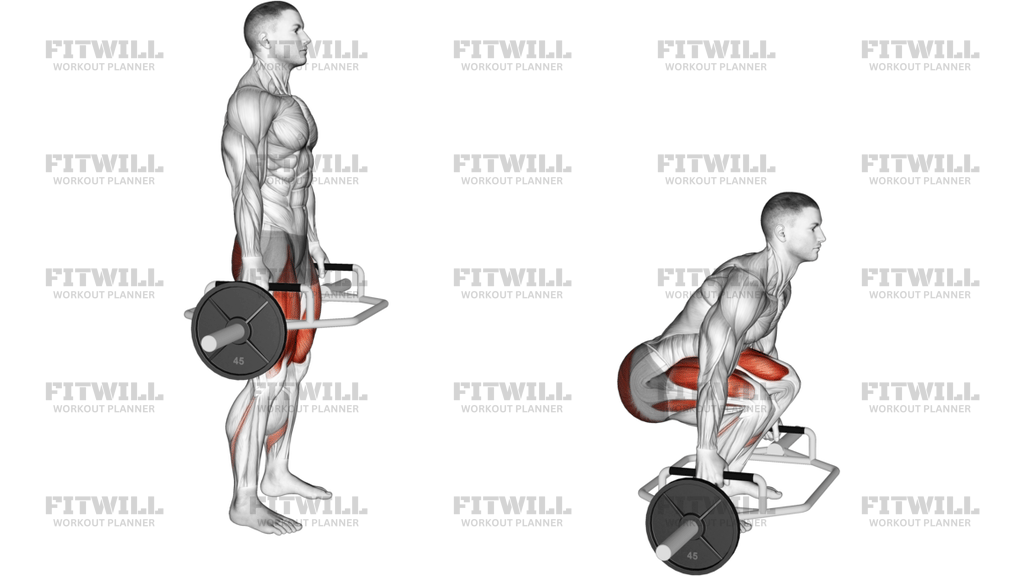
- Pause briefly at the top with stacked ribs and pelvis, then reverse the rep by sending the hips back first.
- Lower the bar under control until it reaches the floor, keeping the band tension even on both sides.
- Reset your breath and body position before the next rep, or set the bar down completely if the form starts to drift.
Tips & Tricks
- Match the band length and attachment height on both sides so the bar does not tilt as tension increases.
- Start every rep by pulling the handles slightly upward before the first drive; that keeps slack out of the system and prevents a jerky takeoff.
- Keep the bar path close to your legs so the bands do not swing the load forward and turn the rep into a back-dominant pull.
- Do not finish by arching hard at the top; the lockout should come from glute squeeze and tall posture, not from leaning back.
- A stable, flat sole helps keep pressure centered when the band tension peaks near the top.
- Use a slower lowering phase than lifting phase so you stay in control of the band recoil and can reset your brace.
- If the hips rise faster than the chest, lower the load and re-learn the start position before adding more band tension.
- Choose band resistance that challenges the last third of the rep without making the first pull feel unstable.
- Keep your eyes on a point a few feet ahead so the neck stays neutral and the upper back does not collapse.
- Stop the set when one handle starts finishing higher than the other or the feet begin to shift inside the bar.
Frequently Asked Questions
What does the band change in a Trap Bar Banded Deadlift?
The bands make the rep harder as you stand up, so the top range and lockout become more demanding than in a regular trap bar deadlift.
Which muscles work the most in this exercise?
The glutes, hamstrings, quads, spinal erectors, lats, and core all contribute, with the bands adding extra demand to the hips near lockout.
How should the bands be set up?
They should be anchored evenly so both sides pull the trap bar the same way; uneven band tension can twist the bar and shift your stance.
Is this a good beginner deadlift variation?
Yes, if the band tension and bar load are light enough to keep the hinge and brace clean. Many beginners find the trap bar easier to learn than a straight-bar deadlift.
Where should the handles be when I start the rep?
The handles should sit centered over your mid-foot so you can hinge down without rocking forward or starting with the bar too far in front of you.
Why do I feel this in my lower back?
A firm brace and neutral spine will make the back work isometrically, but the lift should still be driven by the legs and hips, not by spinal extension.
Can I use this for power work?
Yes. Lighter bar weight with moderate band tension is useful for explosive intent as long as every rep starts from the same position.
What is the most common mistake?
Jerking the bar off the floor before bracing, which makes the bands pull you out of position and usually turns the rep into a sloppy back lift.