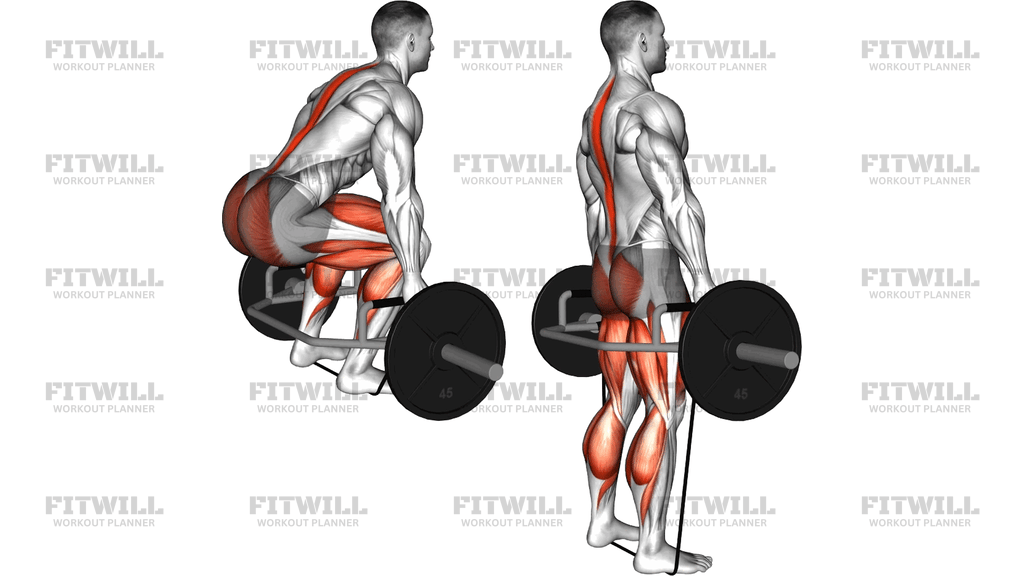
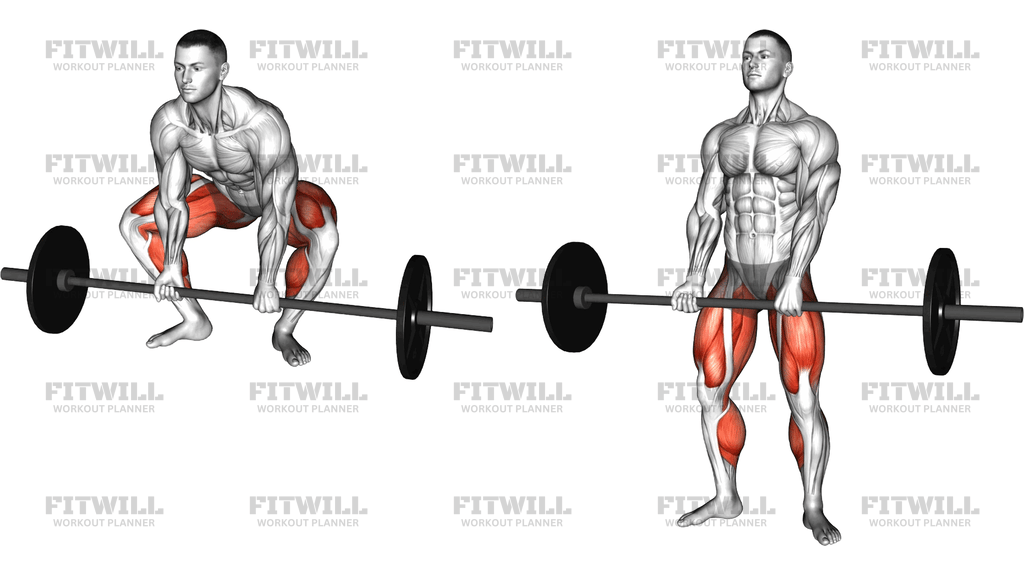
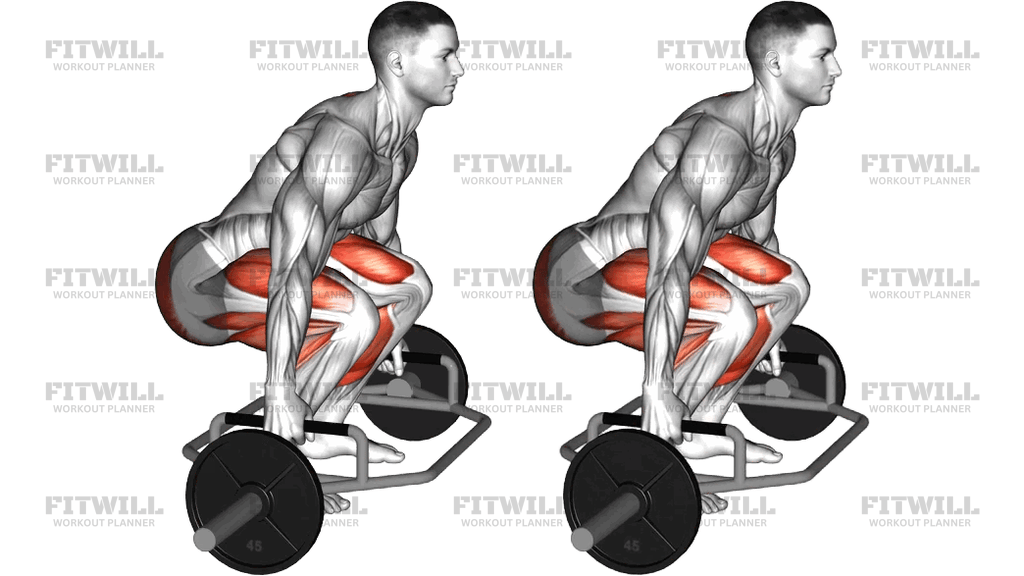
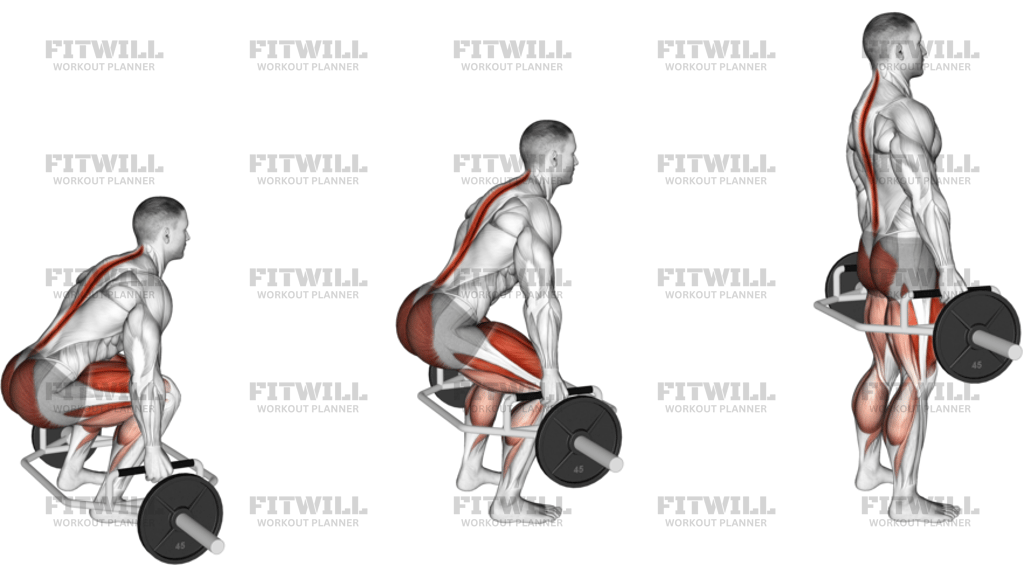
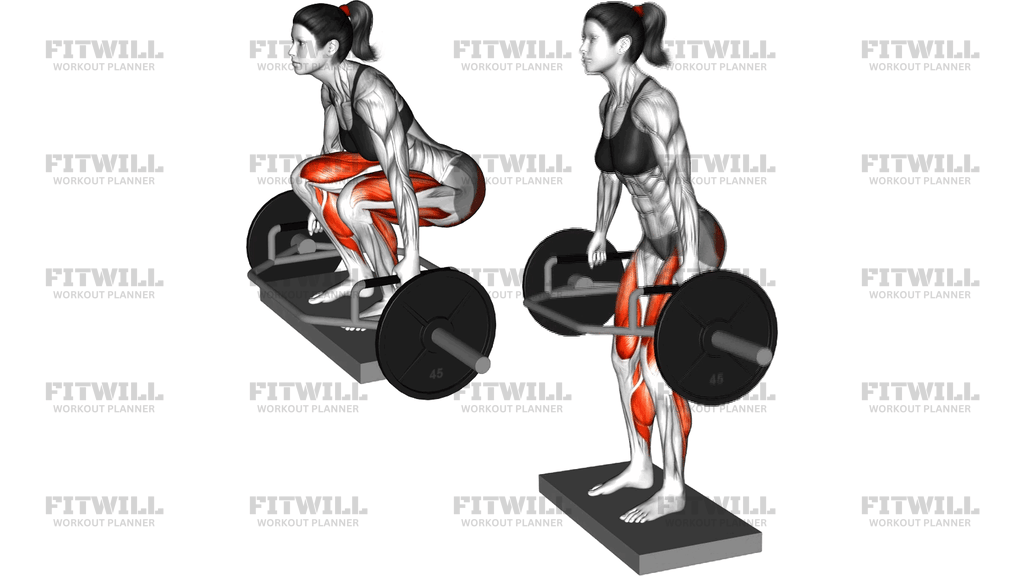
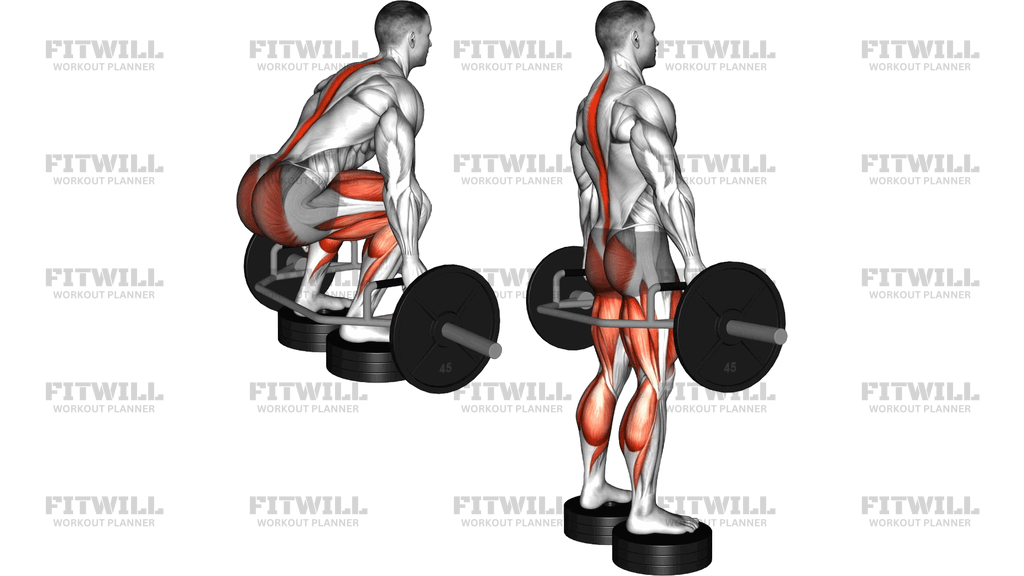
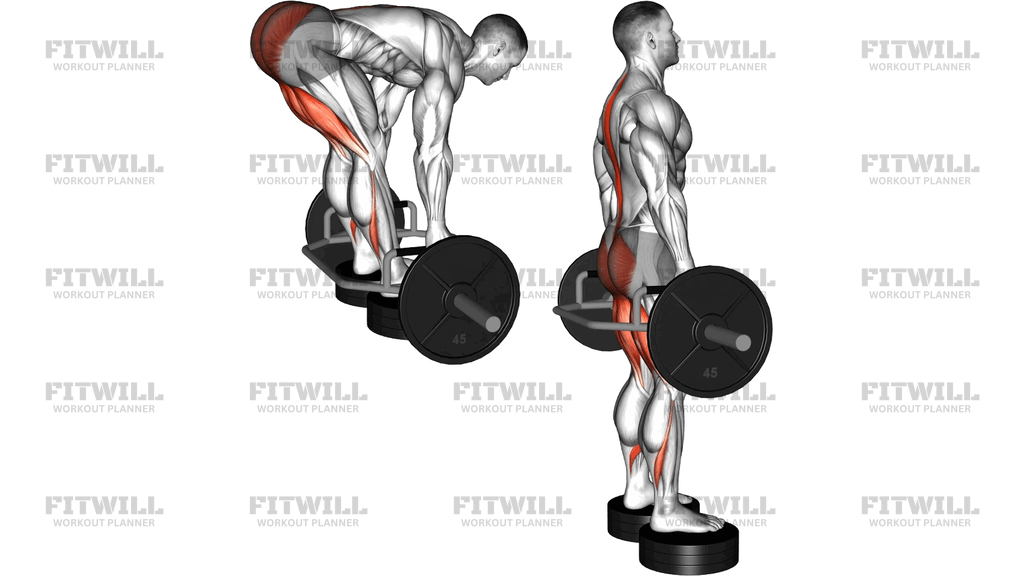
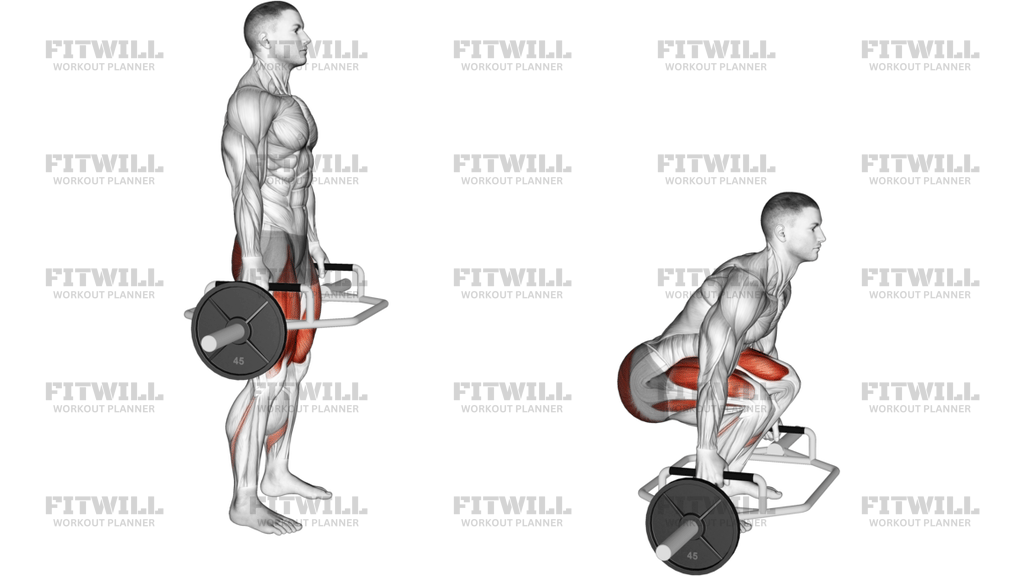
Trap Bar Split Stance RDL
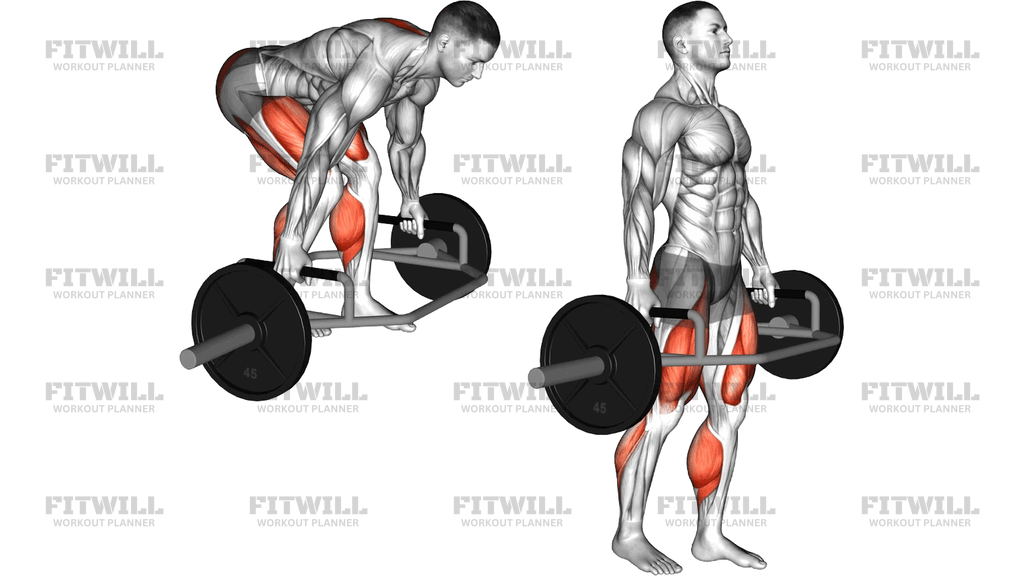
Trap Bar Split Stance RDL is a split-stance hip hinge built around the trap bar, with one leg doing most of the loading while the back foot acts like a kickstand. It is designed to train the glutes and hamstrings through a controlled range while also asking the trunk to stay stacked and steady. The split stance changes the demand compared with a regular Romanian deadlift: you still hinge both hips back, but the front leg usually carries most of the tension and the rear leg helps you keep balance.
The trap bar is useful here because the handles keep the load close to the body and make the path easier to control than a barbell placed in front of the shins. That said, the setup still matters. The front foot needs to stay flat and planted, the rear foot should be light on the toes, and the pelvis should stay square instead of twisting toward the front leg. When those pieces are set correctly, the rep feels like a long hip hinge rather than a squat or a lunge.
At the bottom of the rep, the hips travel back until the hamstrings lengthen and the torso is angled forward without rounding the lower back. The trap bar should stay close to the body as you lower it, then travel back up by driving the front foot into the floor and squeezing the glute to stand tall. The movement is deliberate: lower under control, pause briefly if needed to own the position, and rise without yanking or rotating.
This exercise is a strong option for accessory lower-body work, unilateral strength balance, and posterior-chain training when you want less spinal setup stress than a straight barbell hinge. It is also useful when one side tends to dominate in split-stance work, because the stance exposes side-to-side differences in hip control. Keep the range of motion pain-free and stop the descent when the pelvis starts to tuck, the back rounds, or the front knee shifts excessively.
Done well, Trap Bar Split Stance RDL trains the front-side glute and hamstring to handle load while the core and back keep the torso organized. That makes it practical for athletes, general strength work, and lifters who want a hinge variation that is stable, repeatable, and easy to load progressively without losing position.
Fitwill
Log Workouts, Track Progress & Build Strength.
Achieve more with Fitwill: explore over 9600 exercises with images and videos, access built-in and custom workouts, perfect for both gym and home sessions, and see real results.
Start your journey. Download today!




Instructions
- Set the trap bar on the floor and stand inside it with one foot forward and the other foot back on the toes, like a kickstand.
- Keep most of your weight on the front foot, square your hips toward the floor, and hold the handles with straight arms.
- Unlock the knees slightly, brace your torso, and keep your chest long before you begin the hinge.
- Push the hips straight back while the bar travels down close to your thighs and front shin.
- Lower until you feel a strong stretch in the front-leg hamstring without rounding your lower back or twisting the pelvis.
- Pause briefly in the bottom position if needed, keeping the shoulders packed and the bar still.
- Drive the front foot into the floor and squeeze the front glute to stand back up with the bar close to your body.
- Finish tall with the hips fully extended, then reset your split stance before the next rep.
- Breathe in on the way down and exhale as you come back to standing.
Tips & Tricks
- Keep the front foot rooted through the heel and midfoot; if the toes peel up, the hinge usually turns into a forward lunge.
- Treat the rear leg as balance support only. If you can feel it doing as much work as the front leg, narrow the stance or shift more load forward.
- Let the bar skim down the legs instead of drifting forward; once it moves away from the body, the low back has to work harder.
- Stop the descent when the pelvis starts to rotate open or tuck under. Extra depth is not useful if the hips lose alignment.
- Keep the ribcage stacked over the pelvis so the torso folds from the hips rather than arching through the lower back.
- Use a slower lowering phase than lifting phase to keep tension on the front-leg hamstring and glute.
- Choose a lighter load than your regular trap-bar deadlift. The split stance adds balance demands before it adds strength demand.
- If the handles or plates tap the floor before your hips are ready, shorten the range and keep every rep identical.
- Make each rep look the same on both sides if you train the stance bilaterally; uneven balance often shows up immediately in this setup.
Frequently Asked Questions
What muscles does Trap Bar Split Stance RDL target most?
It mainly trains the front-leg glute and hamstring, with the core and lower back helping keep the torso and pelvis steady.
Can beginners perform this exercise?
Yes, if they start light and use a short, controlled range. The split stance is often easier to learn than a heavier bilateral hinge.
Should the back foot be flat on the floor?
No. The rear foot usually stays on the toes as a light support point while the front leg takes most of the load.
How far back should I send my hips?
Far enough to feel a strong stretch in the front-leg hamstring, but not so far that the lower back rounds or the pelvis twists open.
Why use a trap bar instead of a barbell?
The trap bar keeps the load close to your center of mass and makes the hinge path easier to control in a split stance.
What is the biggest form mistake with this movement?
Letting the hips rotate toward the front leg or drifting the bar away from the body instead of hinging straight back.
Does the front knee bend a lot?
Only slightly. The movement should feel like a hip hinge, not a squat or a deep lunge.
How should I know when to stop lowering?
Stop when you can no longer keep the spine neutral, the pelvis square, and the front foot fully planted.
Can I train both sides with this exercise?
Yes. If one stance feels weaker or less stable, train both sides separately and match the setup and range as closely as possible.