Trap Bar Deadlift From Deficit
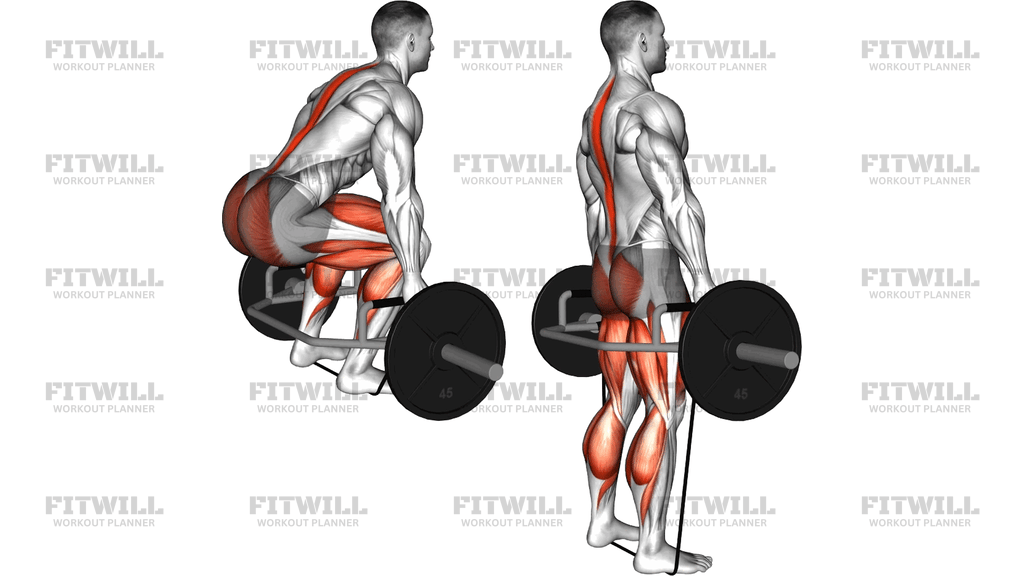
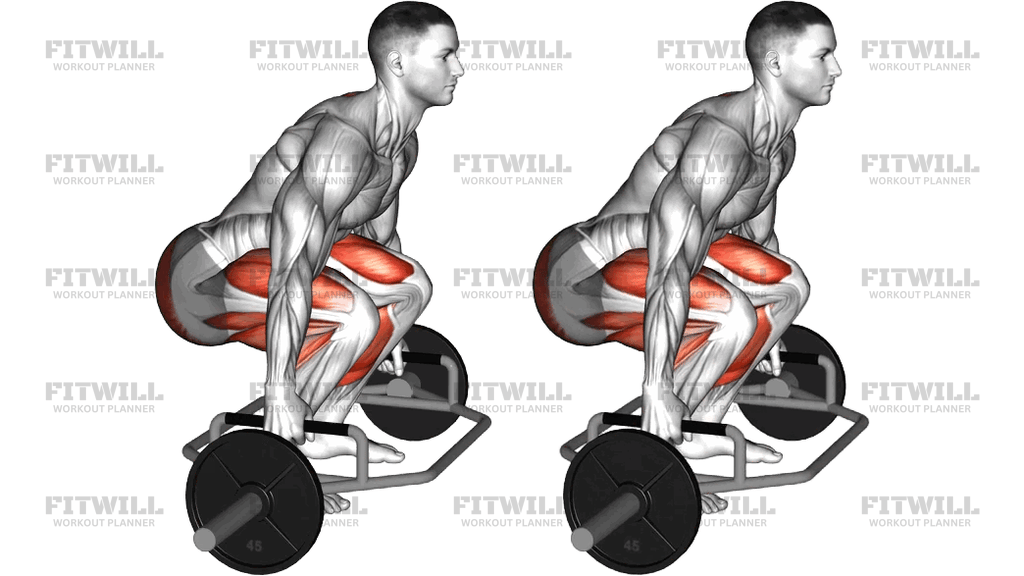
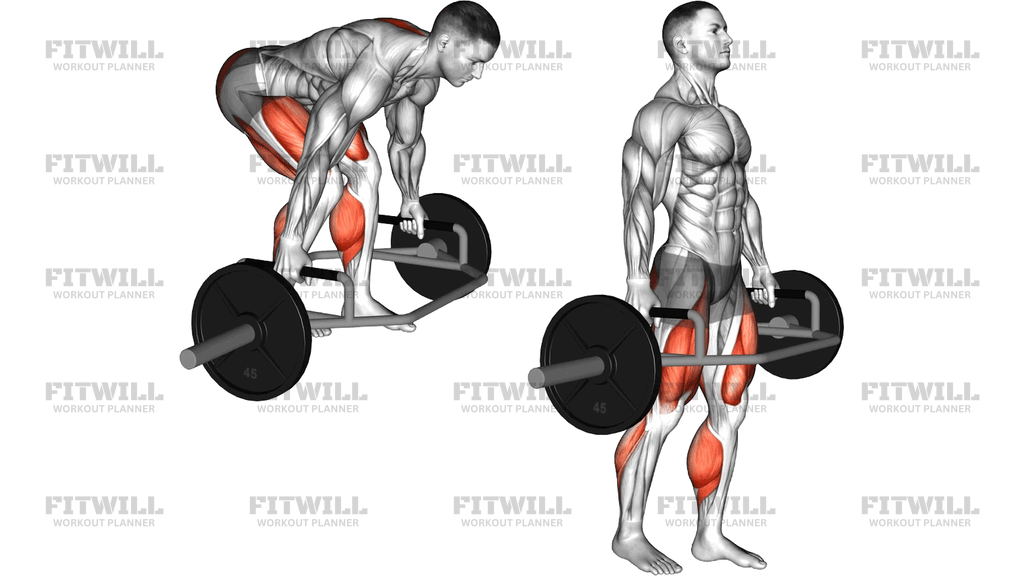
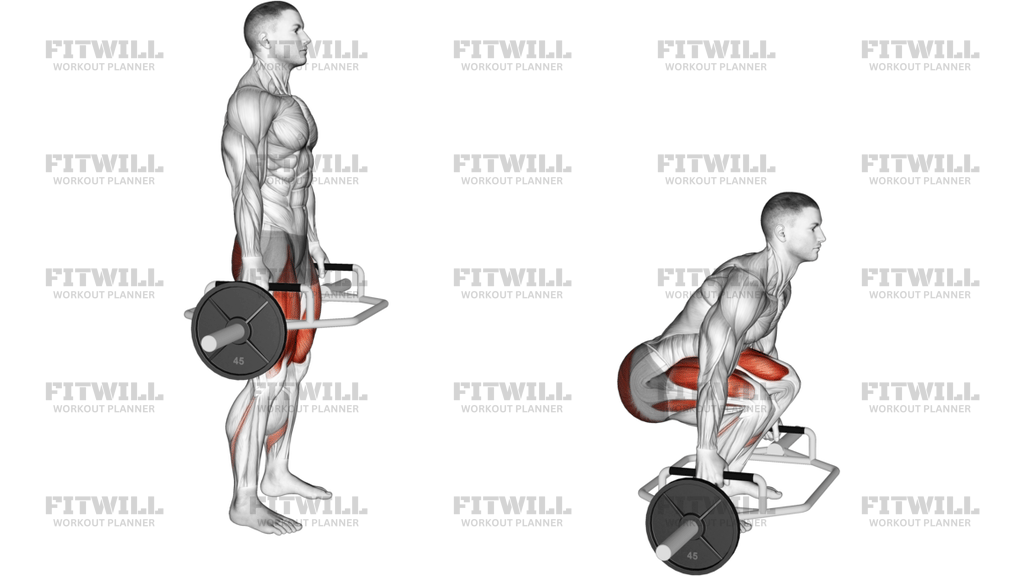
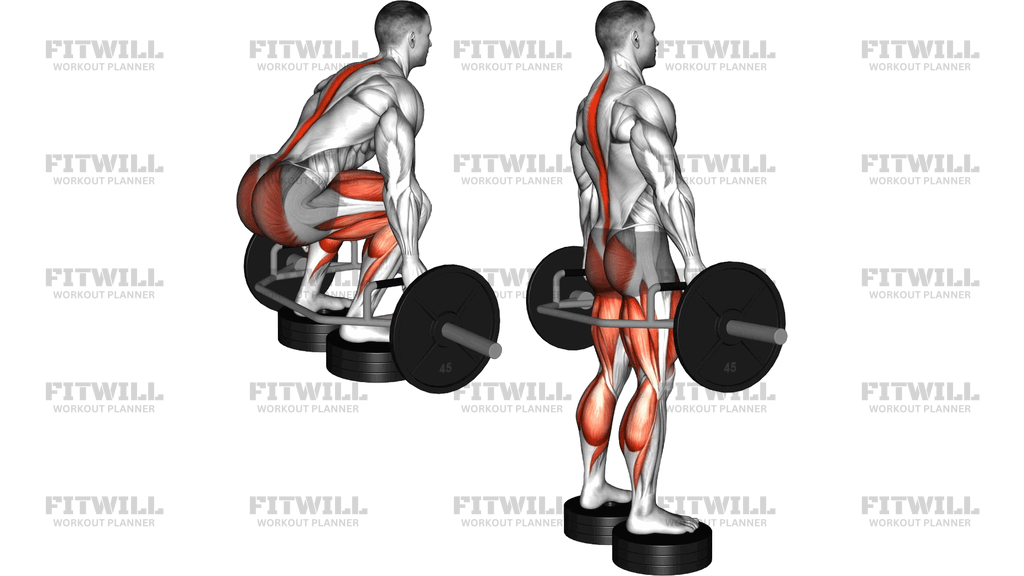
Trap Bar Deadlift from Deficit is a lower-body pulling exercise performed with the feet elevated on a stable platform while the trap bar sits lower than your stance. That extra drop increases the range of motion and makes the start position more demanding, so the lift asks more from the hips, quads, glutes, hamstrings, upper back, and core at the same time.
The raised stance changes the bottom position enough that setup matters more than it does in a standard trap bar deadlift. Your feet need to be centered on the platform, your mid-foot should stay under the handles, and your torso should be braced before the plates leave the ground. If the deficit is too high or the stance drifts too far forward, the lift quickly turns into a rounded-back pull instead of a controlled strength movement.
On each repetition, hinge down to the handles, keep the chest long, and load the legs before you pull. Drive the floor away, let the hips and shoulders rise together, and keep the bar traveling close to the body. The top position should look tall and stacked, not leaned back. Lower the bar with the same control you used on the way up so each rep starts from a clean, repeatable dead stop.
This version of the deadlift is useful when you want more work from the start of the pull, better leg drive, and a stronger hinge under a bigger range of motion. It fits well in strength blocks, accessory work, or deadlift variations for lifters who can already hold neutral posture through a full hinge. A smaller deficit is usually better than forcing extra depth, because the goal is to build quality off the bottom, not chase range that the spine cannot control.
Keep the movement crisp and measured. If the hips shoot up first, the platform is too high, the load is too heavy, or the brace is lost before the pull begins. Stop each set while the handles still rise smoothly and the torso stays organized, because that is where this exercise does its best work.
[ Workout Log & Planner ]
Put your next workout in Fitwill
Keep your plan and training log ready when you are.


Instructions
- Place a stable platform or stack of plates under your feet and stand inside the trap bar with your mid-foot centered under the handles.
- Set your feet about hip-width apart, distribute weight evenly through the whole foot, and keep the handles close to your shins.
- Hinge at the hips to reach the handles, bend the knees as needed, and keep your chest long with a neutral spine.
- Grip the handles firmly, pull your shoulders slightly down and back, and create tension through your lats before the bar leaves the floor.
- Take a breath into your belly and brace your trunk as if you are preparing for a solid body check.
- Drive through the floor to lift the bar, letting the hips and shoulders rise together instead of shooting the hips up first.
- Keep the bar path straight and close to the body until you stand tall with the knees and hips fully extended.
- Lower the bar under control by hinging back first, then bending the knees until the handles return to the bottom position.
- Reset your breath and brace before each repetition, then repeat for the planned set.
Tips & Tricks
- Use the smallest deficit that still gives you a clear increase in range of motion; too much platform height usually turns the bottom into a back-dominant grind.
- Keep the trap bar centered over your mid-foot so the pull stays vertical and you do not rock toward the toes.
- Think about pushing the platform away rather than yanking the handles up; that cue helps the legs start the rep cleanly.
- Keep the handles close to the shins and thighs instead of letting them drift forward, which shortens the lever arm on the low back.
- If your hips rise faster than your shoulders, reduce the load or the deficit until the first inch of the pull stays organized.
- Lock out by standing tall, not by leaning back and overextending the ribs.
- Lower under control and reset fully on the floor or platform so each rep starts from a dead stop, not a bounce.
- Use chalk or straps if grip becomes the limiting factor before the hips and legs are working hard enough.
Frequently Asked Questions
What does the deficit change in a trap bar deadlift?
Standing on a platform lowers your body relative to the handles, which increases the range of motion and makes the bottom of the pull harder.
Which muscles work hardest in this lift?
The biggest demands are on the hips, glutes, quads, hamstrings, core, and upper back because all of them have to stay organized through the deeper start position.
How high should the platform be under my feet?
Start with a small deficit that lets you keep a neutral spine and solid bracing. If the lower back rounds before the bar breaks from the floor, the platform is too high.
Should the handles stay close to my legs?
Yes. Let the handles travel close to the shins and thighs so the bar path stays straight and you do not turn the lift into a forward reach.
Can beginners use this variation?
Yes, but only with a small deficit and light loading. Beginners need enough control to keep the torso stacked and the bar moving from the floor smoothly.
What is the most common form mistake?
The most common mistake is letting the hips shoot up first and turning the rep into a partial good morning instead of a coordinated leg drive.
Is it okay to lean back at the top?
No. Finish by standing tall with the ribs stacked over the pelvis. Leaning back adds stress without improving the lift.
Can I use straps on the trap bar?
Yes, straps are useful if grip fails before the legs and hips are fully challenged, especially on heavier sets or higher reps.