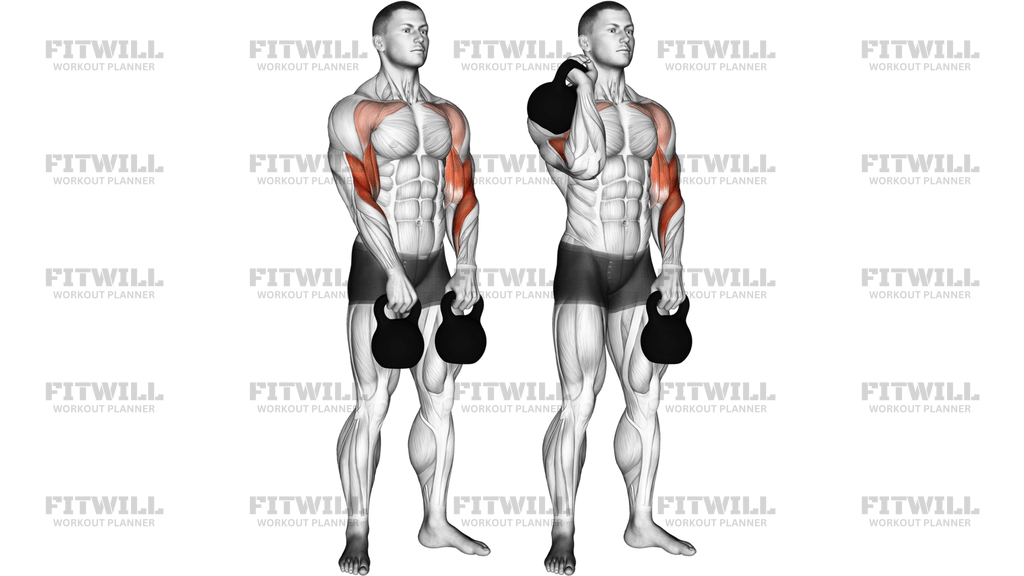
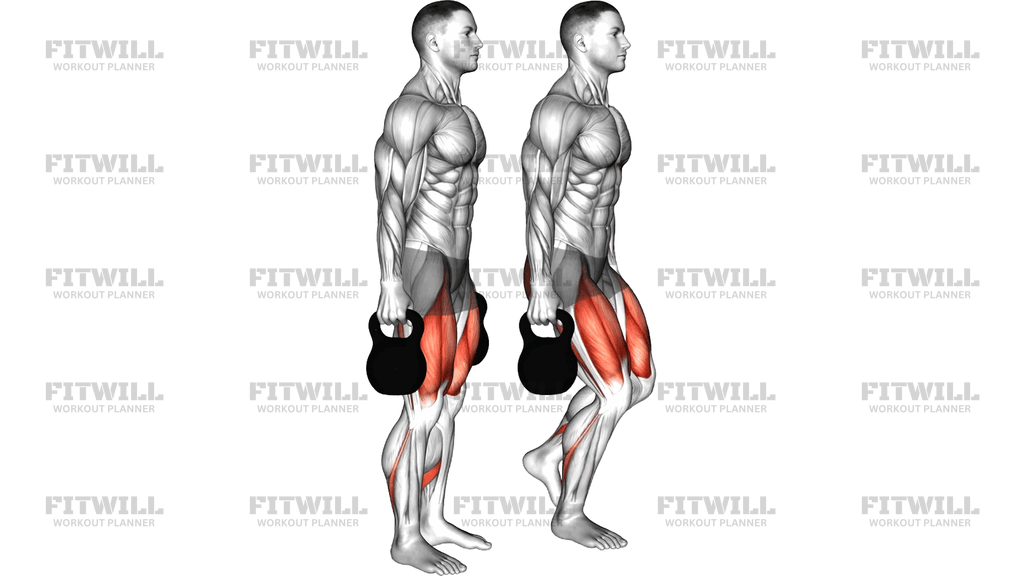
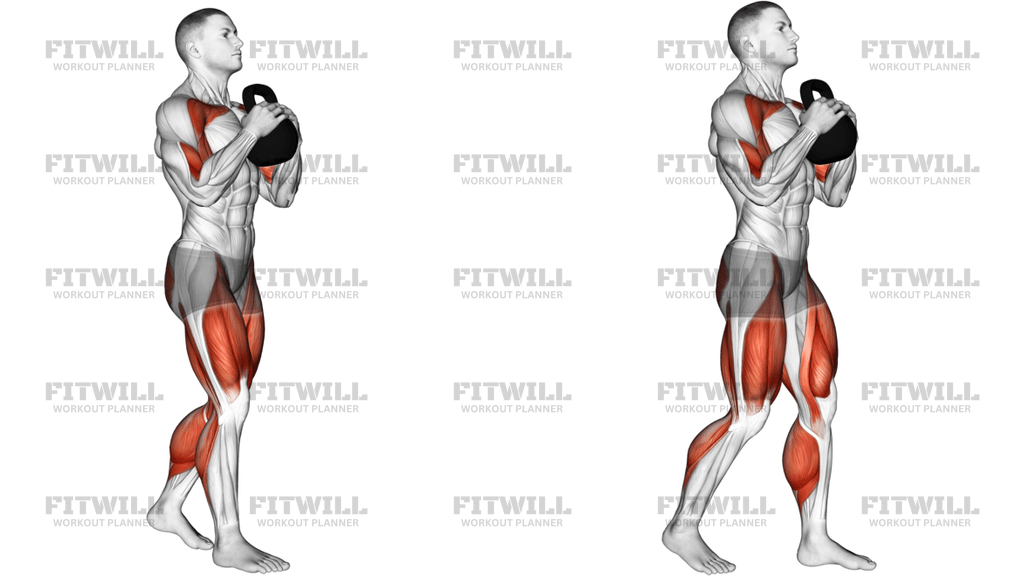
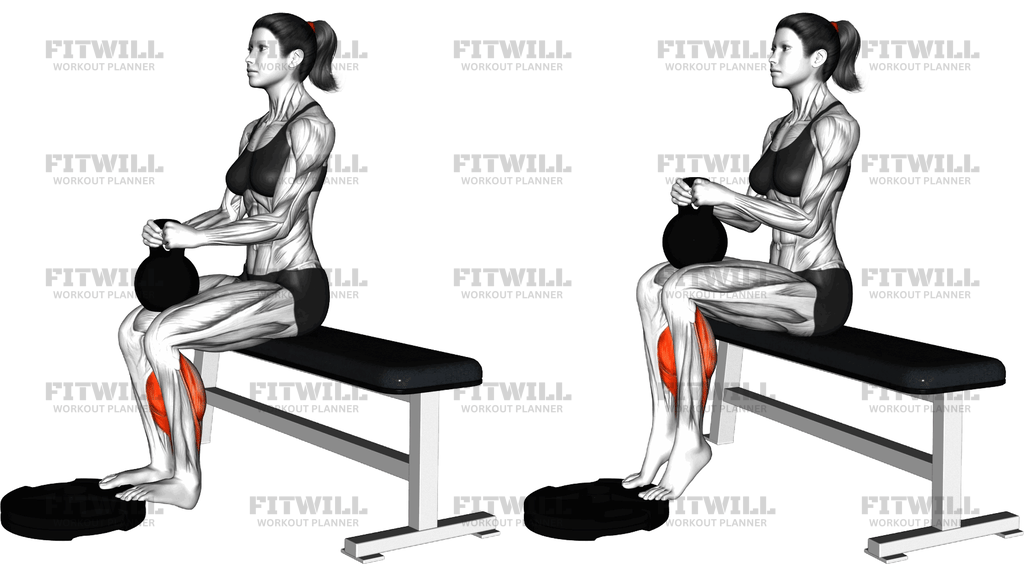
Kettlebell Single Front Squat
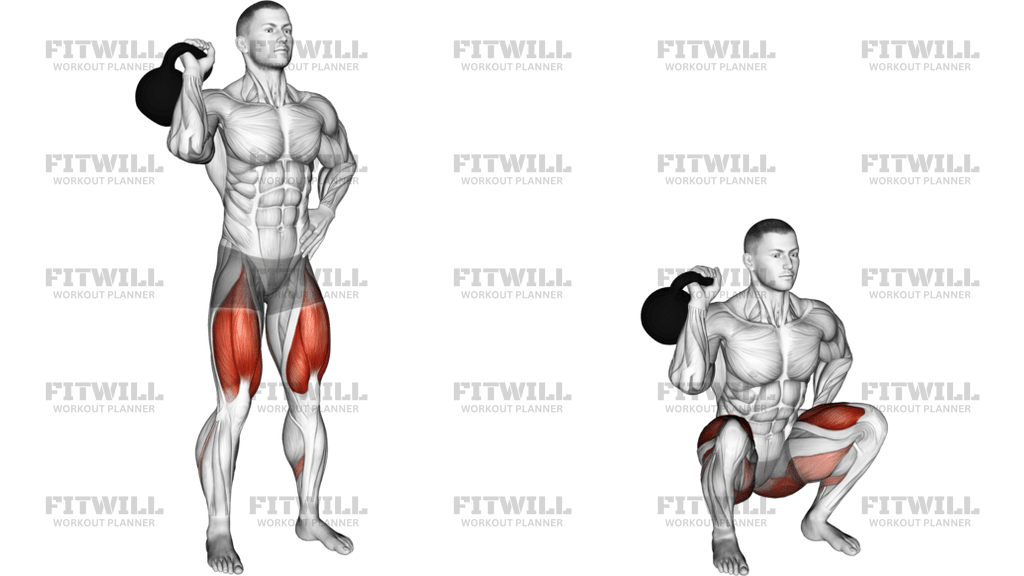
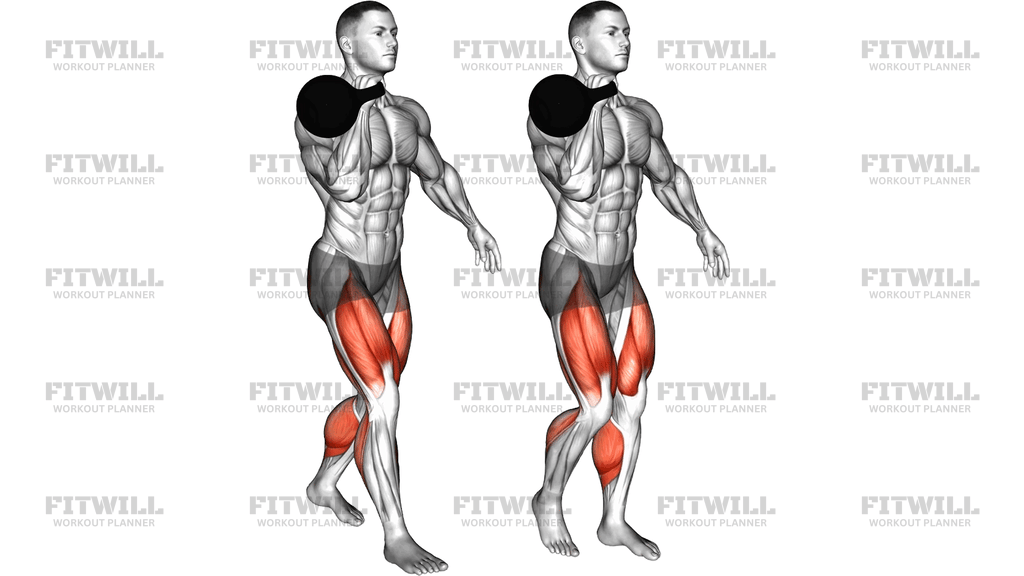
Kettlebell Single Front Squat is a unilateral squat performed with one kettlebell held in the front rack beside one shoulder. It builds quad and glute strength while also challenging the core to resist side bend and rotation, which makes the exercise more demanding than a centered goblet squat. The offset load exposes weak links quickly, so the set should look controlled and symmetrical from the first rep to the last.
The rack position is the anchor for the whole movement. Keep the kettlebell close to the shoulder, the wrist neutral, and the elbow tucked in front of the ribs so the bell rests on the forearm instead of pulling the shoulder forward. Stand with feet about shoulder width or slightly wider, then set your hips and knees so you can squat without shifting toward the loaded side. The free hand can counterbalance, but it should not create a twist through the torso.
Lower by sitting straight down between the heels while keeping the chest tall, the ribs stacked over the pelvis, and the whole foot grounded. The knees should track in line with the toes, and the torso should stay upright enough that the bell does not drag you forward. Pause briefly or change direction under control at the bottom instead of bouncing out of the hole.
Drive back up through the midfoot and heel, keeping the kettlebell tight to the shoulder as you stand. Exhale on the way up, finish tall without leaning back, and reset your stance before the next rep. If the bell makes one hip rise, the heels lift, or the torso collapses toward the load, reduce the weight and clean up the pattern before adding more resistance.
This exercise fits well in lower-body strength work, unilateral training, or core-focused accessory blocks where you want leg work that also demands trunk stability. It can be a useful progression for lifters who already squat well with both hands on a kettlebell or dumbbell and want a more challenging front-loaded variation. Use a load and depth that let every rep stay crisp, because the value of the movement comes from clean positioning rather than forcing extra weight.
[ Workout Log & Planner ]
Put your next workout in Fitwill
Keep your plan and training log ready when you are.


Instructions
- Hold one kettlebell in the front rack beside one shoulder, with the wrist neutral and the elbow tucked in front of the ribs.
- Set your feet about shoulder width or slightly wider, turn the toes out a little if needed, and keep the whole foot planted.
- Square your hips and shoulders before each rep, then brace your trunk without leaning toward the loaded side.
- Sit straight down between the heels while keeping the chest tall and the kettlebell close to the shoulder.
- Let the knees track in line with the toes as you descend to your available depth without losing heel contact.
- Pause briefly at the bottom or reverse smoothly if you are working dynamically, but do not bounce out of position.
- Drive up through the midfoot and heel, keeping the torso upright and the bell tight to the rack.
- Exhale as you stand, finish tall without overextending the lower back, and reset before the next rep.
- Switch sides if you are training both arms, and keep the rep quality even on the weaker side.
Tips & Tricks
- The bell should rest on the forearm and upper arm, not dangle away from the shoulder.
- A slightly wider stance often makes it easier to keep the pelvis level and the knees tracking cleanly.
- Let the free hand counterbalance, but do not let the torso twist toward that side.
- If the loaded shoulder hikes up, reduce the weight and keep the neck long instead of shrugging.
- Heels lifting usually means the stance is too narrow or the squat is deeper than your current control allows.
- Use a slower lowering phase so the offset load cannot pull you into a forward collapse.
- A brief pause in the bottom will expose wobble and make it easier to clean up the pattern.
- Stop the set when the bell starts pulling you sideways or the torso loses its stacked position.
Frequently Asked Questions
What muscles does the Kettlebell Single Front Squat train most?
The quads and glutes do most of the work, with the adductors and trunk muscles helping keep the body upright and centered.
Why use one kettlebell instead of holding it with both hands?
A single bell creates an offset load, so the core has to resist side bend and rotation while the legs drive the squat.
Where should the kettlebell sit during the squat?
It should stay in the front rack beside the shoulder, with the elbow tucked and the bell supported by the forearm and upper arm.
How deep should I go in this squat?
Go only as deep as you can while keeping the heel down, the chest tall, and the pelvis level under the offset load.
What is the most common mistake with this exercise?
Leaning toward the bell or twisting the torso is the most common problem, especially when the load is too heavy.
Can beginners do the Kettlebell Single Front Squat?
Yes, as long as they can keep the rack stable and squat without losing balance or collapsing forward.
How is this different from a goblet squat?
A goblet squat centers the load, while this version places the bell on one side and creates much more anti-rotation demand.
What should I do if the kettlebell pulls me to one side?
Use a lighter bell, widen your stance slightly, and slow the descent until your torso stays centered over the feet.