Kettlebell Single Leg Step-Up
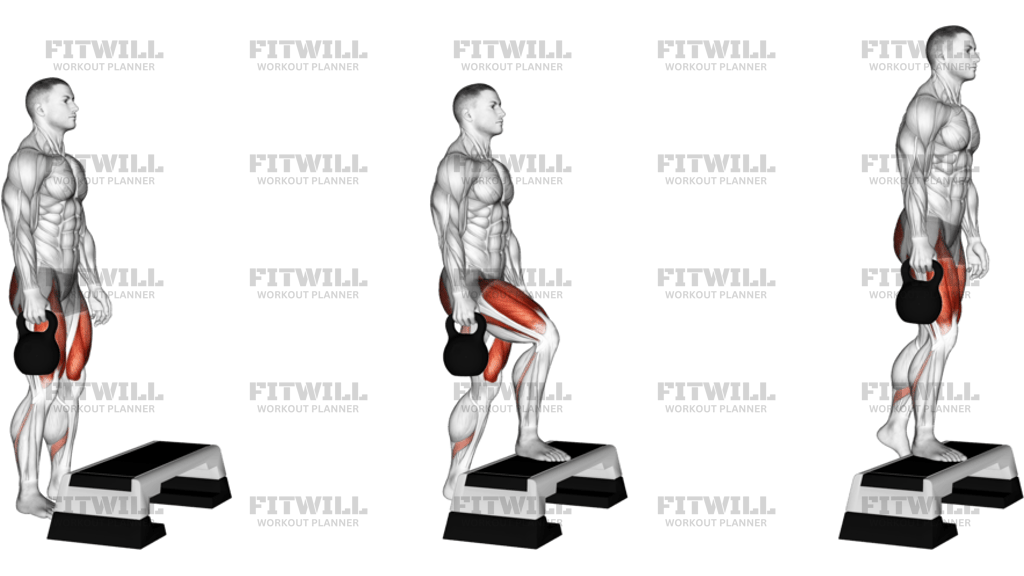
Kettlebell Single Leg Step-Up is a unilateral lower-body exercise that combines a step or box with an offset kettlebell load. It is built to train the lead leg to drive the body upward while the hips, trunk, and stance foot stay organized. The movement is simple on paper, but the real training value comes from how cleanly you can keep the pelvis level, the knee tracking well, and the torso steady as you move up and down.
This exercise is useful for building thigh strength, glute drive, and single-leg balance at the same time. Because only one leg is doing the work, it exposes side-to-side differences quickly and makes compensation obvious. The kettlebell adds a stability demand that forces the trunk and grip to stay quiet while the leg produces the force. That makes it a strong choice for athletes, general strength work, and accessory training when you want one leg to do more of the work than a bilateral lift would allow.
Setup matters more here than on many machine-based exercises. Pick a box or bench height that lets the working foot stay flat and the knee bend without forcing a hop. Hold the kettlebell in one hand at your side, stand close enough that the working foot can land fully on the platform, and keep the ribcage stacked over the pelvis before you start. The free leg should remain relaxed and ready to follow rather than helping you jump off the floor.
On each repetition, drive through the full foot that is on the step and stand up under control. The upward phase should feel like a strong press through the heel and midfoot, not a bounce from the trailing leg. At the top, finish tall without leaning back or twisting. On the way down, lower with the same control you used to stand up so the working leg absorbs the load instead of dropping you into the next rep. Breathing should stay steady: brace before the drive, exhale as you stand, and reset before the next descent.
Use Kettlebell Single Leg Step-Up when you want a practical strength drill that also trains coordination, balance, and clean force transfer. It fits well in lower-body strength blocks, warm-ups, unilateral accessory work, or athletic preparation. Keep the box height, load, and tempo conservative enough that every rep looks the same. If the knee caves inward, the hip hikes, or the rear leg starts jumping the body up, the load or step height is too aggressive for productive work.
[ Workout Log & Planner ]
Put your next workout in Fitwill
Keep your plan and training log ready when you are.


Instructions
- Stand facing a box or bench and hold a kettlebell in one hand at your side.
- Place the working foot flat on the platform with the heel down and the other foot on the floor.
- Brace your torso, keep your chest tall, and square your hips before you start.
- Lean slightly forward from the hips and load the foot that is on the box.
- Drive through the heel and midfoot of the elevated foot to stand up.
- Keep the trailing leg light and avoid pushing off the floor leg to jump up.
- Finish tall at the top with your hips and knee extended and your shoulders level.
- Lower yourself under control until the free foot returns to the floor, then reset for the next rep.
Tips & Tricks
- Choose a box height that lets the working foot stay flat; if you need to hop, the step is too high.
- Keep the kettlebell quiet beside your thigh so the load challenges balance without turning into a swing.
- Let the elevated leg do the work; the floor leg should not give you a push that changes the rep.
- Track the knee over the middle toes instead of letting it cave inward as you stand.
- Stay tall at the top without leaning back or over-arching your lower back.
- Use a slow, controlled lowering phase so the working leg owns the descent as well as the ascent.
- If your grip gives out before your legs, reduce the kettlebell load before reducing the box height.
- Stop the set when the pelvis starts to twist or the torso starts drifting sideways to save the rep.
Frequently Asked Questions
What muscles does Kettlebell Single Leg Step-Up work?
It primarily trains the quads and glutes, with the hamstrings, calves, and core helping keep the body stable and upright.
Should the kettlebell be held in one hand or two?
Hold it in one hand at your side. That offset load makes the torso and hips work harder to stay level.
How high should the box or bench be?
Use a height that lets you place the whole foot flat on top and stand without hopping or twisting.
Should I push off the floor leg?
No. The foot on the box should do most of the work, and the floor leg should stay light and controlled.
Can beginners do this exercise?
Yes. Beginners should start with a low step and little or no kettlebell load until they can control the descent.
Why does my hip tilt or my torso lean to one side?
That usually means the box is too high or the kettlebell is too heavy for your current single-leg control.
Where should I feel the lift most?
You should feel the working leg doing the main drive, with the glute and thigh sharing the effort while the trunk stays stable.
What is a good substitution if the step-up bothers my knee?
Lower the platform first, then reduce the load. If that still irritates the knee, try a supported split squat or bodyweight step-up.