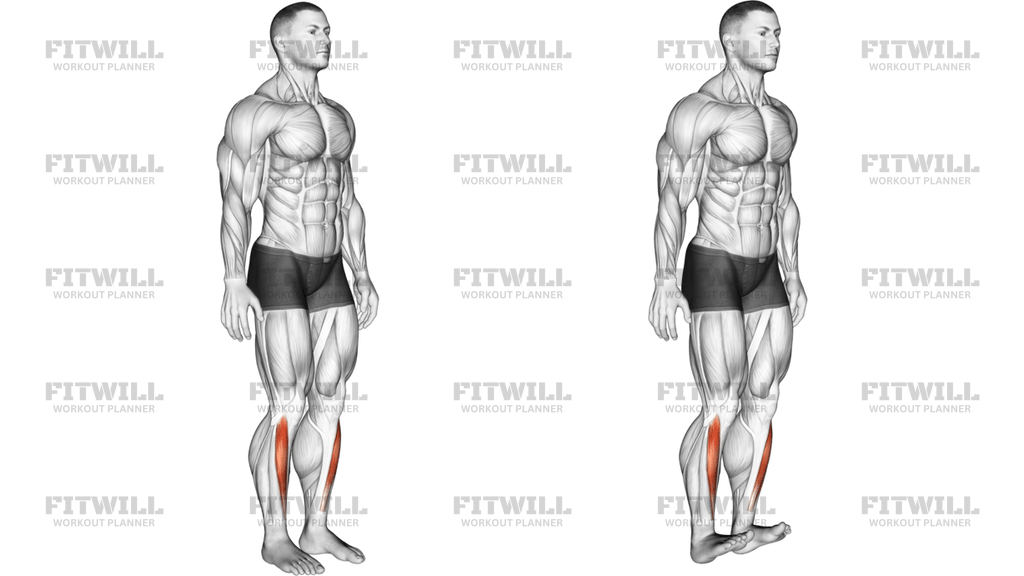
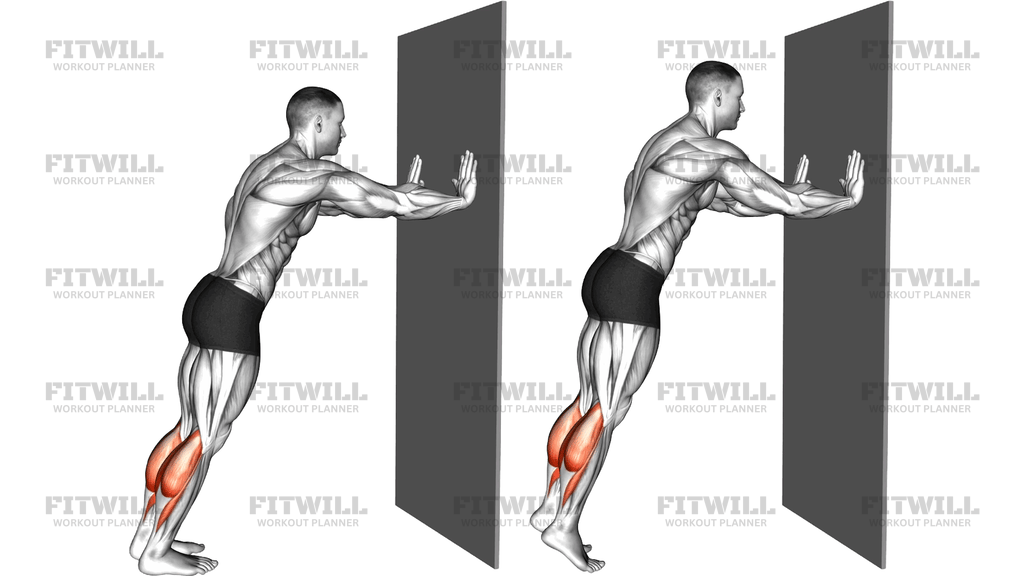
Squat Hold Calf Raise
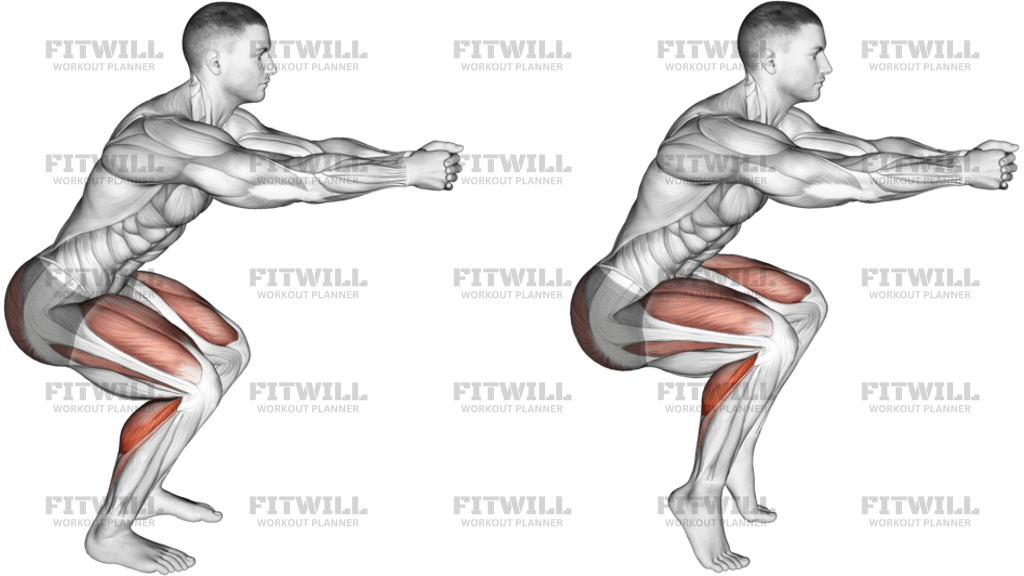
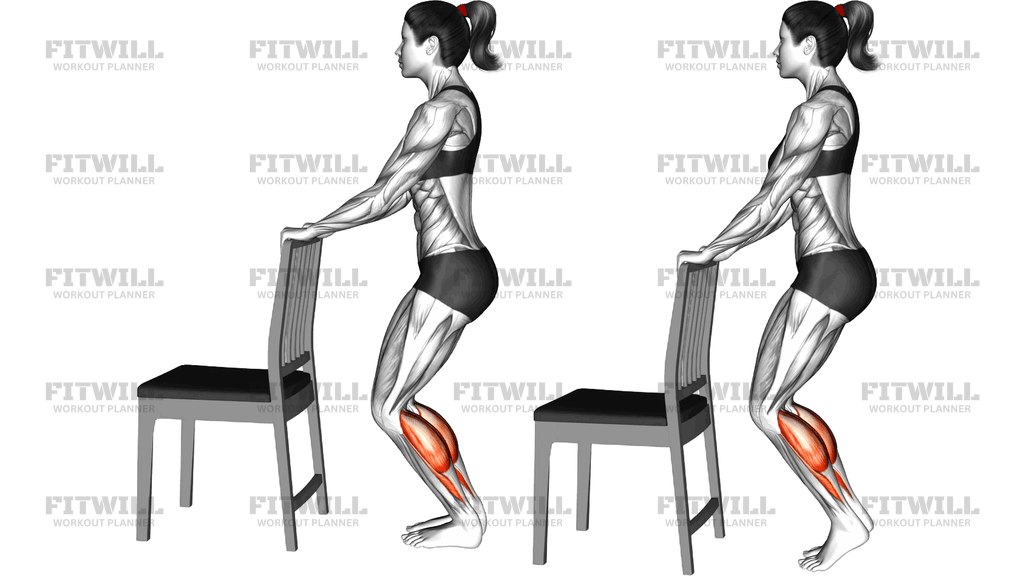
Squat Hold Calf Raise is a bodyweight lower-body exercise that keeps you in a fixed squat while the heels lift and lower through the ankles. The bent-knee position changes the feel of the calf work, making this movement especially useful for training calf strength and endurance without needing a machine or external load. It also keeps the thighs, hips, and trunk working isometrically so the whole position stays stable while the ankles do the moving.
The exercise is most useful when you want focused calf work with a strong balance and posture demand. Because the knees stay bent, the calves have to produce force from a shortened angle, and the soleus does a lot of the work while the quads and glutes keep the squat position from collapsing. That makes Squat Hold Calf Raise a good accessory choice for leg days, warm-ups, finishing work, or home sessions where you want a simple movement with very little setup.
The setup matters more than it looks. Drop into a controlled squat, keep your chest lifted, and let your weight sit over the balls of the feet without letting the arches cave in or the knees cave inward. The torso should stay long and braced, and the squat depth should be shallow enough that you can raise the heels without standing up. If the hips rise during the rep, you lose the constant tension that gives the movement its value.
Each repetition should feel like a clean ankle action inside a steady squat hold. Lift the heels as high as you can while keeping the knee angle nearly unchanged, then lower them slowly until the feet are back under control. A short pause at the top helps you avoid bouncing through the ankles, and the lowering phase should be deliberate so the calves stay loaded instead of resting on momentum.
Squat Hold Calf Raise is a practical option for beginners and experienced lifters alike because it uses body weight and rewards control more than load. It is also easy to scale by using a smaller squat, a shorter heel lift, or light fingertip support on a wall or rack. Keep the motion pain-free and stop the set when you can no longer hold the squat height, heel height, and foot position together with good control.
[ Workout Log & Planner ]
Put your next workout in Fitwill
Keep your plan and training log ready when you are.


Instructions
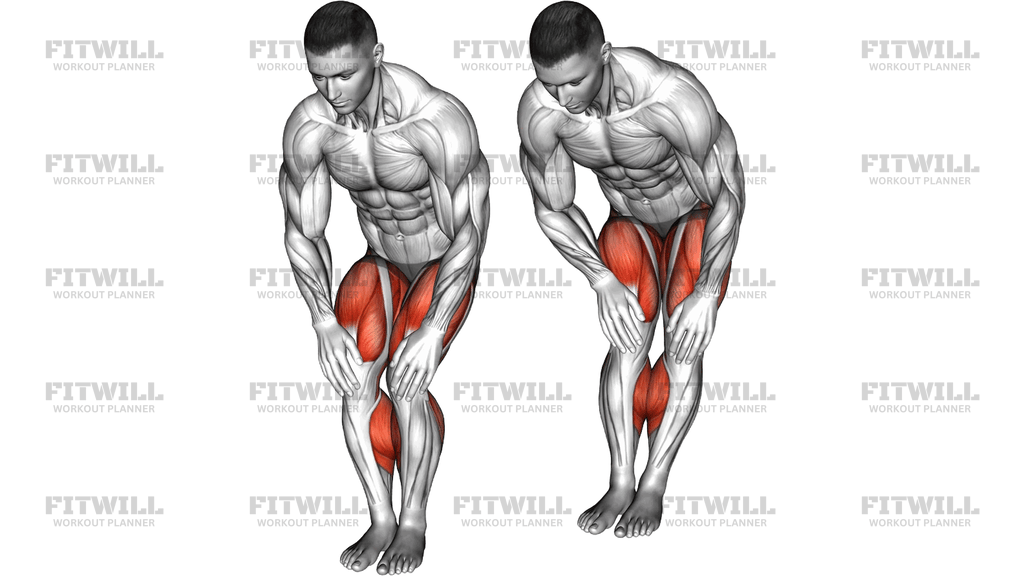
- Stand with your feet about hip-width apart, then sink into a shallow squat with your arms reaching forward for balance.
- Keep your chest lifted, your heels grounded, and your weight centered over the balls of your feet before you start the first rep.
- Brace your trunk and let your knees track over the second and third toes instead of collapsing inward.
- Press through both forefeet and lift your heels as high as you can without straightening your knees or rising out of the squat.
- Hold the top briefly so the calves do the work instead of a quick bounce.
- Lower the heels slowly until they are back on the floor while keeping the squat angle nearly unchanged.
- Keep your breathing steady, exhaling as the heels rise and inhaling as they lower.
- Continue for the planned reps, then stand up smoothly before you reset or rack the set.
Tips & Tricks
- Keep the knee bend the same from start to finish; if the hips rise, the squat hold is turning into a different exercise.
- Think about lifting from the big toe and second toe so the arches do not collapse inward as the heels come up.
- Use a shallower squat if you cannot raise the heels without folding your torso forward.
- A slow lower keeps the calves loaded longer and makes the set harder without adding equipment.
- Light fingertip support on a wall or rack is fine if balance is limiting your calf work.
- The bent-knee position shifts more work toward the soleus, so do not expect it to feel exactly like a straight-leg calf raise.
- Do not bounce at the bottom; let the heels settle with control before the next rep.
- Stop the set when you can no longer keep the squat height, heel height, and knee tracking consistent.
Frequently Asked Questions
What muscles does Squat Hold Calf Raise work?
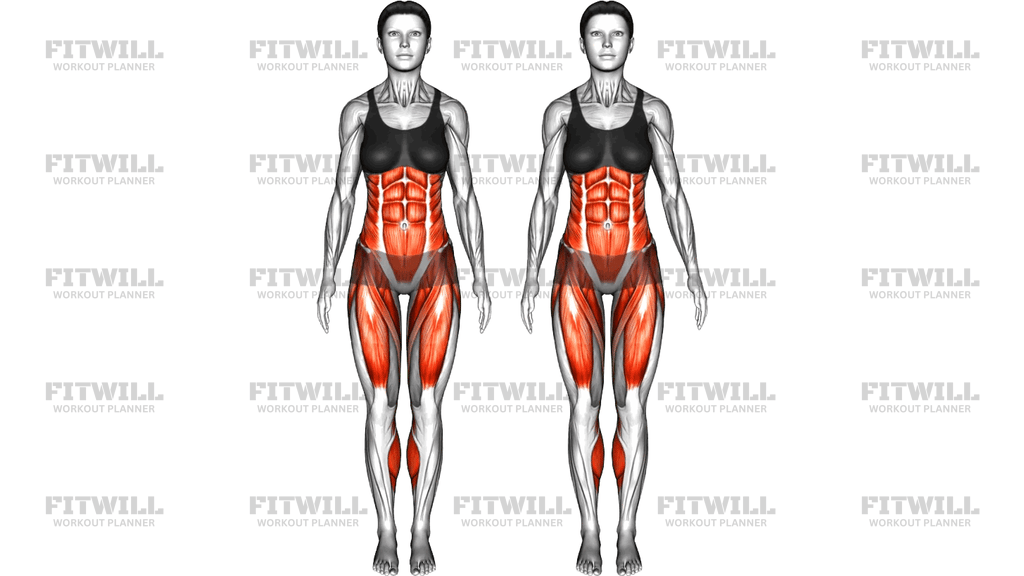
It mainly trains the calves, especially the soleus, while the quads, glutes, and core stay active to hold the squat position.
Should my heels stay down in Squat Hold Calf Raise?
Your heels start grounded in the squat, then lift and lower through each rep. The squat angle stays fixed while the ankles do the movement.
How deep should the squat be for Squat Hold Calf Raise?
Use a shallow to moderate squat that lets you raise the heels without standing up. If your torso folds forward, reduce the depth.
Is Squat Hold Calf Raise good for beginners?
Yes. Body weight makes it accessible, and beginners can keep the squat smaller or use light support until balance improves.
What is the biggest mistake in Squat Hold Calf Raise?
Letting the hips rise as the heels lift is the most common issue. That reduces tension on the calves and turns the set into a partial squat.
Can I hold onto something during Squat Hold Calf Raise?
Yes. A light fingertip hold on a wall, post, or rack can help you stay steady without taking much load off the calves.
How is Squat Hold Calf Raise different from a regular calf raise?
The bent-knee squat hold changes the leverage and puts more emphasis on the soleus while the thighs keep the body locked in place.
Why do I feel Squat Hold Calf Raise in my thighs too?
That is expected because the quads and glutes are holding the squat isometrically while the calves move through the heel raise.