Kettlebell Overhead Carry
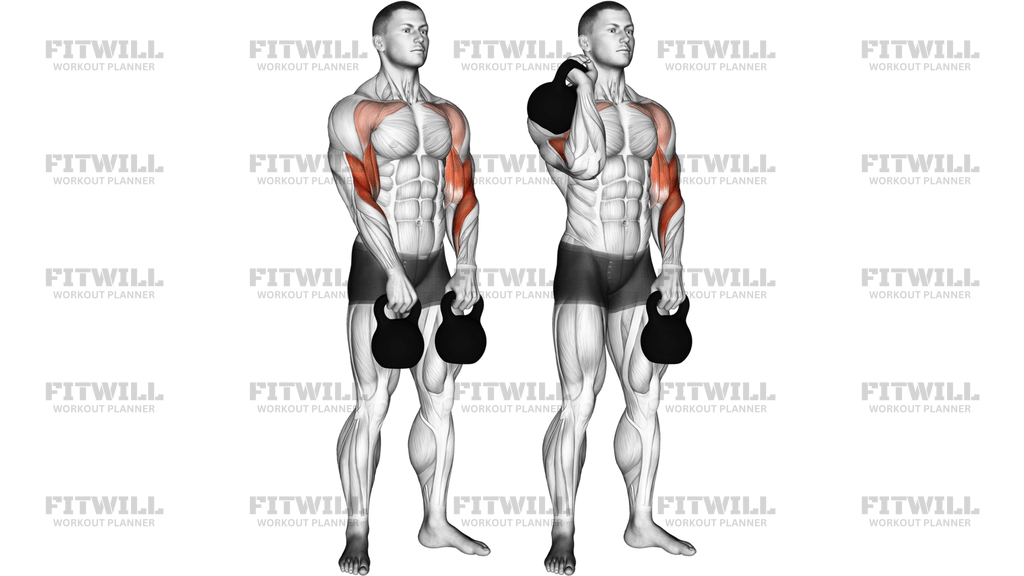
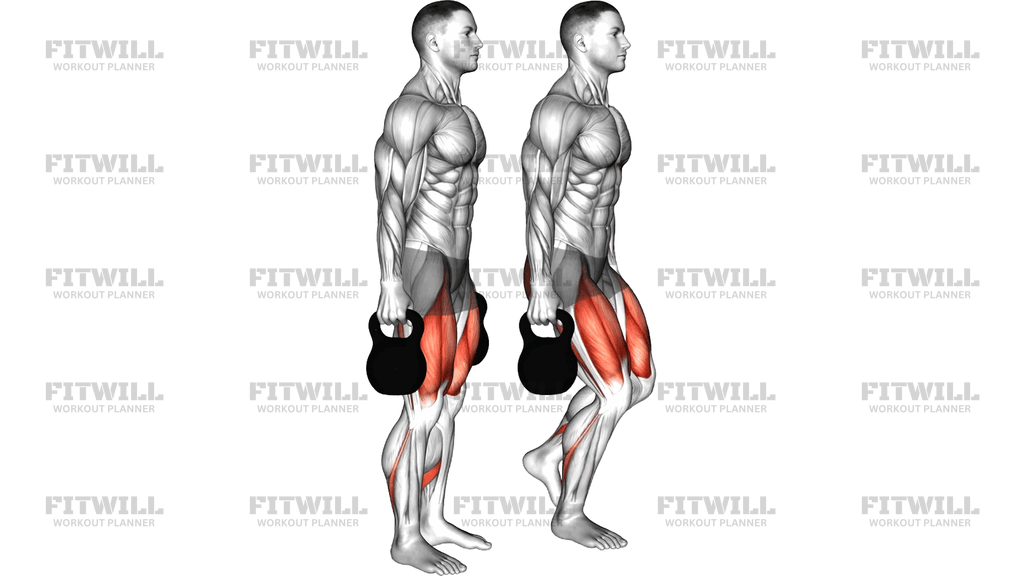
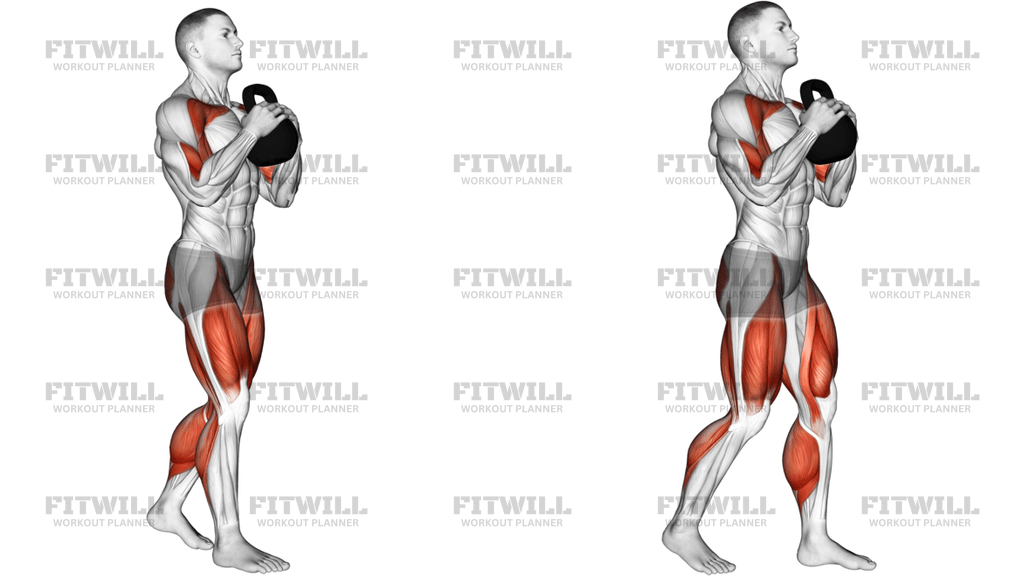
Kettlebell Overhead Carry is a loaded walking drill where you hold the kettlebell locked out overhead and move forward with deliberate, upright steps. It builds shoulder endurance, trunk stiffness, grip control, and the ability to keep the ribcage, pelvis, and feet organized while the weight is no longer in a comfortable rack position. The movement looks simple, but the overhead position exposes every small loss of posture, so the best repetitions are the ones that stay quiet and steady from start to finish.
The overhead hold changes the entire demand of the exercise. Once the kettlebell is above your head, your shoulder has to stay active, the elbow has to remain straight, and the torso has to resist side-bending or arching as each foot leaves the floor. If the bell drifts behind your ear, the ribs flare, or the body leans away from the load, the carry stops training stability and starts borrowing from the low back and neck. A good setup keeps the wrist stacked over the elbow and the elbow stacked over the shoulder before you take the first step.
Use a stance that feels narrow enough to walk naturally but wide enough to stay balanced. Stand tall, press the kettlebell to full lockout, and reach up through the shoulder without shrugging into the neck. Keep your eyes forward, your ribs down, and your glutes lightly on so the pelvis does not tip forward as fatigue rises. The carry should feel like you are walking under a fixed point in space, not like you are chasing the bell with your body.
During the walk, take short controlled steps and keep the kettlebell directly over the midline of the body. The free arm should stay quiet, the torso should not twist, and the shoulders should stay level as you move. Breathe through short, controlled exhales so you can keep the brace without holding your breath the entire time. When the set is finished, lower the kettlebell carefully and reset before the next carry instead of stumbling into the next rep.
This is a useful accessory for shoulder stability work, overhead confidence, trunk control, and conditioning that still rewards clean mechanics. It also pairs well with warmups, core-focused sessions, carries, and athletic training blocks where posture under load matters. Start lighter than you think you need, because the overhead position gets harder quickly as the walk goes on. If the shoulder pinches, the ribs flare, or your steps become uneven, shorten the distance or reduce the load before the pattern breaks down.
[ Workout Log & Planner ]
Put your next workout in Fitwill
Keep your plan and training log ready when you are.


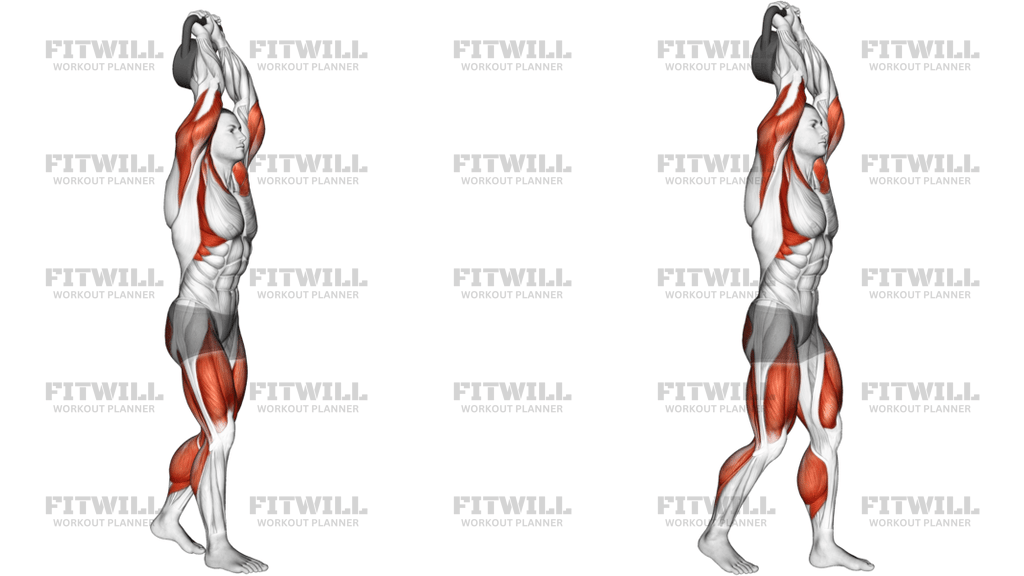
Instructions
- Stand tall with the feet about hip-width apart and bring the kettlebell overhead until the elbow is straight and the bell is stacked over the shoulder.
- Set the wrist, elbow, and shoulder in one line, with the forearm vertical and the kettlebell centered over the midfoot.
- Keep the ribs down and lightly squeeze the glutes so the lower back does not arch as the load goes overhead.
- Fix your gaze forward, relax the neck, and keep both shoulders level before you take the first step.
- Walk forward with short, controlled steps while keeping the bell directly above the body instead of drifting behind you.
- Keep the torso upright and resist twisting or leaning away from the kettlebell as you move.
- Breathe in small, controlled breaths and exhale without losing the stacked overhead position.
- Turn around only if your program calls for a longer carry, or lower the kettlebell carefully once the planned distance or time is complete.
Tips & Tricks
- Start with a lighter kettlebell than you would use for a rack carry, because the overhead position punishes small posture errors fast.
- If the bell sits behind your ear, the shoulder loses a clean line and the low back usually starts compensating.
- Keep the step length short enough that the pelvis stays level; long strides often create side-to-side sway.
- Think about reaching upward through the shoulder rather than shrugging the neck toward the ear.
- A soft bend in the knees is fine, but the carry should still look tall and organized, not like a partial squat walk.
- The free hand should stay quiet at your side instead of swinging for balance.
- If your ribs flare or you feel your lower back taking over, shorten the distance before adding load.
- Use a smooth walking pace; rushing the steps usually makes the kettlebell drift and the torso tilt.
Frequently Asked Questions
What does the kettlebell overhead carry train?
It trains shoulder stability, core control, grip endurance, and the ability to keep the trunk stacked while walking.
How should the kettlebell sit overhead?
The wrist, elbow, and shoulder should be stacked, with the bell centered over the midfoot and the arm locked out.
Should I keep my ribs down during the carry?
Yes. If the ribs flare, the lower back usually arches to save the overhead position.
What is the most common mistake with this exercise?
Letting the kettlebell drift behind the head or leaning away from the load are the most common breakdowns.
Can beginners do kettlebell overhead carries?
Yes, but they should start light and keep the walk short enough to maintain a clean overhead line.
How far should I walk with the kettlebell overhead?
Use a distance or time that lets you stay tall and steady; stop before the shoulders or torso start to wobble.
Why do my shoulders and upper back feel this more than my legs?
The legs move you forward, but the shoulders, upper back, and trunk have to keep the weight stacked while you walk.
What should I do if my neck starts to tighten?
Lower the load, relax the shoulders away from the ears, and reduce the carry distance until the neck stays quiet.