Cobra Yoga Pose
Cobra Yoga Pose is a prone back extension performed on the floor to open the front of the body while training controlled spinal extension. It is commonly used as a yoga drill, mobility reset, or low-load accessory movement that teaches you to lift the chest without dumping all the work into the lower back. The body weight setup makes the line of the movement more important than force: the hips stay grounded, the hands support only as much as needed, and the chest rises because the spine extends in a smooth arc.
The pose emphasizes the spine, chest, shoulders, and the muscles that stabilize the torso while the hips and legs stay lightly engaged. Done well, Cobra Yoga Pose creates a long stretch through the abdomen and hip flexors and a controlled contraction through the back of the body. It is not about cranking the head upward or forcing a deep bend. The better rep is the one where the pelvis stays heavy, the ribs stay organized, and the upper body rises with calm breath and clean alignment.
Setup matters because Cobra starts from the floor, with the whole body already under tension. Lie prone with your legs extended behind you, tops of the feet on the floor, and your hands near the lower ribs or just under the shoulders. From there, press the pubic bone and thighs gently into the floor, draw the shoulders away from the ears, and use the hands only to guide the chest upward. The elbows stay close to the sides so the lift comes from the back and not from shrugging into the shoulders.
At the top, the sternum should reach forward more than the chin reaches up. The neck stays long, the gaze stays slightly ahead of the mat, and the lower ribs do not flare aggressively. Lower back comfort is the key limiter for most people, so the lift should be as high as you can hold while breathing normally and keeping the pelvis down. This makes Cobra Yoga Pose useful for warmups before pressing, hinging, or overhead work, and also as a gentle drill for posture and spinal extension tolerance.
Because it is a bodyweight floor movement, Cobra Yoga Pose is easy to scale. Keep the lift small for beginners, use short holds, or place less pressure through the hands if the lower back is sensitive. More advanced practitioners can slow the rise and lower phases, hold the top position longer, or pair it with breathing drills. The goal is a repeatable, pain-free backbend that feels open through the front line of the body and controlled through the trunk, not a max-height pose.
[ Workout Log & Planner ]
Put your next workout in Fitwill
Keep your plan and training log ready when you are.


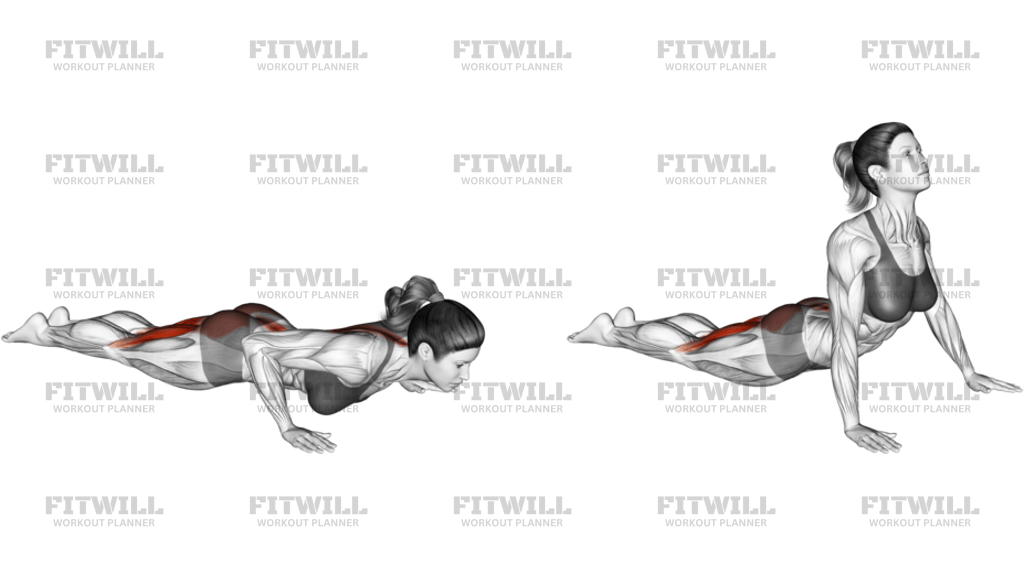
Instructions
- Lie face down with your legs extended, the tops of your feet on the floor, and your hands placed beside the lower ribs or just under the shoulders.
- Set your legs long behind you and press the pubic bone and thighs gently into the floor so the pelvis stays anchored.
- Draw your shoulders away from your ears and lightly pull your elbows toward your sides before you start to lift.
- Inhale and begin to raise the chest by straightening the arms just enough to support the movement, not to shove the shoulders forward.
- Keep the hips, thighs, and pelvis heavy on the floor while the sternum reaches forward and up.
- Keep the neck long and the gaze slightly ahead of the mat instead of tipping the chin sharply upward.
- Hold the top briefly with steady breathing, then exhale as you lower the chest back down under control.
- Reset the shoulders and ribs on the floor before the next repetition, then repeat for the planned number of reps or hold time.
Tips & Tricks
- Start with the hands low on the ribs if you want more back extension and less arm-driven press.
- Keep the elbows soft and close to the torso so the shoulders do not collapse forward or shrug up.
- Think about lengthening the spine forward as you rise; that keeps the bend smoother than trying to crank the chest straight up.
- If your lower back feels compressed, lift lower and focus on a smaller, cleaner arc.
- Keep the pubic bone and upper thighs pressing into the floor so the pelvis does not peel off early.
- Let the breath stay quiet and controlled; holding your breath usually makes the lumbar area tense up.
- A gentle hold at the top is more useful than chasing height with an unstable neck or flared ribs.
- If the shoulders feel pinchy, move the hands slightly farther forward and reduce the amount of arm support.
Frequently Asked Questions
What does Cobra Yoga Pose work?
It mainly trains spinal extension, with emphasis on the back of the torso, chest opening, shoulder stability, and gentle hip flexor lengthening.
Where should my hands go in Cobra Yoga Pose?
Place your hands beside the lower ribs or just under the shoulders so you can lift the chest without overloading the low back.
How high should I lift in Cobra Yoga Pose?
Lift only as high as you can while keeping the pelvis down, the neck long, and the breath smooth. A smaller lift is often better than a bigger one.
How is Cobra different from Upward-Facing Dog?
Cobra keeps the hips and thighs grounded, while Upward-Facing Dog usually involves more arm support and the thighs lifting off the floor.
Can beginners do Cobra Yoga Pose?
Yes. Beginners usually do best with a low lift, short holds, and a focus on keeping the ribs and pelvis organized.
What should I do if my lower back feels tight?
Reduce the height of the lift, press the thighs down, and keep the ribs from flaring. If it still feels uncomfortable, skip the hold and shorten the range.
Should I feel this in my shoulders or arms?
Some support from the arms is normal, but the shoulders should feel long and stable rather than jammed up toward the ears.
When is Cobra Yoga Pose useful in a workout?
It works well in a warmup, mobility sequence, recovery session, or as a light accessory drill before pressing, hinging, or overhead work.