Seated Twist Straight Arm
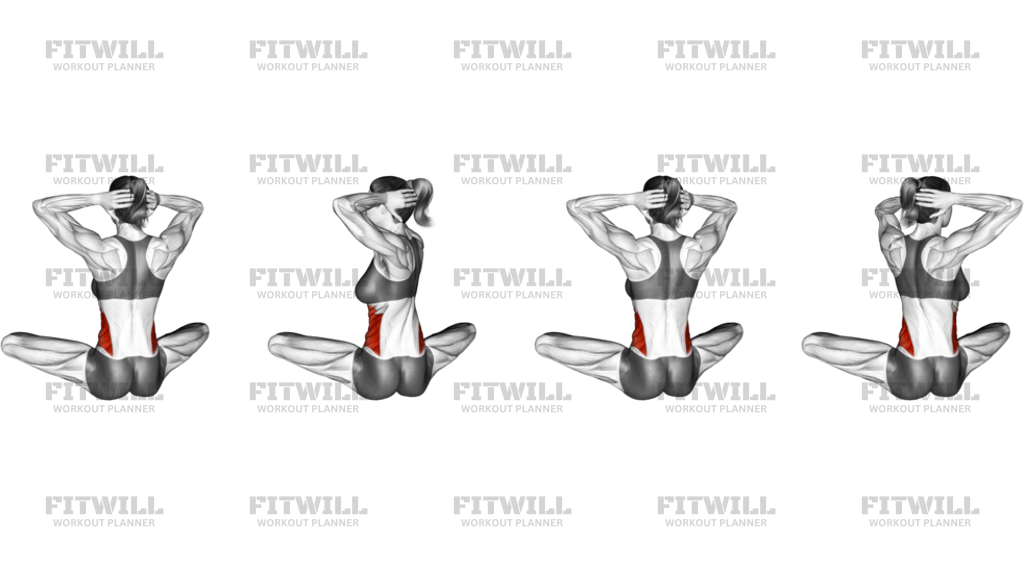
Seated Twist Straight Arm is a bodyweight rotational drill for the waist, core, and hips. It trains you to turn from the ribs and trunk while keeping the arms long and the pelvis anchored, which makes it useful for core control, warm-ups, mobility work, and low-load training days. The movement looks simple, but the quality comes from staying tall, keeping both sit bones heavy, and rotating without collapsing through the lower back.
The straight-arm position matters because it gives you a clear line from the shoulders through the fingertips. When the arms stay long, the torso has to organize the twist instead of letting the elbows bend and steal the work. That makes Seated Twist Straight Arm a good option for anyone who wants cleaner rotational control, better awareness of trunk position, or a gentle way to open the hips and spine before harder training.
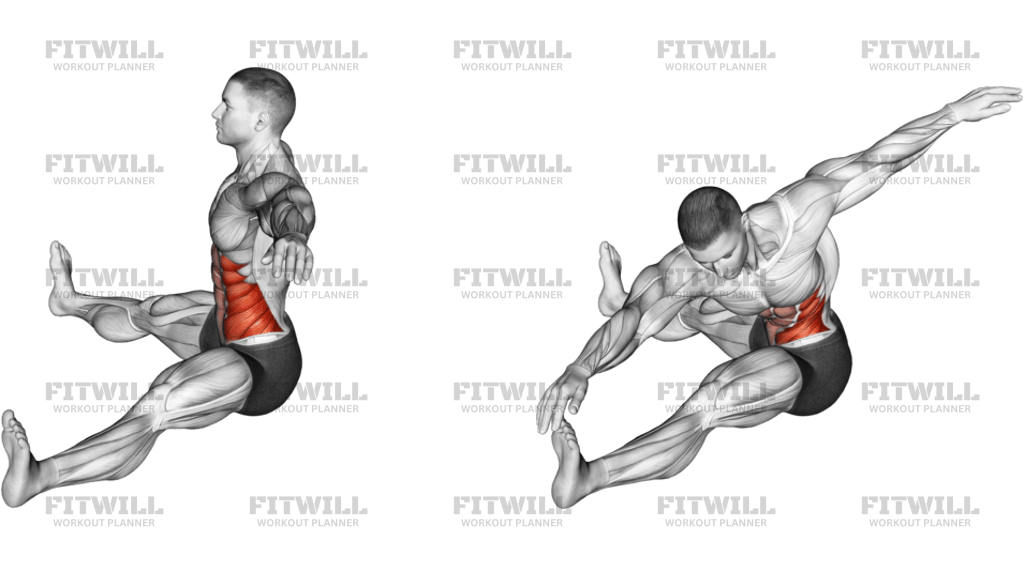
Start by sitting on the floor with your legs opened in a comfortable V and your spine tall. From there, rotate toward one leg, reaching the front hand toward the foot while the opposite arm stays long behind you. The goal is not to force the biggest possible turn; it is to keep the chest lifted, the shoulders relaxed, and the movement smooth as you move into and out of the twist.
This exercise fits well in core circuits, mobility sessions, and warm-ups because it teaches controlled rotation without load. It can also be used as a down-regulation drill after heavy lifting or running, especially if your hips and mid-back feel stiff. If your pelvis rounds backward or your low back starts to pinch, shorten the range, sit on a folded mat, or bend the knees slightly so the spine can stay organized.
Done well, Seated Twist Straight Arm should feel like a controlled reach and turn through the waist, not a yank from the shoulders. Keep the movement deliberate, breathe out as you rotate, and come back to center with the same control you used on the way into the twist. The exercise is especially useful when you want rotational work that is precise, low impact, and easy to repeat for quality reps.
[ Workout Log & Planner ]
Put your next workout in Fitwill
Keep your plan and training log ready when you are.


Instructions
- Sit on the floor with your legs opened in a comfortable V, heels down, sit bones grounded, and both arms straight out at shoulder height.
- Lift your chest, lengthen through the crown of your head, and set your shoulders down so your torso stays tall before you twist.
- Keep a soft bend in the knees if your hamstrings pull your pelvis backward or make it hard to sit upright.
- Rotate your ribcage toward one leg while keeping both arms long and level with your shoulders.
- Reach the front hand toward the shin or foot and let the opposite arm sweep behind you without bending either elbow.
- Keep both sit bones close to the floor and stop the turn before your lower back rounds or the opposite hip lifts.
- Exhale as you deepen the twist, then hold the end position briefly without bouncing.
- Return to center under control, reset your tall posture, and repeat on the other side for the planned number of reps.
- When the set is finished, unwind slowly and bring the legs back in before standing up.
Tips & Tricks
- Keep both sit bones heavy; if one starts to pop off the floor, the twist has gone too far.
- Think about turning the ribs over the hips instead of reaching the shoulders around first.
- A long front arm makes the drill harder to cheat and keeps the rotation honest.
- If your knees drift upward, sit on a folded mat or widen the legs a little less.
- Do not let the front hand collapse onto the leg; keep reaching through the fingertips.
- Move slowly through the center so you do not rock side to side between reps.
- Exhale as you rotate to help the waist tighten without bracing so hard that the chest caves.
- A smaller twist with a tall spine is better than a bigger twist with a rounded lower back.
- If the hips feel tight, keep the pelvis square and reduce the leg width before forcing depth.
Frequently Asked Questions
What does Seated Twist Straight Arm work most?
It mainly trains the obliques and deep core, with the hips and spinal stabilizers helping you keep the twist organized.
Should my legs be straight or bent in Seated Twist Straight Arm?
A wide V-sit works well, but you can soften the knees if tight hamstrings pull your pelvis backward and make it hard to sit tall.
How far should I rotate in Seated Twist Straight Arm?
Twist only as far as you can keep both sit bones close to the floor and your chest lifted; the set should feel controlled, not forced.
Why do the arms stay straight during Seated Twist Straight Arm?
Straight arms keep the shoulders and torso connected so the rotation comes from the trunk instead of turning into a bent-arm reach.
Is Seated Twist Straight Arm a mobility exercise or a core exercise?
It is both: the drill builds rotational control through the waist while also giving the hips and mid-back a gentle mobility challenge.
Can beginners do Seated Twist Straight Arm?
Yes. Beginners should use a smaller range, sit on a folded mat if needed, and keep the spine tall instead of chasing a big twist.
What should I do if I feel Seated Twist Straight Arm in my lower back?
Shorten the twist, keep the chest taller, and stop before the pelvis rolls back. If needed, bring the legs in a little closer.
When is Seated Twist Straight Arm useful in a workout?
It works well in a warm-up, core circuit, or cooldown when you want controlled rotation without adding load or impact.