Push With Chair
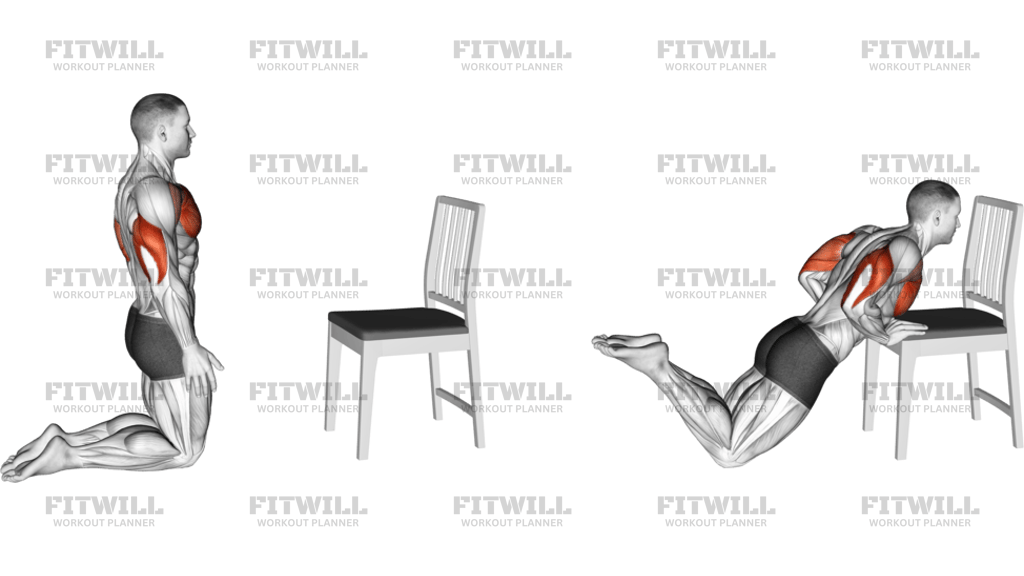
Push With Chair is a bodyweight pressing exercise performed with the hands on a sturdy chair and the knees on the floor. The elevated hand position shortens the lever compared with a floor push-up, which makes the movement easier to learn and easier to control while still training the chest, triceps, and front shoulders. It is a useful bridge between wall or bench push-ups and more demanding floor variations.
The chair changes the whole mechanics of the rep, so setup matters. Your hands need a stable, non-slip surface, your knees need to stay anchored, and your torso should stay in a straight line from knees to head. When the chair is placed securely and your body stays braced, the exercise teaches clean pressing without collapsing through the lower back or dumping all of the work into the shoulders.
Each repetition should feel like a controlled press away from the chair. Lower your chest toward the seat with the elbows tracking slightly out from the ribs, then drive the chair away until the arms are straight again. That path keeps tension on the chest and triceps while letting the shoulder blades move naturally. Because the hands are elevated, the bottom position is usually easier on beginners than a floor push-up, but the same control rules still apply.
This variation is useful for beginners, for warm-ups, for higher-rep accessory work, and for anyone rebuilding push-up strength after a layoff. It also makes a practical regression when a standard push-up is still too heavy. The goal is not to rush through reps, but to own the angle, keep the chair stable, and build the pressing pattern with consistent breathing and clean form. If the set starts to wobble, shorten the range or end the set before the shoulders start to shrug and the hips begin to sag. Over time, that controlled progression makes the chair version a reliable stepping stone toward stronger horizontal pressing and better push-up mechanics overall. Once the knee-supported chair version feels smooth, you can reduce the angle or move to a lower support to keep progressing.
[ Workout Log & Planner ]
Put your next workout in Fitwill
Keep your plan and training log ready when you are.


Instructions
- Place a sturdy chair on a flat, non-slip surface or brace it against a wall, then kneel on the floor facing the seat.
- Set both hands on the front half of the chair seat slightly wider than shoulder width, with fingers spread and wrists stacked under the hands.
- Slide your knees back until your body forms one straight line from knees through hips and shoulders to your head.
- Tighten your glutes and keep your ribs down so your lower back does not sag as you start the rep.
- Inhale and lower your chest toward the seat by bending the elbows and keeping them angled about 30 to 45 degrees from your torso.
- Stop when your chest comes close to the chair without shrugging your shoulders or losing control of the torso.
- Exhale and press firmly through the palms to extend the elbows and return to the starting position.
- Reset the brace at the top, keep the chair steady, and repeat for the planned number of reps.
Tips & Tricks
- A heavy or slippery chair is not optional here; if it moves, the rep quality drops immediately.
- Keep your knees behind your hips only as far as you can maintain a straight line through the torso.
- If your shoulders feel jammed, bring your elbows a little closer to your sides and shorten the bottom range.
- Think about lowering the chest toward the seat rather than letting the head reach forward first.
- Press the seat away with the whole palm, especially through the base of the index finger and thumb.
- A slower descent makes the movement harder without needing a lower chair or extra load.
- Do not let the hips drift back into a pike; that turns the exercise into something less like a push-up.
- Stop the set when the chest stops moving smoothly and the shoulders start to shrug or wobble.
Frequently Asked Questions
What muscles does Push With Chair train?
It mainly trains the chest, triceps, and front shoulders, with the core and upper back helping keep the torso rigid.
Is this easier than a standard floor push-up?
Yes. Elevating the hands on the chair reduces how much bodyweight you have to press, so it is a common push-up regression.
Where should my hands go on the chair seat?
Place them on the front half of the seat, a little wider than shoulder width, so your wrists stay under control and the chair does not tip forward.
How far should I lower my chest?
Lower until your chest comes close to the seat or you feel a solid stretch without losing shoulder position or arching your lower back.
What is the most common form mistake?
Letting the hips sag or the shoulders shrug up toward the ears is the biggest issue because it shifts stress away from the pressing muscles.
How can I make Push With Chair harder?
Slow the lowering phase, pause near the bottom, move the knees farther back, or progress to a lower support once the chair version feels easy.
Can I use this as a beginner push-up drill?
Yes. It is a good beginner drill because the elevated hands reduce the load while still teaching the push-up path and torso control.
Why does the chair need to be so stable?
If the chair slides or tips, your shoulders and wrists absorb the sudden movement and the press pattern breaks down.