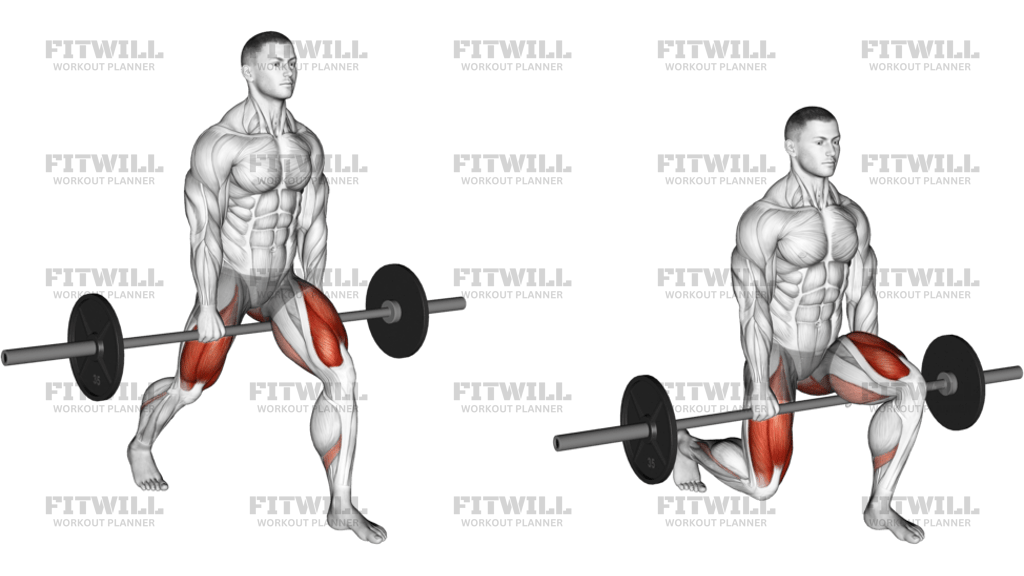
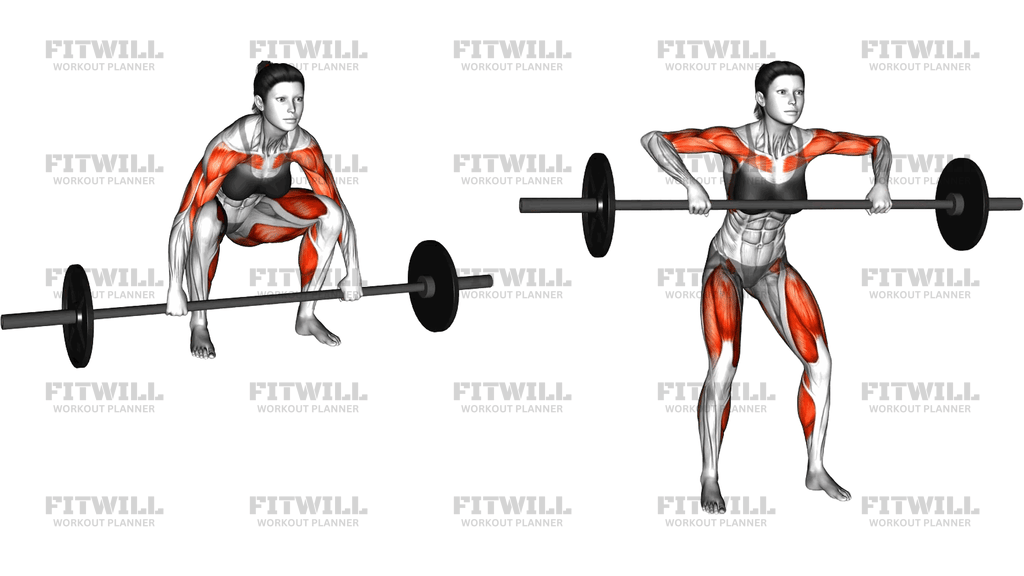
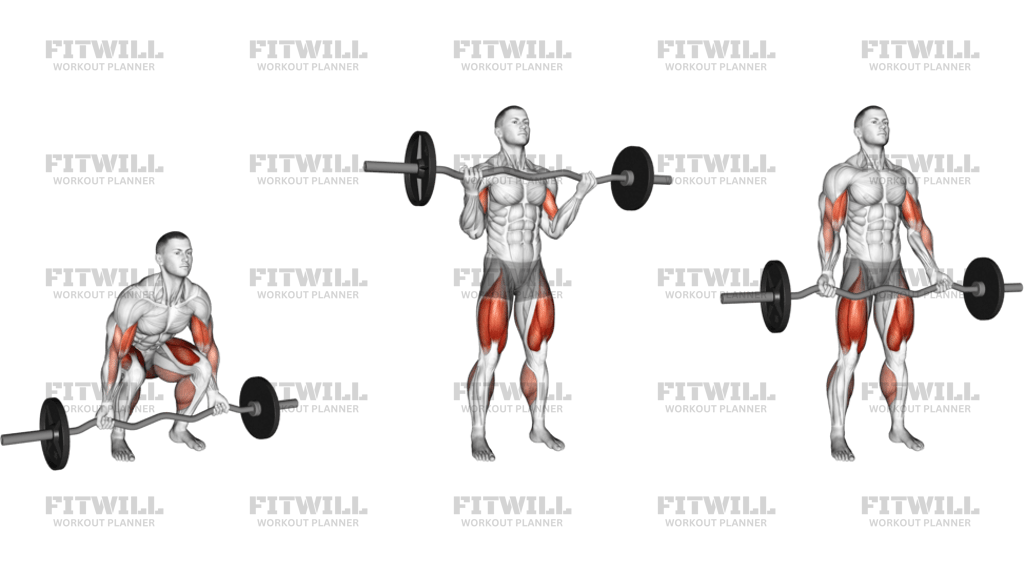
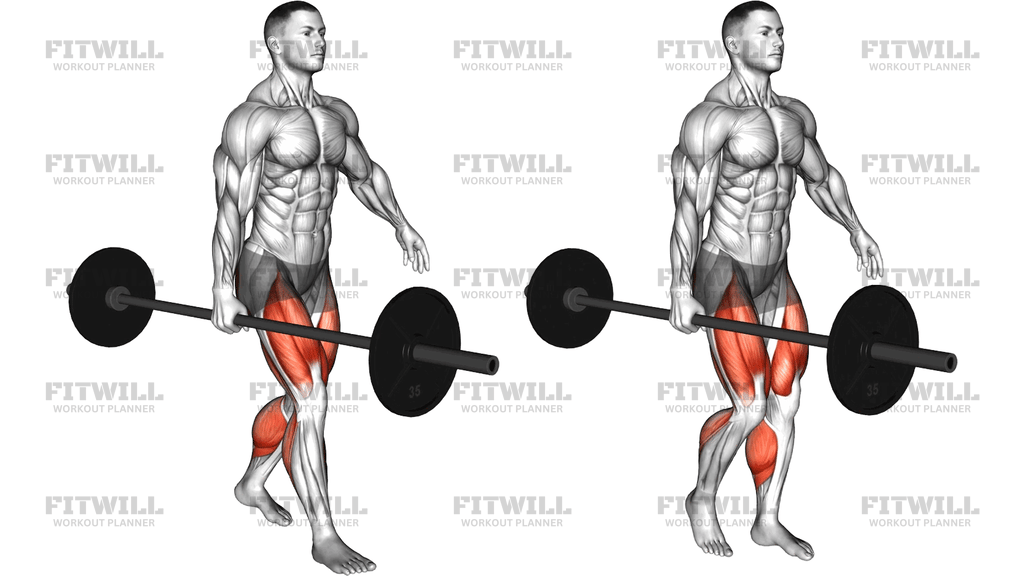
Barbell Single Leg Squat
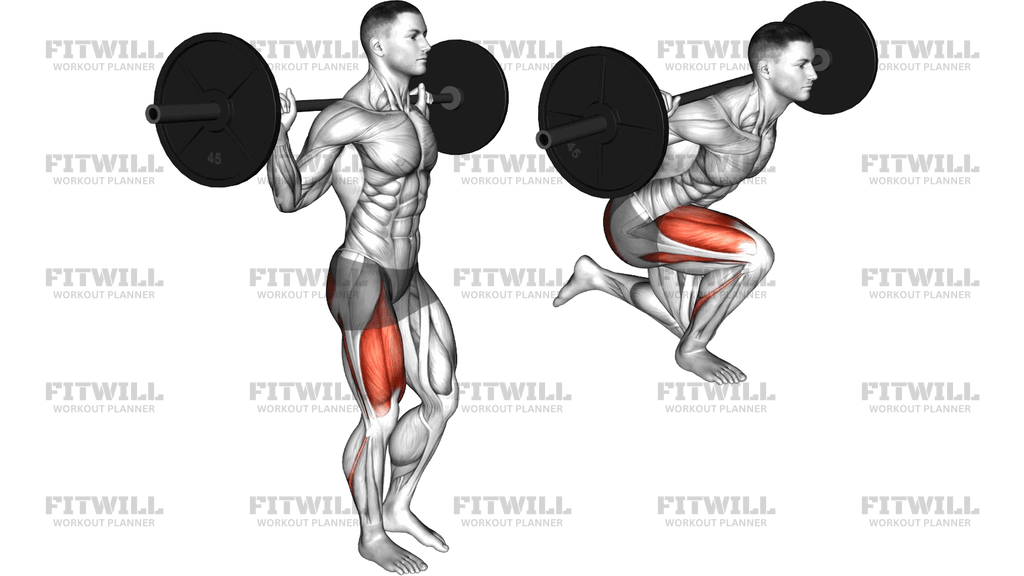
Barbell Single Leg Squat is a unilateral lower-body strength exercise performed with a barbell across the upper back while one leg does the work and the other leg stays lifted clear of the floor. The image shows a pistol-style squat pattern: you balance on one foot, sit down under control, then stand back up without letting the free leg or torso collapse. It is a demanding thighs-focused movement that also challenges the glutes, adductors, calves, and trunk to keep the body stacked over one working foot.
This exercise is useful when you want to build leg strength without relying on both legs to share the load. Because the base of support is small, the setup matters as much as the squat itself. The bar must sit securely on the upper back, the standing foot must be planted firmly, and the ribs and pelvis need to stay organized before the descent starts. If you rush the setup, the knee, hip, and ankle on the working side will be forced to compensate.
The lowering phase should feel like a controlled sit-back-and-down motion on one leg, not a drop. Keep the chest tall enough to stay balanced, let the free leg float forward or slightly ahead as a counterbalance, and track the working knee in line with the toes. At the bottom, the heel stays grounded and the foot stays active so you can drive straight back up through the midfoot and heel.
A well-executed rep looks smooth from top to bottom: brace before you move, descend under control, reach a depth you can own, then stand without bouncing or twisting. Breathing should stay deliberate, with a short brace before the rep and a controlled exhale as you rise. If balance or depth breaks down, reduce the load or use a lighter variation rather than chasing more reps with sloppy mechanics.
Barbell Single Leg Squat is best used for advanced leg training, unilateral strength work, or as an accessory movement when you want to expose side-to-side differences in control and strength. It is not a good place to rush fatigue reps. Treat every repetition as a test of balance, ankle control, knee tracking, and hip strength under barbell loading.
[ Workout Log & Planner ]
Put your next workout in Fitwill
Keep your plan and training log ready when you are.


Instructions
- Set the barbell across your upper back, stand tall on one foot, and let the other leg hover in front of you for balance.
- Plant the working foot firmly, brace your trunk, and keep your ribs stacked over your pelvis before you descend.
- Sit down on the working leg in a slow, controlled path while keeping the free leg off the floor.
- Keep the working knee tracking in line with your toes instead of letting it cave inward.
- Lower until your squat depth stops short of losing balance, heel contact, or spinal position.
- Drive through the midfoot and heel to stand back up on the same leg without bouncing.
- Finish with the hips and knee fully extended while keeping the bar level across your back.
- Reset your brace, switch sides if needed, and repeat for the planned repetitions.
Tips & Tricks
- Choose a bar position you can control; a high-bar setup usually makes the torso easier to keep upright in this pattern.
- If the free leg drops toward the floor, shorten the range until you can keep it lifted through the whole rep.
- Keep pressure through the big toe, little toe, and heel of the working foot so the arch does not collapse.
- Let the non-working leg act as a counterweight, not a kickstand.
- A slight forward torso lean is normal, but avoid folding at the waist or letting the bar tip forward.
- Stop the descent when the working heel starts to lift or the knee drifts inward.
- Use a controlled eccentric and avoid bouncing out of the bottom to protect balance and knee tracking.
- Use a spotter or rack if you are loading this heavily, because a missed rep is harder to recover from on one leg.
Frequently Asked Questions
What muscles do Barbell Single Leg Squats work most?
They mainly train the thighs, especially the quads, while also heavily involving the glutes, adductors, calves, and core to keep you balanced on one leg.
Is the bar supposed to stay on my upper back the whole time?
Yes. Keep the bar fixed across the upper traps or rear delts so your hands only stabilize it while the working leg does the squat.
How do I keep my free leg from touching the floor?
Hold the non-working leg slightly in front of you and use it as a counterbalance, not as support. If it still taps down, reduce depth or load.
How deep should I go on a single-leg squat with a barbell?
Go only as deep as you can keep the working heel grounded, the knee tracking well, and the torso controlled. Depth is useful only if you can own it.
What is the biggest mistake with this exercise?
Most problems come from losing balance and letting the knee cave inward or the torso fold too far forward. Both usually mean the load or depth is too ambitious.
Can I use a lighter variation if this is too hard?
Yes. A bodyweight pistol squat to a box, a counterweighted version, or a split squat is a better starting point if barbell balance is the limiter.
Should I lean forward a little during the squat?
A small lean is normal in a one-leg squat, but the bar should stay controlled and the spine should not round. Lean only enough to keep balance and the heel down.
Is this exercise appropriate for beginners?
Usually not as a first squat variation. Most beginners should master split squats, step-downs, or assisted single-leg squats before loading this pattern with a barbell.