Bodyweight Shrug
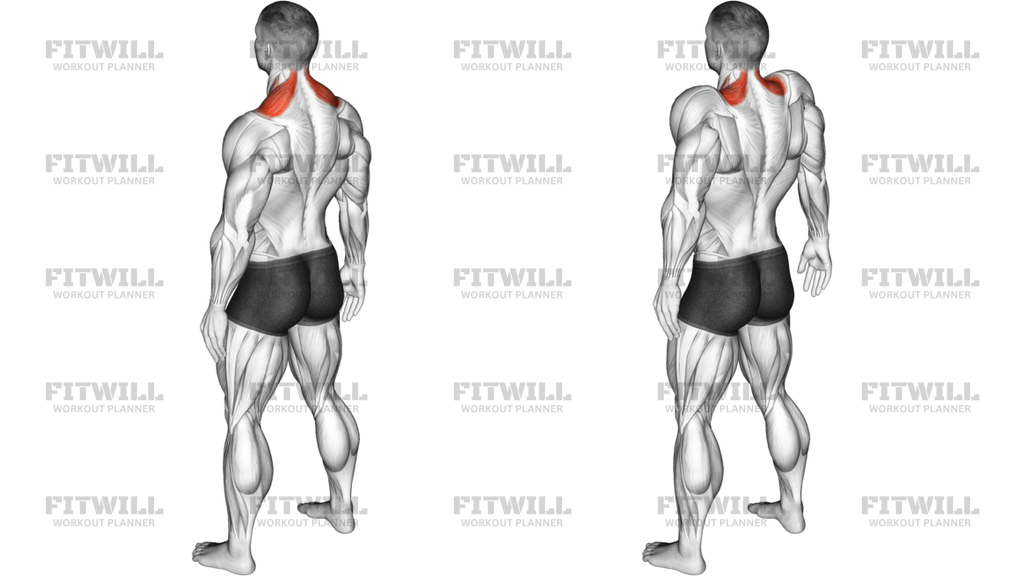
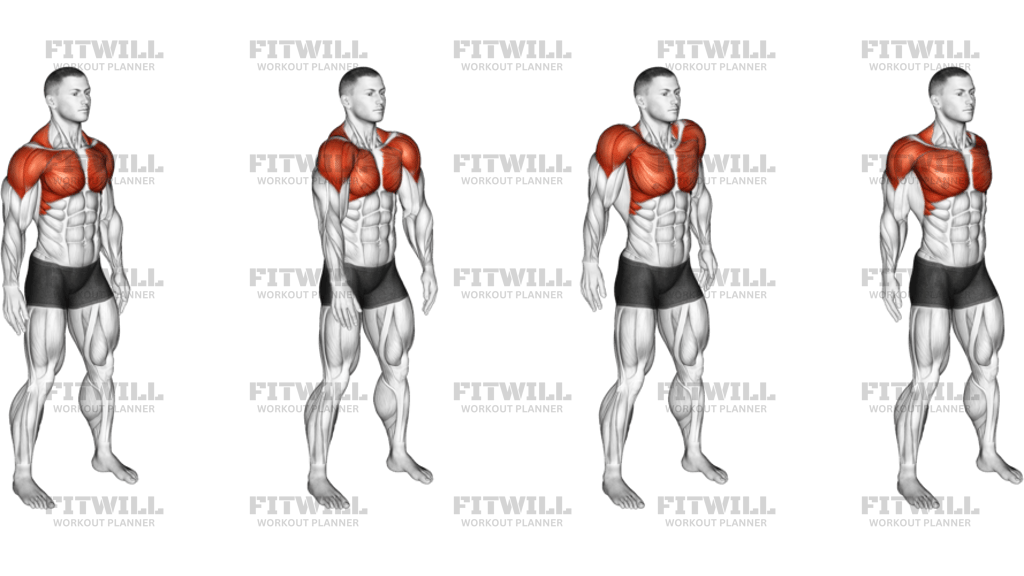
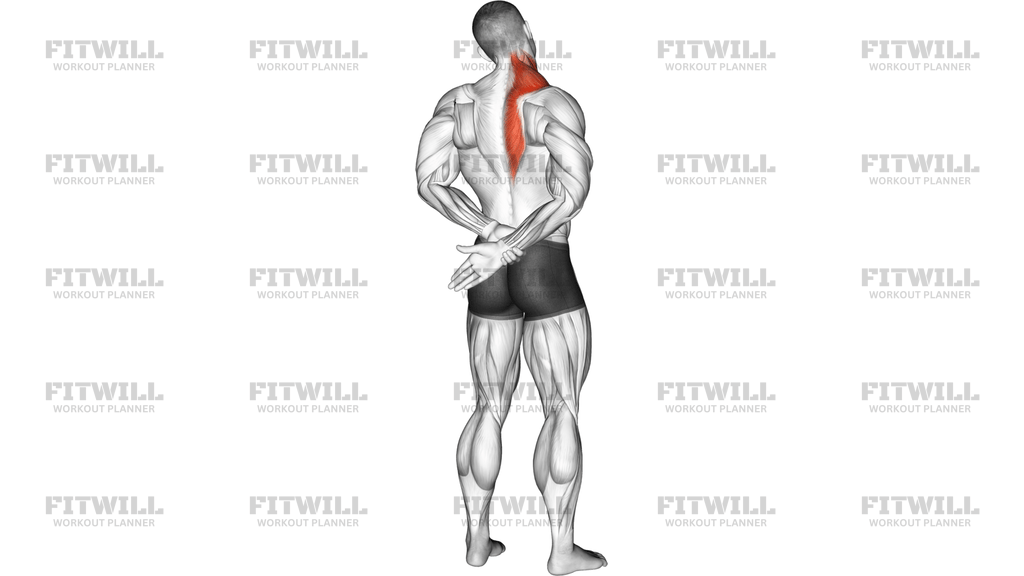
Bodyweight Shrug is a standing shoulder-elevation drill that teaches you to move the shoulder girdle without bending the elbows or turning the rep into a full upper-body swing. It is mainly used to train the upper traps and the small stabilizers around the shoulders and upper back, making it useful as a warm-up, posture drill, or accessory movement when you want cleaner scapular control.
Because there is no external load to hold, the setup matters more than people expect. Stand tall with your feet planted, arms hanging at your sides, and your neck long so the shoulders can move freely. The goal is not to roll the shoulders or lean backward; it is to lift the shoulders straight up, then lower them with control while keeping the torso stacked.
Bodyweight Shrug is helpful for lifters who want better awareness of the upper traps during rows, carries, pull-ups, or overhead work. It can also be a simple regression for people who struggle to feel a shrug with dumbbells or a barbell, because the unloaded version makes it easier to isolate the elevation pattern and avoid cheating with momentum. When done well, the rep should feel smooth, deliberate, and very concentrated near the base of the neck.
The movement should stay short and precise. Shrug the shoulders directly toward the ears, pause briefly at the top, then let them travel back down until the neck feels long again. If the chest flares, the ribs pop forward, or the head cranes to help the lift, the set is usually too fast or too aggressive. A clean Bodyweight Shrug is about control, not height, and the best range is the one that keeps the torso still and the shoulders moving on their own.
Use it when you want an easy-to-learn trap emphasis drill that reinforces posture without needing equipment. It fits well near the start of training, between upper-body sets, or in a corrective block for shoulder positioning. Beginners can use it confidently because the pattern is simple, but the value comes from precision: keep the elbows straight, keep the spine quiet, and let each shrug look exactly like the one before it.
[ Workout Log & Planner ]
Put your next workout in Fitwill
Keep your plan and training log ready when you are.


Instructions
- Stand tall with your feet about hip-width apart, arms relaxed by your sides, palms facing in, and your chin slightly tucked.
- Let your shoulders settle down away from your ears while keeping your chest stacked over your pelvis.
- Take a breath in and brace lightly so your torso stays still when the shoulders start to move.
- Shrug both shoulders straight up toward your ears without bending your elbows or leaning your torso backward.
- Pause for a moment at the top and feel the upper traps lift the shoulder girdle.
- Lower your shoulders slowly until they return to the relaxed starting position and the neck feels long again.
- Keep your head facing forward and avoid circling the shoulders or twisting side to side.
- Repeat for the planned reps, then finish standing tall and relaxed before moving on.
Tips & Tricks
- Think straight up and straight down; a shoulder roll turns this into a different exercise and reduces trap tension.
- Keep the elbows soft but not bent, so the rep stays in the shoulder girdle instead of the arms.
- If your neck feels jammed, shorten the shrug and keep the chin slightly tucked rather than reaching the head forward.
- Pause at the top for a beat so the upper traps do the work instead of momentum.
- Do not flare the ribs to create a bigger shrug; keep the pelvis and ribcage stacked.
- Let the shoulders fully settle at the bottom before starting the next rep so every shrug starts from the same position.
- Use slower lowering if you tend to bounce through the bottom of the rep.
- If one shoulder rises before the other, slow the tempo and match both sides on every rep.
Frequently Asked Questions
What muscle does Bodyweight Shrug target most?
It mainly targets the upper traps, with the muscles around the shoulder girdle helping keep the shrug smooth and controlled.
Can beginners perform this exercise?
Yes. The unloaded standing version is simple to learn, and it is a good way to practice shoulder elevation before adding dumbbells or a bar.
Should my arms move during Bodyweight Shrug?
No. Keep your arms hanging straight and let the motion come from the shoulders rising and lowering, not from bending the elbows.
Should I roll my shoulders during Bodyweight Shrug?
No. Roll your shoulders and you change the exercise. This movement should go straight up and straight down.
Where should I feel Bodyweight Shrug?
You should feel it mostly along the upper traps at the base of the neck, not as a twist in the low back or a burn in the arms.
Is Bodyweight Shrug useful before upper-body training?
Yes. It works well as a warm-up before rows, pull-ups, carries, or overhead pressing because it wakes up the shoulder elevation pattern.
What is the biggest mistake with Bodyweight Shrug?
The most common mistake is leaning back or bouncing the torso to fake a bigger shrug. Keep the body stacked and let the shoulders do the work.
How many reps should I do?
Moderate to higher reps usually make sense because the exercise is light and positional, so quality and control matter more than load.