Handstand Walk
Handstand Walk is an advanced bodyweight skill built around moving forward while staying stacked over the hands. It trains shoulder strength, scapular elevation, wrist tolerance, trunk stiffness, and balance under fatigue. The exercise is as much about controlling your center of mass as it is about generating force, so the quality of each step depends on how well you hold the line from wrists to ankles.
The handstand position should look tall and organized before you try to walk. Hands are planted under the shoulders, fingers spread for balance, elbows stay locked, and the ribcage stays tucked instead of flaring. From there, you shift pressure into one hand, float the opposite hand forward, and place it softly before transferring weight again. That small, deliberate transfer is what keeps the walk controlled instead of turning into a handstand collapse.
Because the movement is upside down, the setup matters more than on most bodyweight drills. A stable floor with enough open space, dry hands, and a clear bailout path help you stay confident. Short, purposeful steps are usually better than trying to cover distance in a hurry. If your shoulders shrug unevenly, your hips drift behind your hands, or your legs split wildly to save balance, the walk is losing its line and should be reset.
Use this exercise when you want a high-skill strength and conditioning movement that challenges the shoulders, core, and coordination at the same time. It is useful in gymnastics-style training, advanced warmups, athletic circuits, and handstand progressions. Beginners usually need wall holds, shoulder taps, or frog stand work first, because the inverted balance demand is high even before the first step.
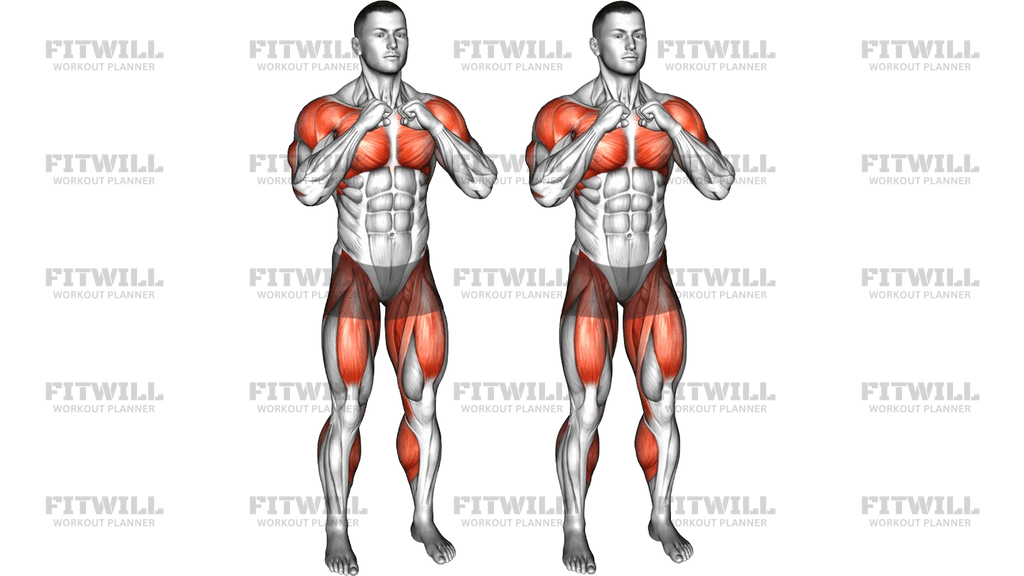
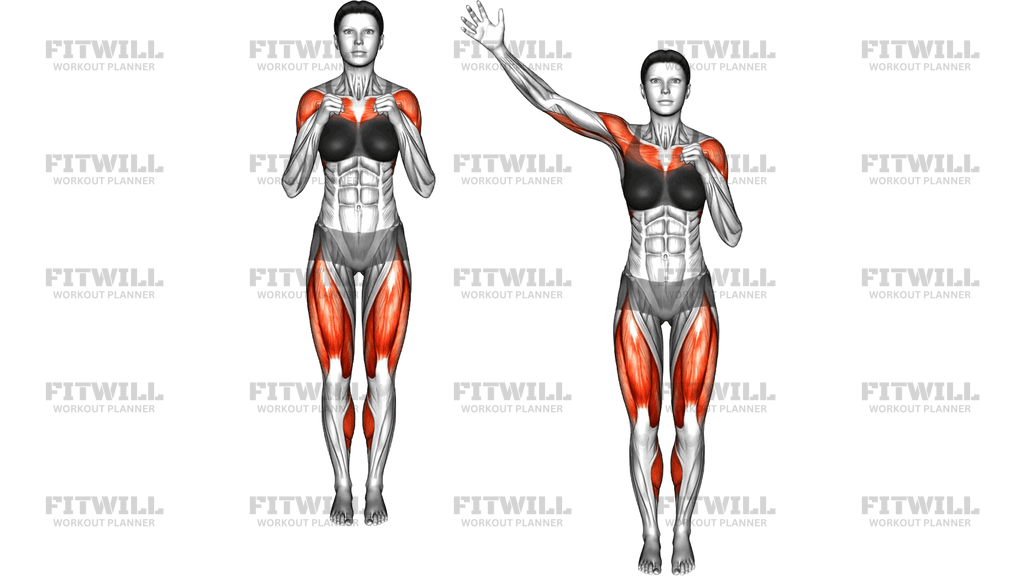
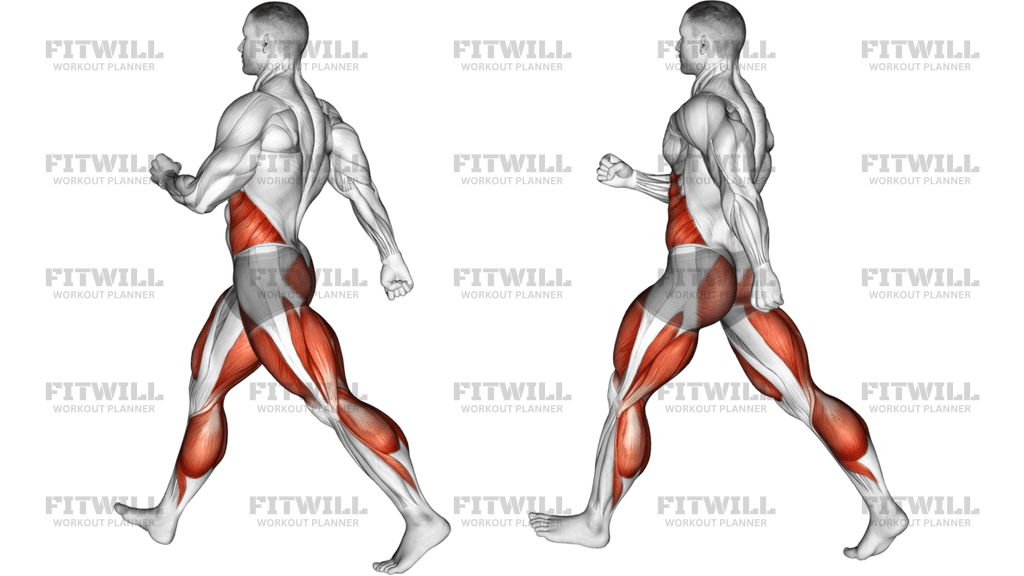
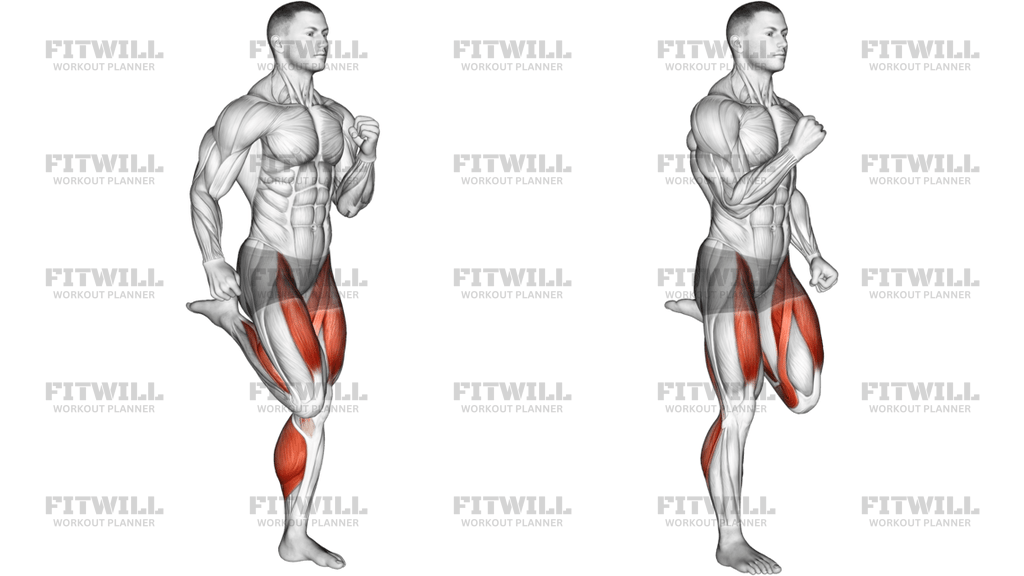
A good handstand walk finishes the same way it starts: tall, braced, and under control. The best reps are not the fastest ones. They are the ones where you can keep breathing, keep the hands landing quietly, and keep the line from collapsing as fatigue builds. If the image for this payload looks like a static handstand rather than a walk, treat it as a media mismatch and follow the exercise name for the coaching cues.
Fitwill
Log Workouts, Track Progress & Build Strength.
Achieve more with Fitwill: explore over 9600 exercises with images and videos, access built-in and custom workouts, perfect for both gym and home sessions, and see real results.
Start your journey. Download today!




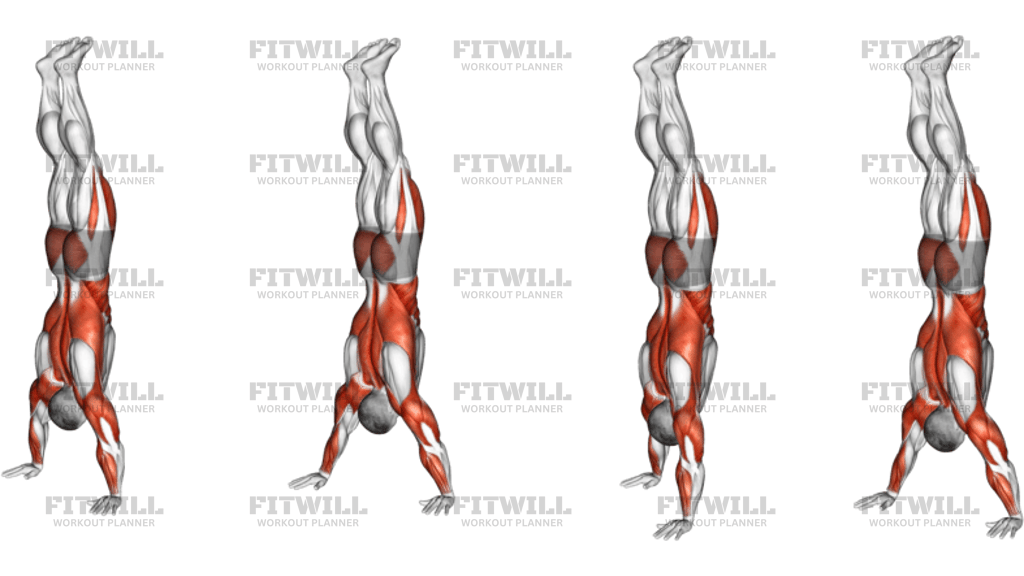
Instructions
- Clear an open stretch of floor and place your hands shoulder-width apart with your fingers spread wide.
- Kick up to a stacked handstand or press into a stable inverted hold with your shoulders pushed tall over your hands.
- Lock your elbows, squeeze your glutes, and keep your ribs from flaring as you find a straight line through your body.
- Shift your weight slightly into one hand until the opposite hand feels light and can float off the floor.
- Reach that light hand forward in a short, controlled step and place it down softly in front of the other hand.
- Transfer weight to the new lead hand and bring the trailing hand forward so the steps stay small and deliberate.
- Keep your legs together or lightly split only enough to save balance, then re-stack the hips over the shoulders as you move.
- Breathe in small controlled pulses, finish the set by lowering safely out of the handstand, and stop before form turns into a chase for distance.
Tips & Tricks
- Push the floor away the entire time; the shoulders should feel elevated, not sunk between the ears.
- Spread the fingers and use fingertip pressure to correct balance instead of letting the wrists do all the work.
- Keep the steps short. Reaching too far forward usually makes the hips swing and the handstand collapse.
- If you can, practice along a wall or on a taped line so you learn to stay in one lane instead of wandering side to side.
- A slight hollow body is more useful than an arched back; rib flare makes the balance point harder to control.
- Look at the floor between your hands rather than craning the neck to see where you are going.
- Bend the knees only if it helps you save the rep; straight legs are cleaner when you can hold the line.
- Stop the set when the hands start slapping down or the feet keep drifting behind you, because that usually means the shoulders have lost position.
Frequently Asked Questions
What muscles does a handstand walk work?
It heavily trains the shoulders, triceps, upper chest, upper back, core, forearms, and the small stabilizers that keep the body balanced upside down.
Is this exercise suitable for beginners?
Not usually. Most people need wall handstands, shoulder taps, and kick-up control before they can walk safely on their hands.
How wide should my hands be during the walk?
Start about shoulder-width apart. If the hands are too wide, balance gets sloppy; if they are too narrow, the base can feel cramped and unstable.
What is the most common mistake in a handstand walk?
Reaching too far with each step. Big reaches pull the hips out of line and turn the walk into a series of saves instead of controlled steps.
Should I practice this against a wall first?
Yes. Wall holds and wall walks are the safest way to learn stacking, breathing, and weight shifts before you try freestanding steps.
Can I bend my knees while walking on my hands?
A small knee bend is acceptable if it helps you keep balance, but straight legs usually produce a cleaner, more controlled line.
Where should I look while doing it?
Keep your gaze on the floor between your hands. Looking around usually breaks the neck position and throws off the balance point.
How do I bail out safely if I lose balance?
Turn the exit into a controlled cartwheel or step down to one side rather than trying to save a falling rep with locked shoulders and a twisted spine.