Barbell Front Rack Rear Lunge
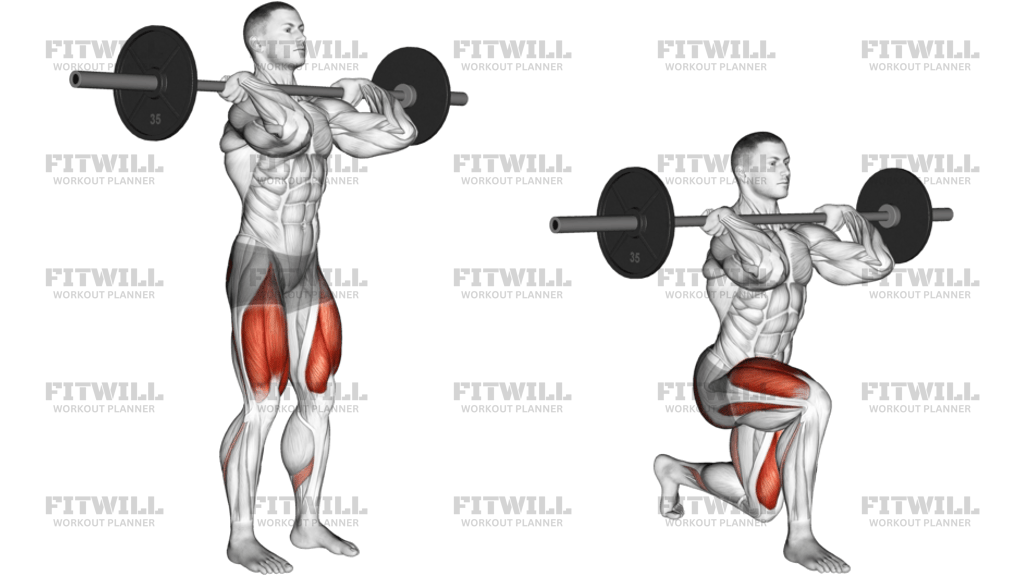
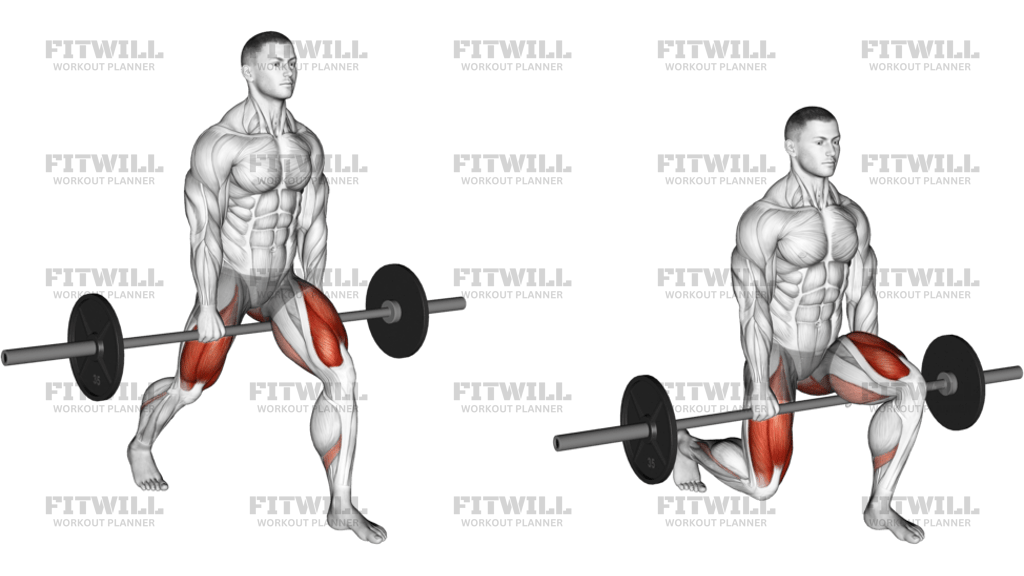
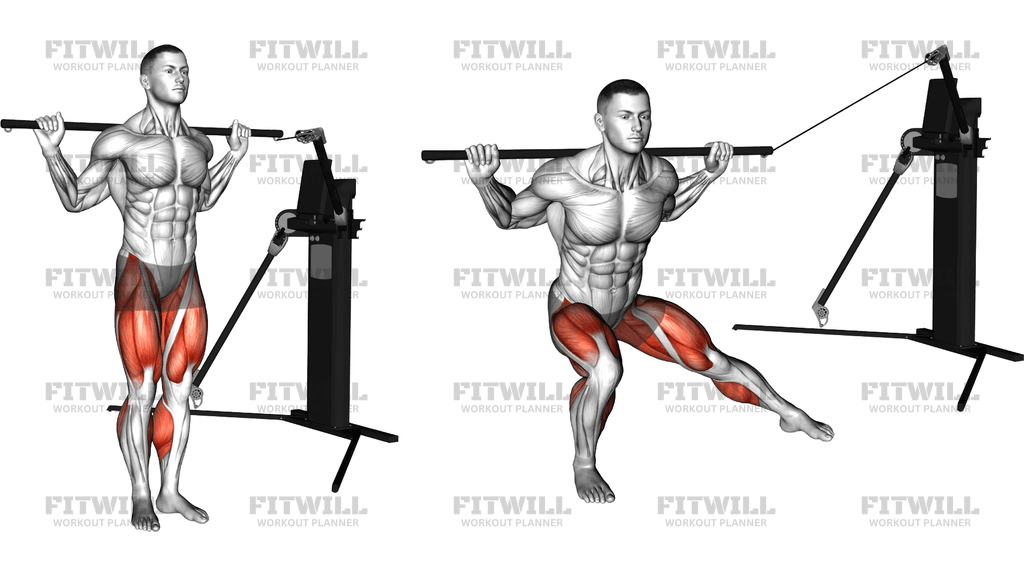
Barbell Front Rack Rear Lunge is a unilateral lower-body exercise that loads the front leg while the bar stays racked across the front delts. The front rack keeps the torso more upright than a back-rack lunge, so the lead leg has to do more of the work through the knee and hip while the trunk resists tipping forward. In the image, the lifter steps the rear leg back and lowers straight down until the back knee approaches the floor, which makes the movement a strong choice for quad-dominant leg strength, hip control, and balance.
Because the bar sits in the front rack, setup quality matters more than it does in many other lunge variations. The elbows should stay lifted enough to keep the bar secure, the chest should stay tall, and the rib cage should not flare as you brace. If the front rack is loose or the torso collapses, the step-back lunge turns into a wobbly squat pattern and you lose the clean single-leg loading that makes this exercise useful. The best reps look deliberate and stacked: bar over midfoot, front foot planted, and the pelvis controlled as you descend.
This exercise trains the quadriceps heavily, especially on the lead leg, while the glutes, adductors, and core help stabilize the descent and drive the ascent. The front rack also makes the upper back and shoulders work isometrically so the bar does not roll forward. That combination makes Barbell Front Rack Rear Lunge useful for athletes, lifters who want stronger legs without as much spinal loading as a heavy back-rack squat, and anyone who needs better unilateral control for running, jumping, or field work.
The key execution pattern is to step back far enough that the front heel stays down and the lead knee can track naturally over the toes. Lower under control until the rear knee is just above the floor or gently taps it, then drive through the front foot to stand back up without bouncing. Keep the movement smooth, breathe in on the way down, and exhale as you rise. If the rack position or balance breaks down, reduce the load before you add reps, because the value of this exercise comes from crisp alignment rather than from speed or momentum.
Use Barbell Front Rack Rear Lunge when you want a leg-focused accessory lift that also challenges posture and front-rack stability. It fits well after squats or presses, in lower-body strength blocks, or in programs that need more single-leg work than bilateral patterns can provide. Beginners can use it if they have enough front-rack mobility to hold the bar comfortably and can keep the step and landing controlled.
[ Workout Log & Planner ]
Put your next workout in Fitwill
Keep your plan and training log ready when you are.


Instructions
- Clean or lift the bar into a front rack so it rests across the front delts, then hold the bar with the elbows high and the wrists stacked as comfortably as possible.
- Stand tall with your feet about hip-width apart, brace your trunk, and pick a fixed spot in front of you so your torso stays upright through the set.
- Take a small inhale, then step one leg straight back far enough that the front heel stays planted and the front knee can bend without the heel lifting.
- Lower your hips straight down under control, keeping most of your weight on the front leg and letting the back knee travel toward the floor behind you.
- Keep the front knee tracking in line with the toes instead of caving inward, and keep the bar centered over the midfoot as you descend.
- Pause briefly when the rear knee is just above the floor or lightly touches down, without collapsing onto the back leg.
- Drive through the front heel and midfoot to stand back up, bringing the rear leg forward only after the hips and knees are fully extended.
- Reset your stance between reps if needed, or alternate sides according to the program while keeping the same depth, torso angle, and bar position each rep.
Tips & Tricks
- Keep the elbows lifted enough that the bar stays on the front delts instead of rolling into the hands.
- Choose a step-back distance that lets the front shin move naturally without the heel peeling off the floor.
- Think about lowering straight down, not lunging forward, so the lead leg gets the main loading.
- Let the back knee travel down and slightly behind you; cutting the descent short makes the rep less stable and less useful.
- If the torso tips forward, the load is usually too heavy or the front rack is too loose.
- Keep pressure through the big toe, little toe, and heel of the lead foot so the knee stays organized on the way up.
- Use a controlled tempo on the way down instead of dropping into the bottom and rebounding.
- Start lighter than you would for a back-rack lunge because the front rack makes balance and upper-back position part of the lift.
Frequently Asked Questions
What does the front rack change in this rear lunge?
The front rack keeps the torso more upright and shifts more of the work to the lead leg, especially the quads, while the upper back has to hold the bar in place.
What muscles should I feel most?
You should feel the front leg working hardest through the quadriceps and glute, with the adductors, core, and upper back helping stabilize the rep.
How far back should I step?
Step back far enough that the front heel stays down and the front knee can bend without the torso folding forward. If your front foot feels cramped, the step is probably too short.
Does the back knee need to touch the floor?
No. It can hover or lightly touch if you can keep control, but you should not drop onto the back leg or bounce out of the bottom.
Why do my elbows drop during the set?
Usually the bar is too heavy or the front rack mobility is limited. Reduce the load and use a grip width that lets the elbows stay high.
Is this the same as a reverse lunge?
The stepping pattern is the same, but the front rack makes the lift more upright and places more demand on the quads, core, and upper back.
Can beginners do Barbell Front Rack Rear Lunge?
Yes, if they can hold the front rack comfortably and control the step back. Start with a very light bar or a front-loaded variation before adding weight.
What is the most common form mistake?
Letting the torso lean forward and pushing off the back leg too early. The front leg should own the rep from the first descent to the return to standing.