Barbell Front Rack Split Squat
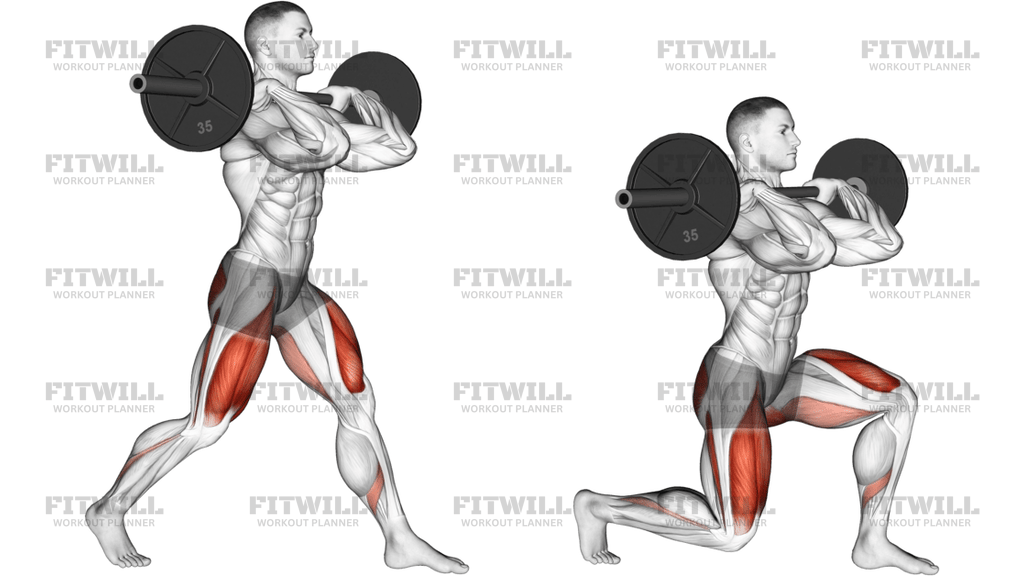
Barbell Front Rack Split Squat is a unilateral lower-body strength exercise that loads the front leg while the torso stays upright under a barbell held in the front rack. The front-rack position changes the demand compared with a simple bodyweight split squat: you need enough upper-back tension, wrist comfort, and trunk stiffness to keep the bar stable while each leg works through its own range. That makes this movement useful for building quads, glutes, adductor control, and single-leg balance at the same time.
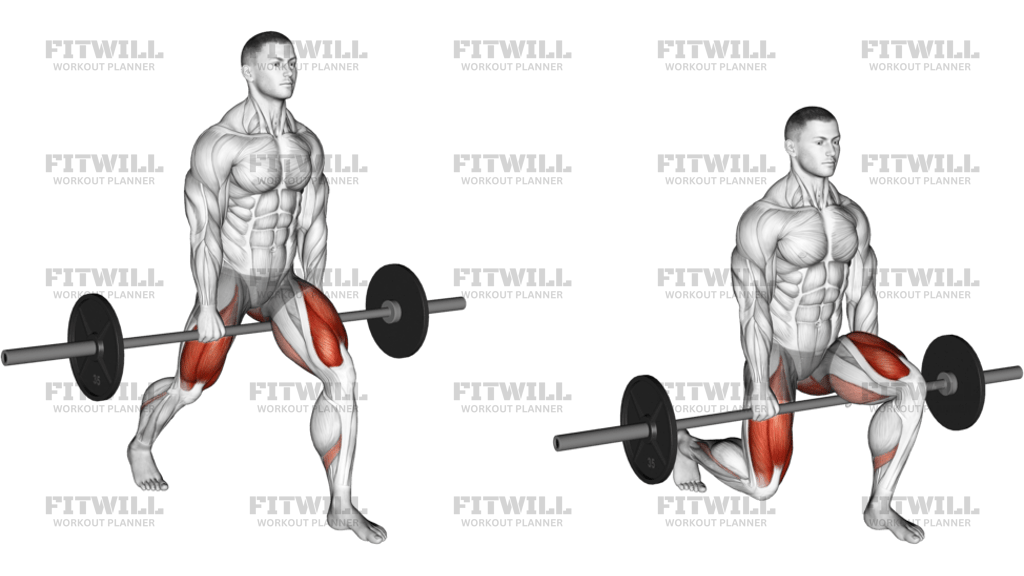
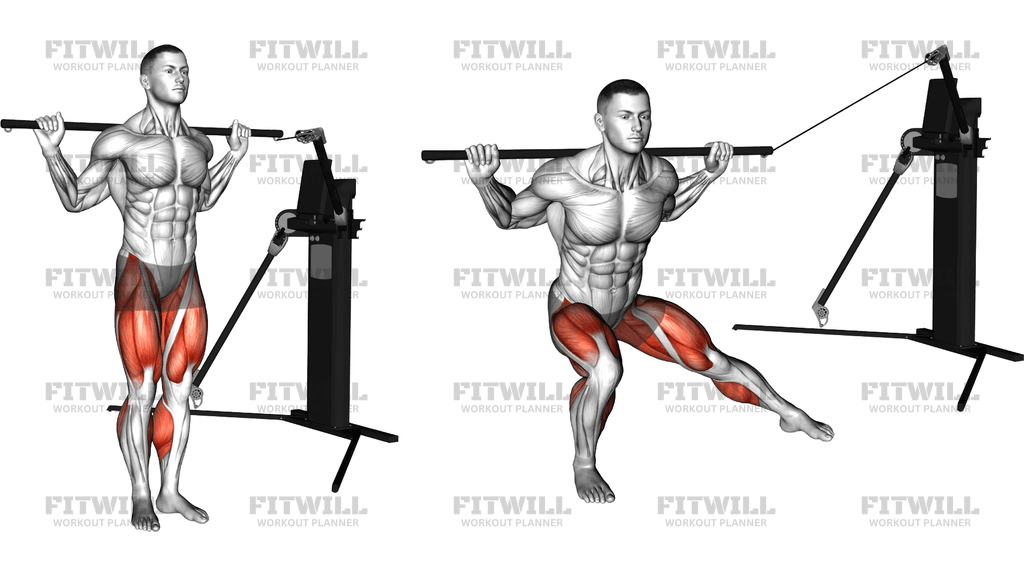
The split stance lets you train one side hard without needing to step or travel like a lunge. The front foot stays flat, the rear heel lifts, and the torso remains tall while the back knee drops toward the floor. In the image, the lifter keeps the elbows high and the bar resting across the front shoulders, which is the key setup cue for keeping the chest up and preventing the torso from folding forward.
The setup matters more here than on many bilateral squat patterns. If the stance is too short, the front knee may be forced too far forward and the hips will feel cramped; if it is too long, the rear leg can take over and the front leg loses useful tension. Start with the feet far enough apart that you can lower straight down between them, then adjust until the front thigh can work through a deep, controlled range without the pelvis twisting or the back heel crashing into the floor.
Each repetition should look smooth and deliberate: descend under control, lightly touch the bottom position with the rear knee hovering near the floor or contacting softly if that is your chosen standard, then drive through the whole front foot to stand back up. Keep the front knee tracking in line with the toes, keep the ribs stacked over the pelvis, and avoid turning the rep into a forward lunge or a wobbling balance drill. When the load is appropriate, this exercise is a strong accessory choice for leg strength, unilateral hypertrophy, and clean split-squat mechanics without needing a machine or bench.
[ Workout Log & Planner ]
Put your next workout in Fitwill
Keep your plan and training log ready when you are.


Instructions
- Set a barbell across the front of your shoulders in a front-rack position, with elbows lifted and upper arms roughly parallel to the floor.
- Step one foot forward and the other foot back into a split stance, keeping your feet on two separate tracks rather than a tight line.
- Plant the front foot flat and keep most of your weight over that leg before you begin the descent.
- Brace your trunk, keep your chest tall, and let the bar stay stacked over the midfoot of the front leg.
- Lower straight down by bending both knees until the rear knee approaches the floor and the front thigh reaches a deep but controlled position.
- Keep the front knee tracking over the toes and avoid letting it cave inward as you descend.
- Drive through the full front foot to stand back up, finishing with the hips and knees extended while the torso stays upright.
- Reset your stance with control between reps if needed, then repeat for the planned number of repetitions on that side before switching legs.
Tips & Tricks
- Keep the elbows high enough that the bar stays pinned on the front delts instead of rolling forward into your hands.
- Choose a split stance long enough to let the rear knee drop without forcing the front heel to lift.
- If the front knee slides excessively forward, widen the stance slightly and sit straight down between the feet.
- Use a slow lowering phase so the front leg does the work instead of bouncing off the bottom.
- Keep pressure through the big toe, little toe, and heel of the front foot so balance stays centered.
- Exhale near the top or after you clear the hardest part of the rep, then re-brace before the next descent.
- If your wrists or front rack mobility limit the bar position, reduce the load before you shorten the range.
- Stop the set when the torso starts tipping forward or the back leg begins pushing the rep up.
Frequently Asked Questions
What does the front-rack position change in this split squat?
The front rack keeps the torso more upright and increases the demand on the quads and trunk compared with a bar on the back.
Which leg should feel the most work?
The front leg should do most of the lifting, with the rear leg acting mainly as a balance and support leg.
Can beginners do Barbell Front Rack Split Squat?
Yes, but only if they can hold the front rack comfortably and control a split stance with bodyweight or a very light bar first.
How should my front knee track during the rep?
It should stay in line with the toes instead of caving inward or drifting so far forward that you lose front-foot pressure.
Do I need to touch the rear knee to the floor?
Not necessarily. Many lifters lower until the rear knee hovers close to the floor, but a soft touch is acceptable if it does not change your torso position.
Why do my wrists or shoulders feel awkward in the rack?
The front rack requires thoracic extension, shoulder mobility, and a bar position that rests on the delts, not in the hands. Reducing load or using a looser grip can help.
What are the main muscles worked?
The front leg’s quads and glutes do most of the work, with the adductors, calves, upper back, and core helping stabilize the position.
How can I make the exercise harder without losing form?
Add load slowly, pause briefly near the bottom, or lengthen the set only if you can keep the front rack stable and the torso upright.