Resistance Band Squat
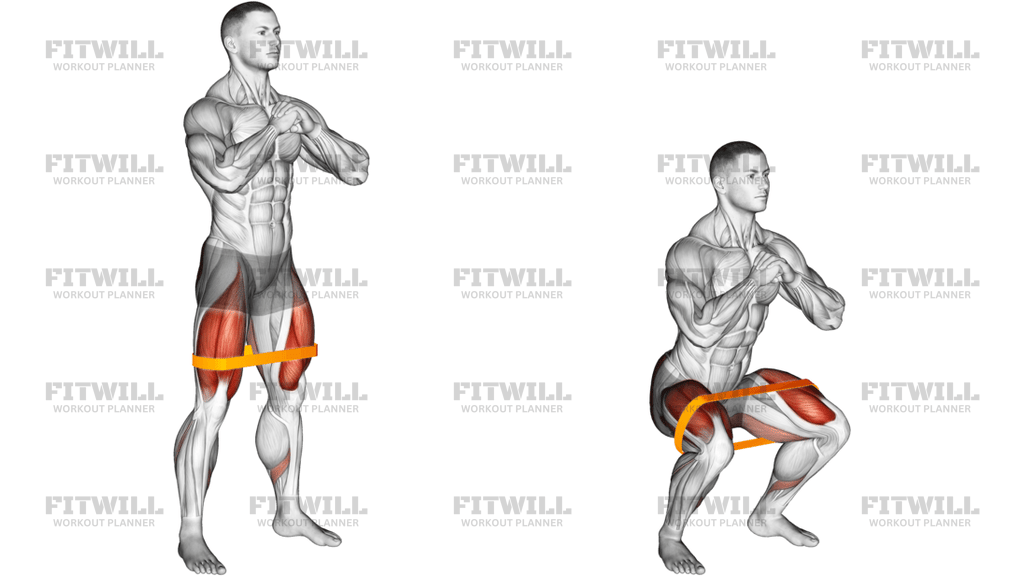
Resistance Band Squat is a squat variation that uses a loop band around the thighs, usually just above the knees, to add outward tension while you sit down and stand up. The band does not replace the squat pattern; it changes the demand by asking you to keep the knees tracking out instead of collapsing inward. That makes the exercise useful for thigh strength, hip control, and cleaner lower-body mechanics under bodyweight or light external resistance.
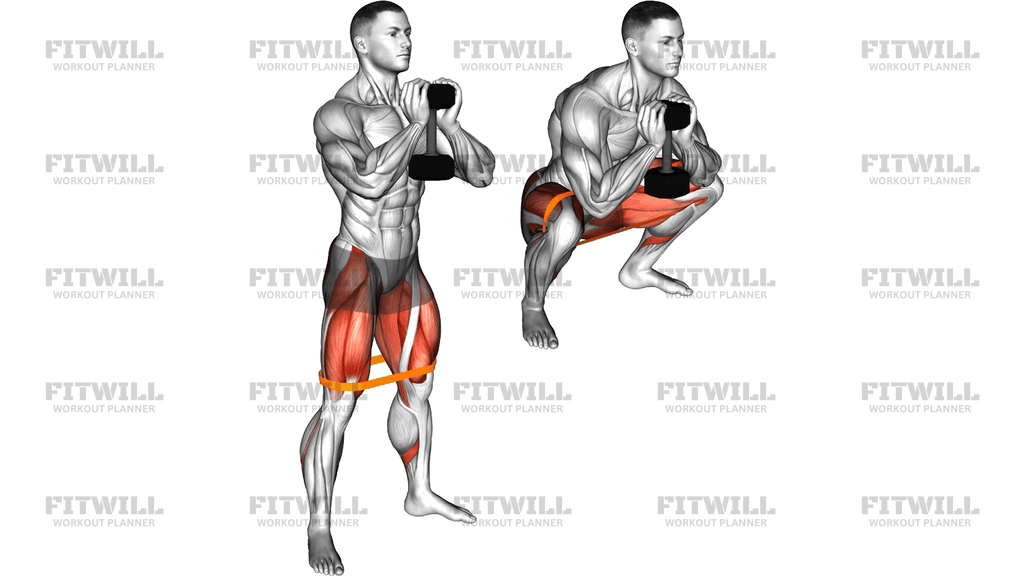
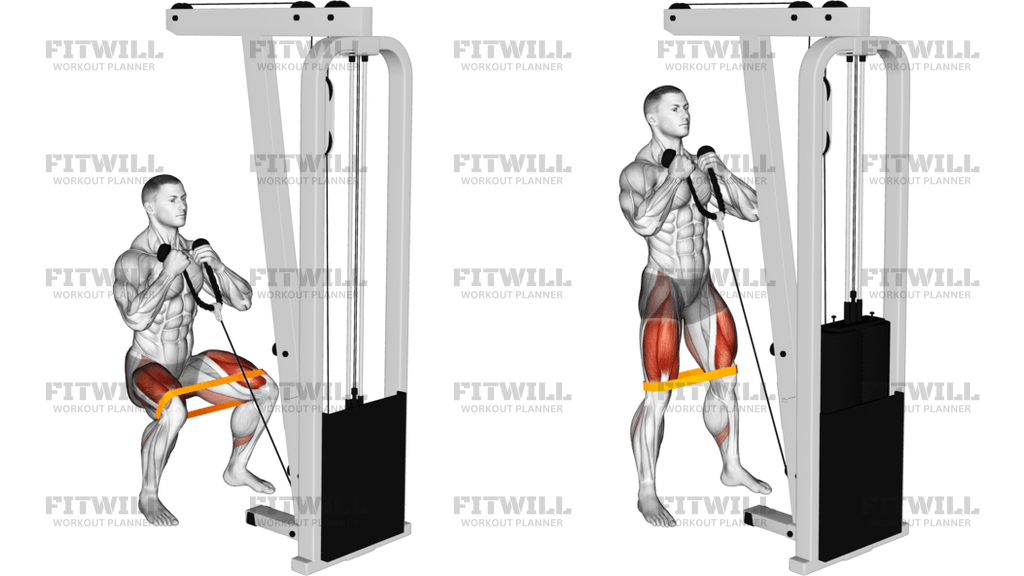
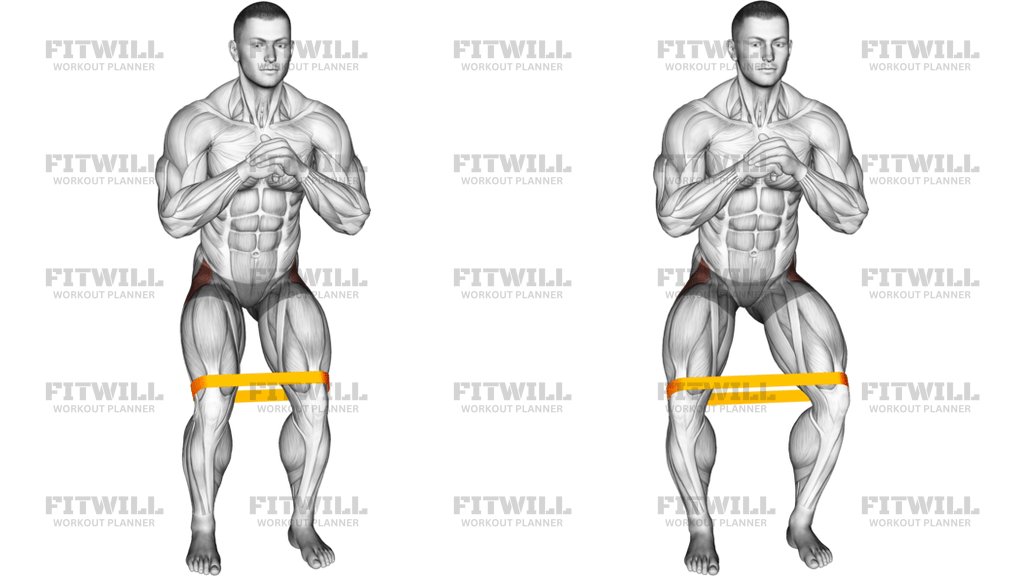
The setup matters because the band should stay snug without sliding, and the feet should be planted wide enough to let the hips move freely. In the image, the lifter keeps the hands together at chest height, the torso tall, and the knees pressed slightly outward against the band. That position helps the quads, glutes, and hip stabilizers share the work while the trunk stays organized.
A good repetition starts by lowering the hips under control, not by dropping straight down. Keep the chest lifted, the ribs stacked over the pelvis, and the knees following the line of the toes as you descend. At the bottom, the thighs should reach a depth you can own without the heels lifting, the lower back rounding, or the band being ignored. Then drive up by pushing the floor away and keeping tension in the band the whole way back to standing.
This is a practical choice for warmups, accessory work, and technique-focused leg sessions because it teaches alignment as much as it trains force production. It can be scaled for beginners by using a lighter band and a smaller squat depth, or made harder by using a stronger band, slowing the lowering phase, or pausing at the bottom. The main safety priority is consistency: keep the knees out, the feet grounded, and the rep smooth rather than bouncing into range or losing the band position.
[ Workout Log & Planner ]
Put your next workout in Fitwill
Keep your plan and training log ready when you are.


Instructions
- Loop the band around both thighs, just above the knees, and stand with your feet about shoulder-width apart and toes slightly turned out.
- Bring your hands together at chest height, lift your chest, and stack your ribs over your pelvis before you start the first rep.
- Press the knees gently outward so the band stays taut and the thighs do not cave inward.
- Sit the hips back and down at the same time, letting the knees bend and track over the middle toes.
- Lower until your thighs are parallel or as deep as you can keep without rounding your lower back or lifting your heels.
- Pause briefly at the bottom if needed, keeping the band stretched and the knees aligned with the feet.
- Drive up by pushing the floor away through your midfoot and heels while keeping the knees out against the band.
- Finish tall with the hips and knees extended, but do not lean back or snap into a hard lockout.
- Reset your stance, breathing, and band tension before each next repetition.
Tips & Tricks
- If the band slides up the thighs, reset it higher and make sure your stance is wide enough to keep it from rolling.
- Keep pressure on the outer edge of the band the whole time; letting the knees drift inward removes the main training effect.
- Hold the chest tall instead of folding forward, especially if your torso starts to collapse as you descend.
- Think about sitting between your heels rather than reaching your hips far behind you, which can turn the squat into a hinge.
- Choose a band that creates tension before you even squat; a loose band turns the exercise into a regular bodyweight squat.
- Keep the heels planted and the arches active so the knees can track cleanly over the toes.
- Control the lowering phase for at least a couple of seconds if you want more thigh and hip tension from lighter resistance.
- Stop the set when the knees no longer stay out against the band or when the lower back starts to tuck under.
- Exhale on the way up so the torso stays braced without holding a long, unnecessary breath.
Frequently Asked Questions
What does the band above the knees actually do in this squat?
It adds outward tension so you have to keep the knees from caving in while you squat, which increases hip and thigh control.
Which muscles work hardest in Resistance Band Squat?
The quads do most of the squatting work, while the glutes and hip stabilizers help keep the knees aligned against the band.
Should my knees push out against the band the whole time?
Yes, but only enough to keep tension on the band. The goal is steady outward pressure, not an exaggerated bow-legged stance.
How deep should I squat with the band on my thighs?
Go as deep as you can while keeping your heels down, your torso controlled, and the band from losing tension.
Can beginners use this exercise?
Yes. A light band and a smaller range of motion make it easy to learn the squat pattern safely.
Why are my thighs shaking during the set?
The band is forcing your hip stabilizers to work hard, so shaking usually means the muscles are being challenged rather than that the movement is wrong.
What is the most common mistake with this banded squat?
Letting the knees drift inward or letting the band slide down so the rep turns into a normal squat without the hip-control demand.
Can I make this harder without adding weights?
Yes. Use a stronger band, slow the lowering phase, or add a brief pause at the bottom while keeping the same squat position.