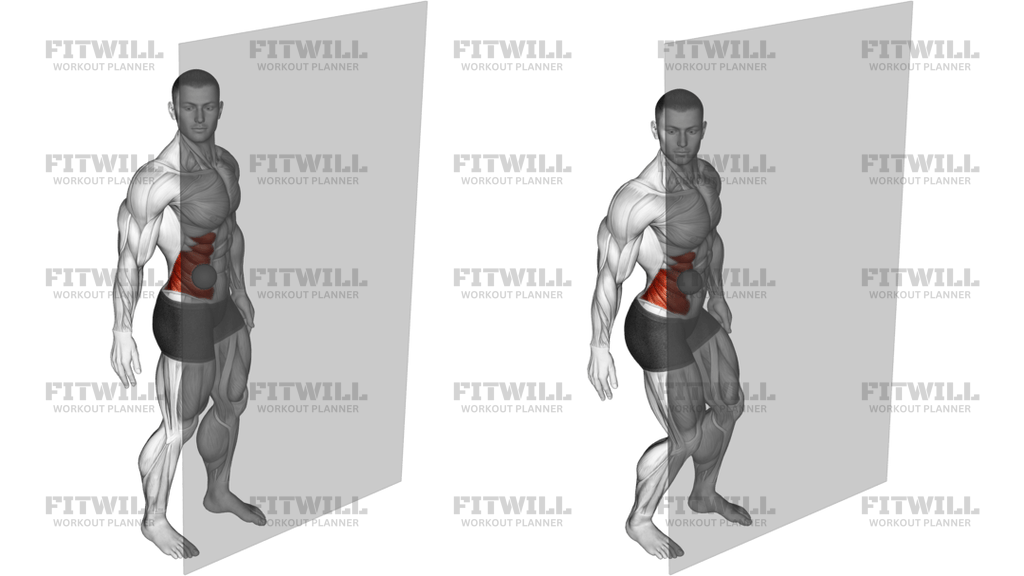
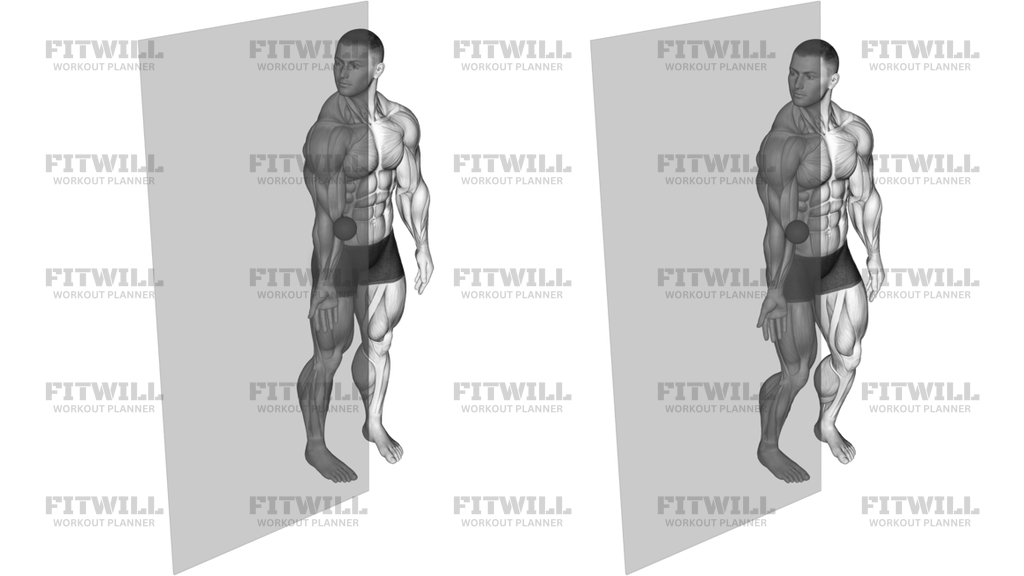
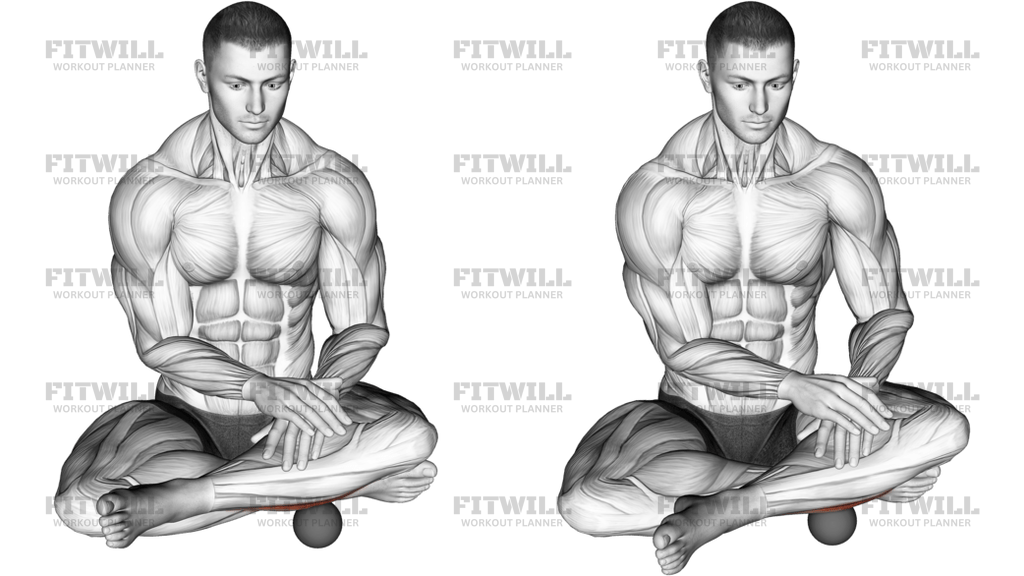
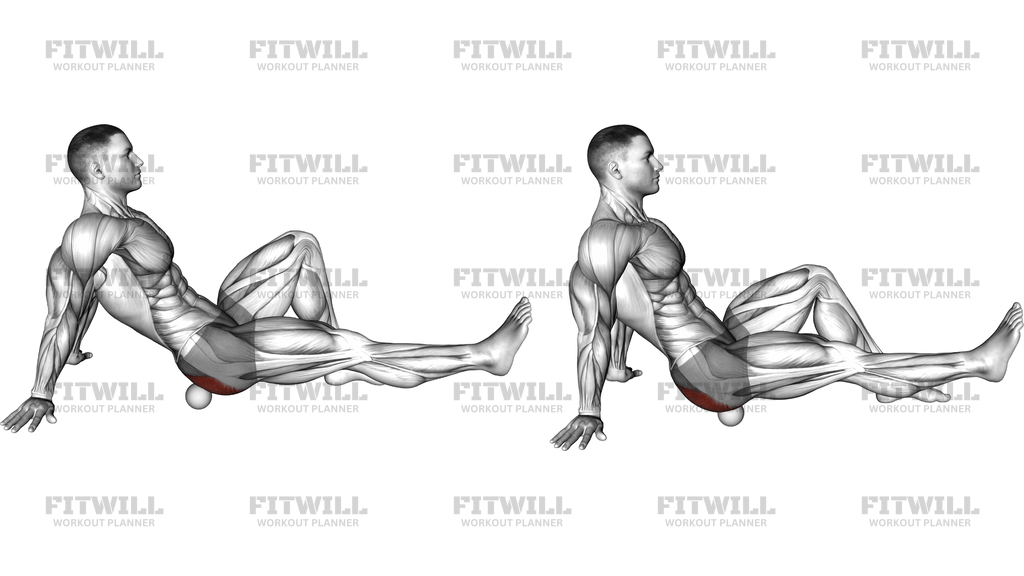
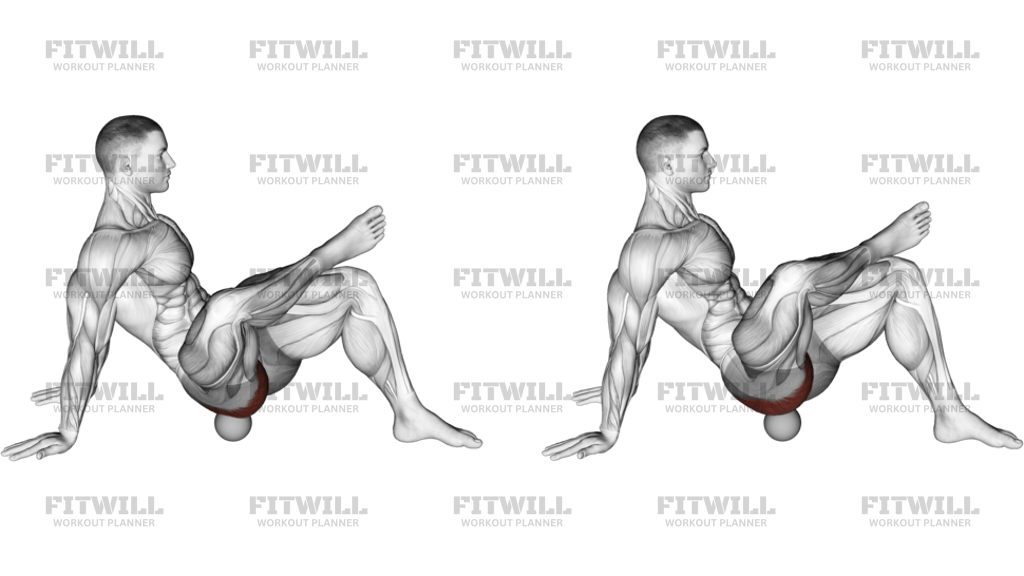
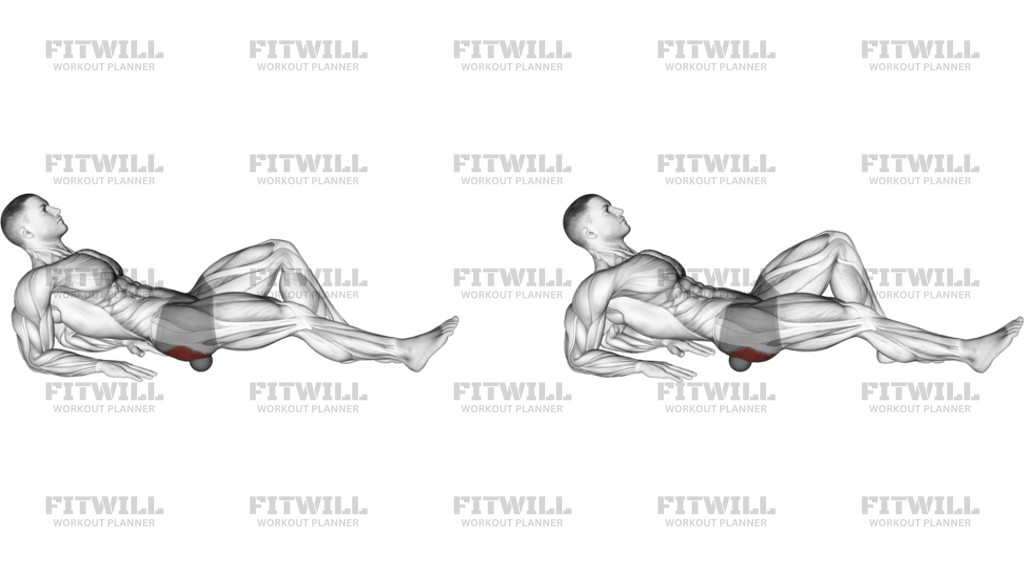
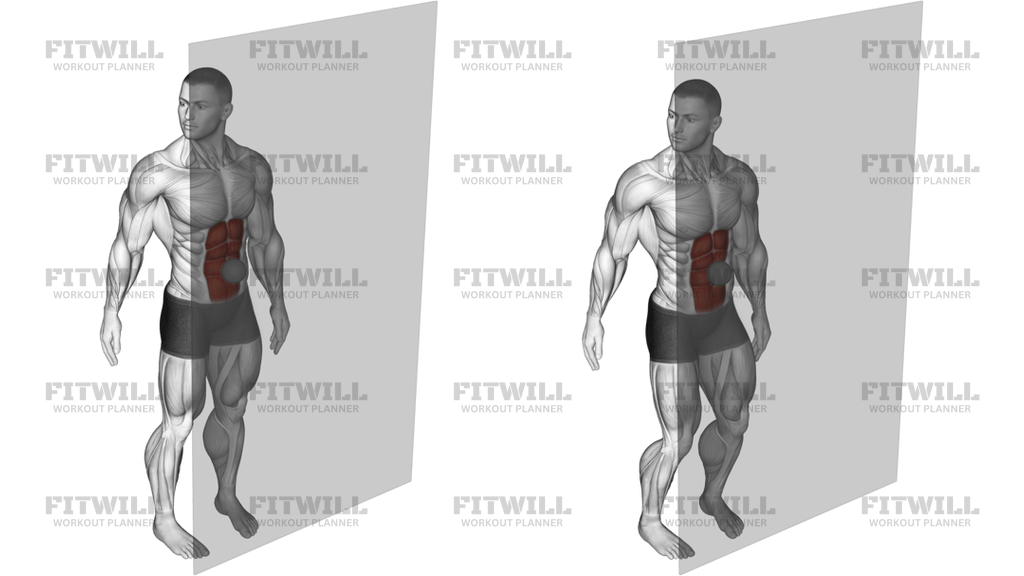
Roll Ball Iliacus Abdominal Region
Roll Ball Iliacus Abdominal Region is a front-hip soft-tissue release that uses a small roll ball to apply controlled pressure to the iliacus and the tissue just inside the front rim of the pelvis. The movement is not meant to be a big rolling exercise. It is a precise positioning drill where the setup determines whether you feel useful pressure in the deep hip flexor area or just roll across bone and lose the target.
The exercise is typically used to calm down a tight front hip after sitting, squatting, running, or repeated knee lift work. When it is done well, the pelvis stays quiet, the rib cage stays down, and the ball stays on the soft tissue instead of drifting into the hip bone or the groin. The result should feel like a tolerable release in the lower abdomen and front-hip channel, not a sharp pinch or a cramping sensation.
Because the iliacus sits deep inside the pelvis, the useful range is small. Slight changes in elbow support, pelvis angle, and how far you shift your bodyweight can make the difference between a productive release and an aggressive bruise-like contact. Slow breathing matters here: every exhale should help the front hip soften instead of stiffen.
Use this movement as mobility or recovery work, not as a strength drill. It works best when you choose a small ball, stay patient over each tender spot, and stop before the pressure becomes sharp or nerve-like. Beginners can usually tolerate it well if they keep the load light and limit the motion to small, controlled shifts over the front hip tissue.
[ Workout Log & Planner ]
Put your next workout in Fitwill
Keep your plan and training log ready when you are.


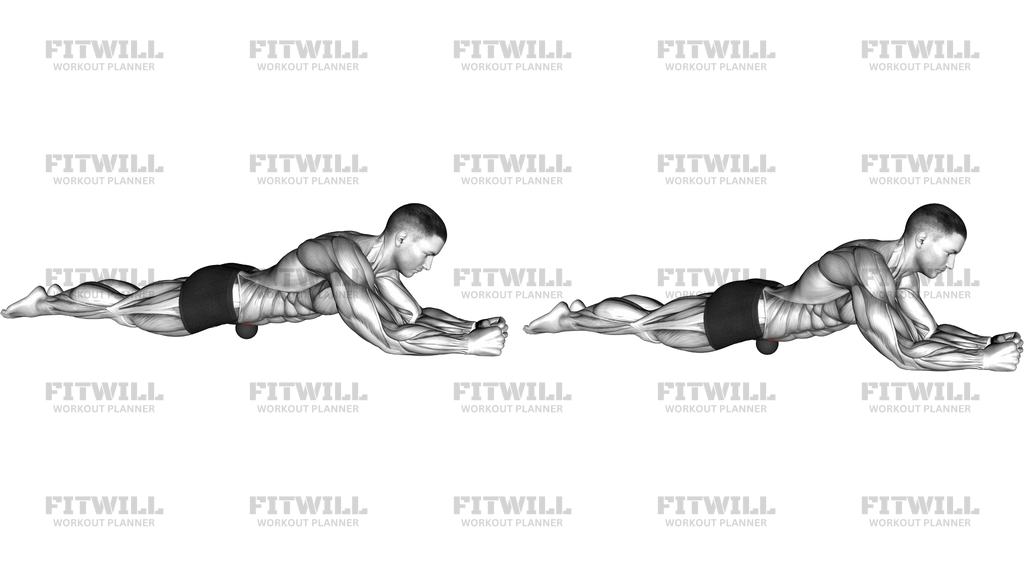
Instructions
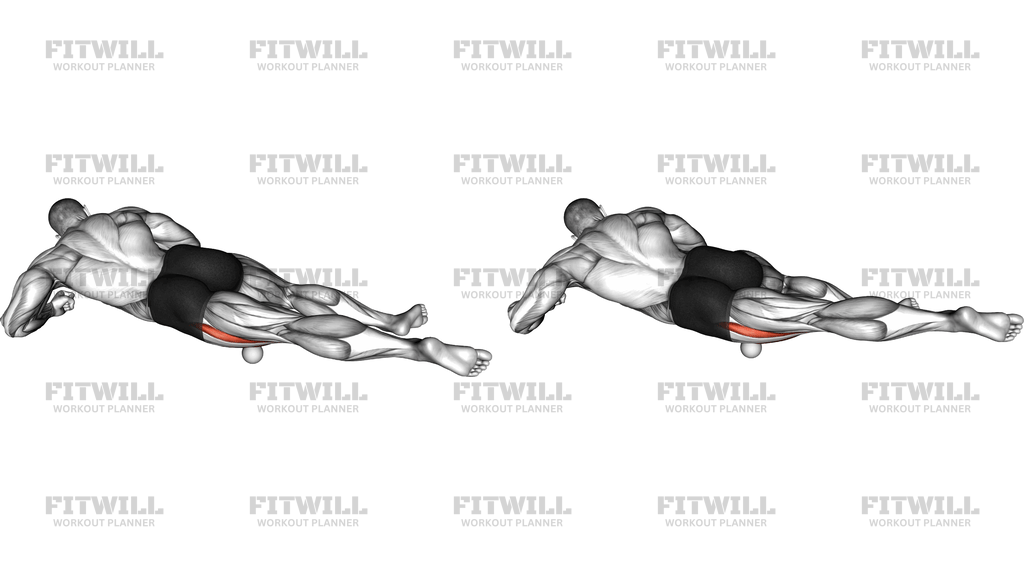
- Lie face down with a small roll ball under the soft tissue just inside one front hip, above the crease and away from the hard point of the pelvis.
- Prop yourself on both forearms so your chest is supported and your upper body can stay relaxed while the ball targets the front hip.
- Keep the working leg long and let the opposite leg rest without twisting your pelvis or arching your low back.
- Shift your bodyweight a few centimeters forward, back, and slightly inward until you find a tender spot in the iliacus area.
- Pause on the spot and take slow breaths, letting the exhale soften the front of the hip instead of bracing harder.
- Make tiny rolls or pressure shifts over the same area, staying on the soft tissue and avoiding the hip bone or groin.
- Reduce pressure by widening your forearm support or moving a little more weight onto the opposite side if the contact feels too sharp.
- Continue for the planned time, then slowly come off the ball and repeat on the other side if your program calls for it.
Tips & Tricks
- Place the ball on the soft pocket just inside the front hip, not directly on the iliac crest or the point of the hip bone.
- A smaller ball usually works better because the iliacus area is deep and a large ball tends to spread pressure too broadly.
- Keep the rib cage heavy and the low back quiet; if your spine arches, the pressure shifts away from the front hip tissue.
- Use your exhale to relax the abdomen and the front hip, especially when you settle onto a tender spot.
- If the sensation feels sharp, pinchy, or travels into the groin, move off the spot immediately and adjust the angle.
- Do not chase a big rolling range; this exercise is about a few centimeters of precise pressure change.
- Support more of your bodyweight with your forearms when the contact is too intense, then reintroduce pressure gradually.
- Hold each tender area long enough for the tissue to soften before moving on to the next spot.
Frequently Asked Questions
What does Roll Ball Iliacus Abdominal Region target most?
It targets the iliacus and the deep front-hip tissue just inside the pelvic rim.
Where should I feel the pressure with the ball?
You should feel it in the soft front-hip pocket above the hip crease, not on the bone or deep in the groin.
Is this a stretching exercise or a strength exercise?
It is a release and mobility drill, not a strength movement.
Can beginners do this safely?
Yes, if they use a small ball, keep the pressure light, and avoid forcing through sharp discomfort.
Why am I on my forearms instead of lying flat?
The forearm support lets you control how much bodyweight you put on the iliacus area.
What if the ball feels too painful?
Back off the pressure by shifting more weight to the forearms or moving the ball slightly off the tender point.
When is this exercise most useful?
It is useful after long periods of sitting, before lower-body training, or after sessions that leave the front hip tight.
Should I roll a large range over the hip?
No. Small shifts and short holds are more effective than trying to roll broadly across the pelvis.