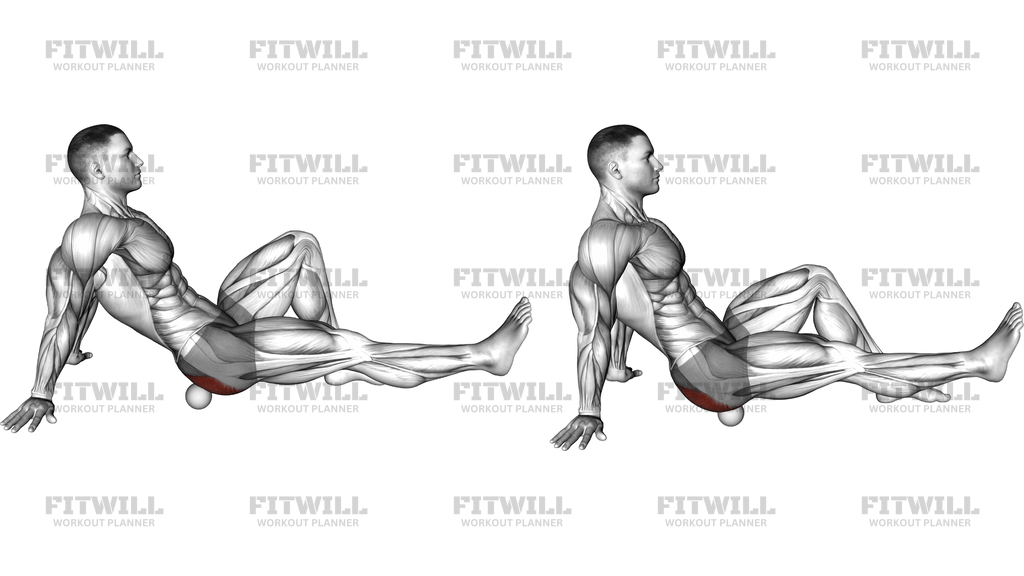
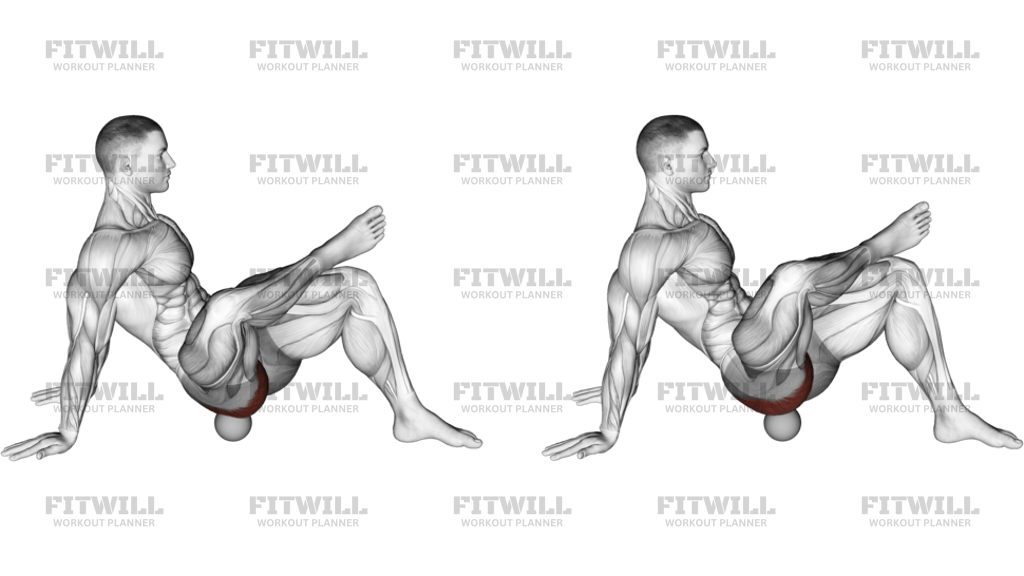
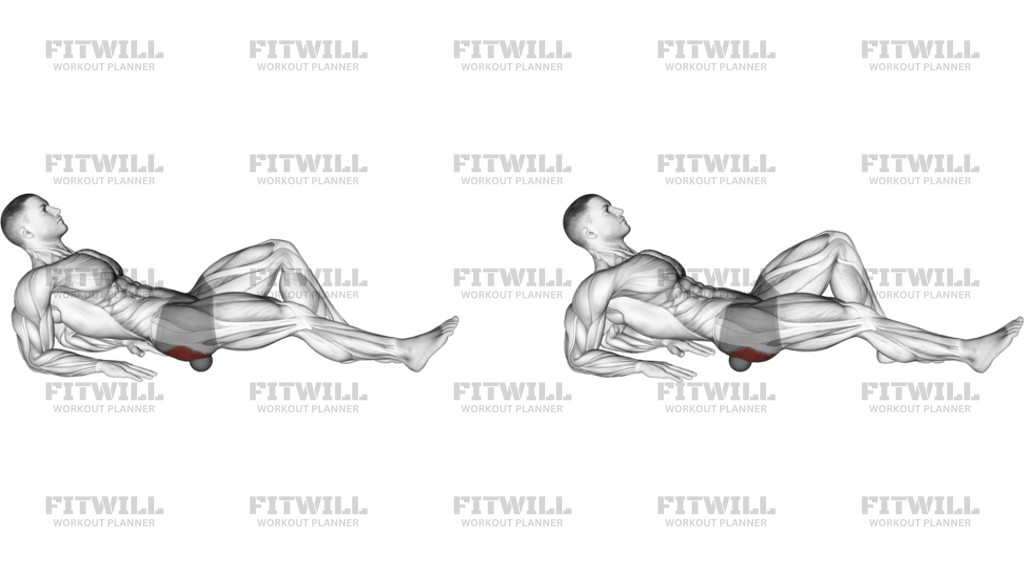
Roll Ball Lumbar Diagonal
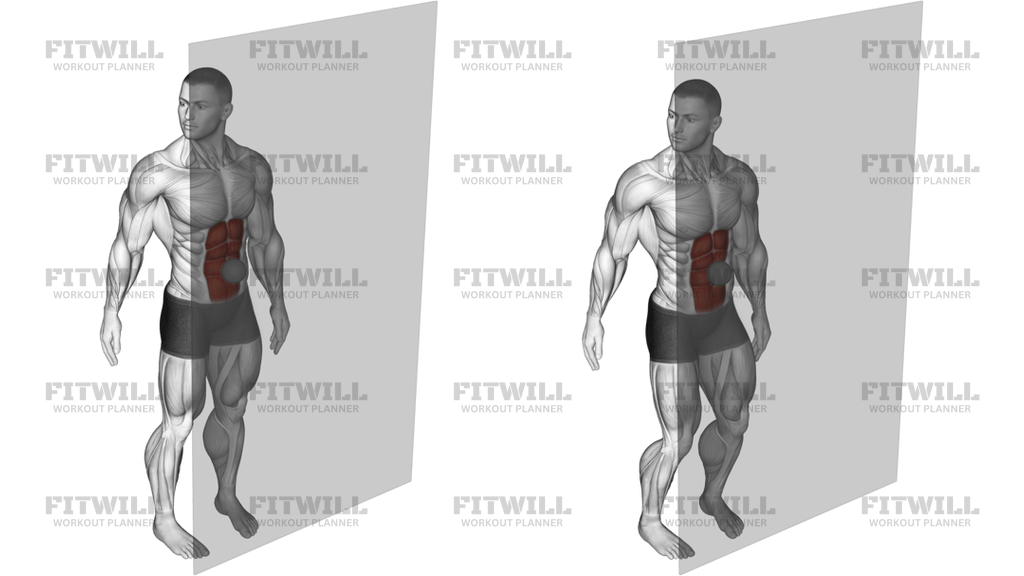
Roll Ball Lumbar Diagonal is a wall-supported lumbar mobility and soft-tissue drill that uses a rollball to work the low back, the side of the trunk, and the tissues that attach the pelvis to the ribs. The movement is small on purpose. Instead of trying to force a big stretch, you use body position, pressure, and a controlled diagonal glide to find the tight line beside the spine and let it soften gradually.
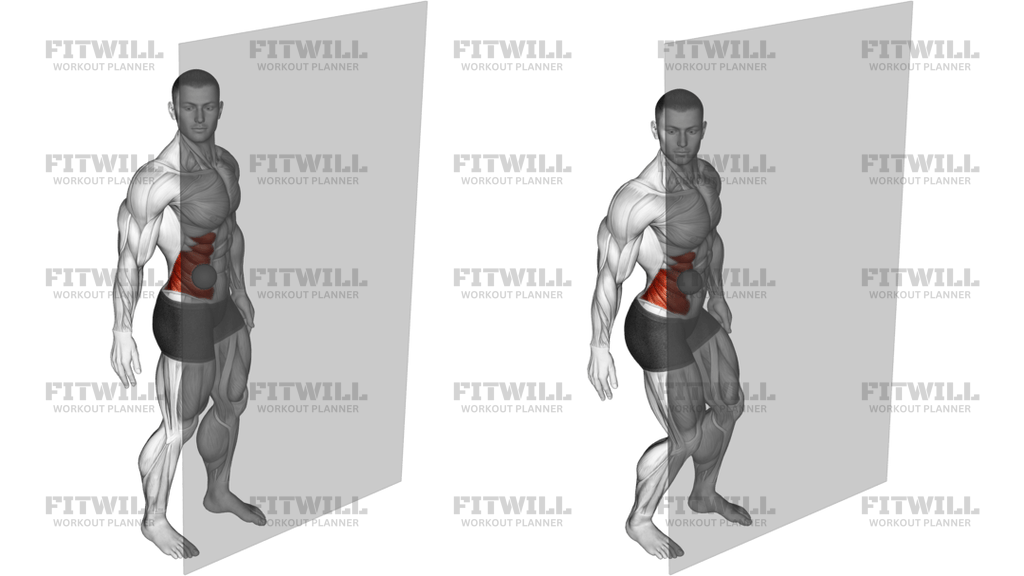
The setup matters because the ball should sit on muscle tissue, not on the lumbar vertebrae themselves. In the image, the ball is placed just beside the spine above the belt line, with the body leaning into the wall to create steady pressure. That position lets you bias the lumbar paraspinals, quadratus lumborum, and nearby stabilizers without jamming the low back into an extreme arch or twist.
Each repetition should feel like a guided diagonal sweep: sink slightly through the knees, shift the hips and ribs together, and trace a short arc that changes the angle of pressure across the low back. The goal is not speed or range. The goal is a smooth change in contact so the same area is loaded from a slightly different direction, which is why this drill is useful when the side of the low back feels stiff from sitting, hinging, or repeated rotation.
Use Roll Ball Lumbar Diagonal as a warm-up before pulling or squatting, as a reset between sets, or as a recovery drill after long periods of desk time. Keep the pressure firm but tolerable, breathe continuously, and stop short of sharp pain, numbness, or symptoms that travel down the leg. If the tissue feels guarded, reduce the lean, shorten the diagonal path, and make the movement slower rather than harder. Clean, repeatable pressure is what makes this drill useful.
[ Workout Log & Planner ]
Put your next workout in Fitwill
Keep your plan and training log ready when you are.


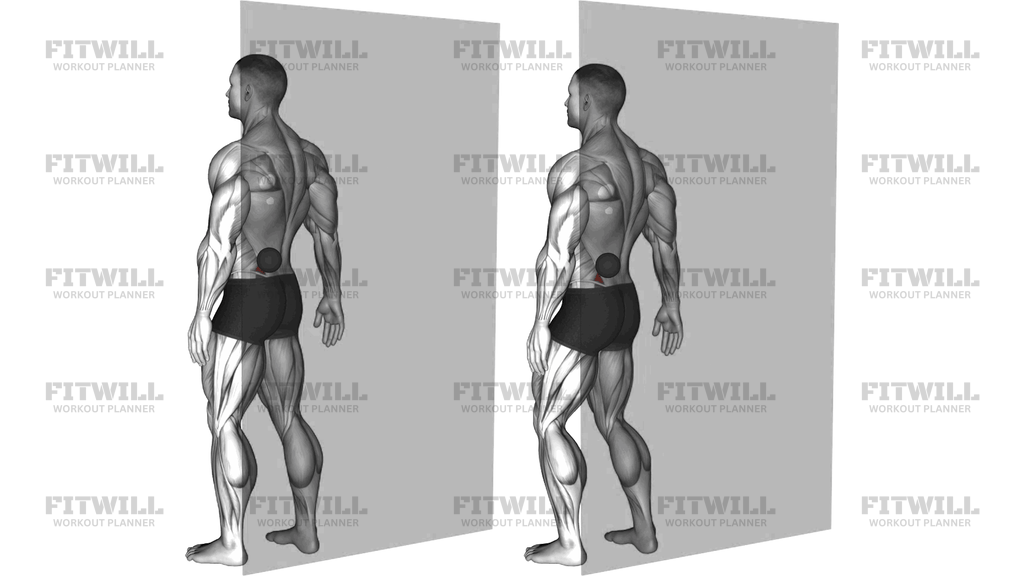
Instructions
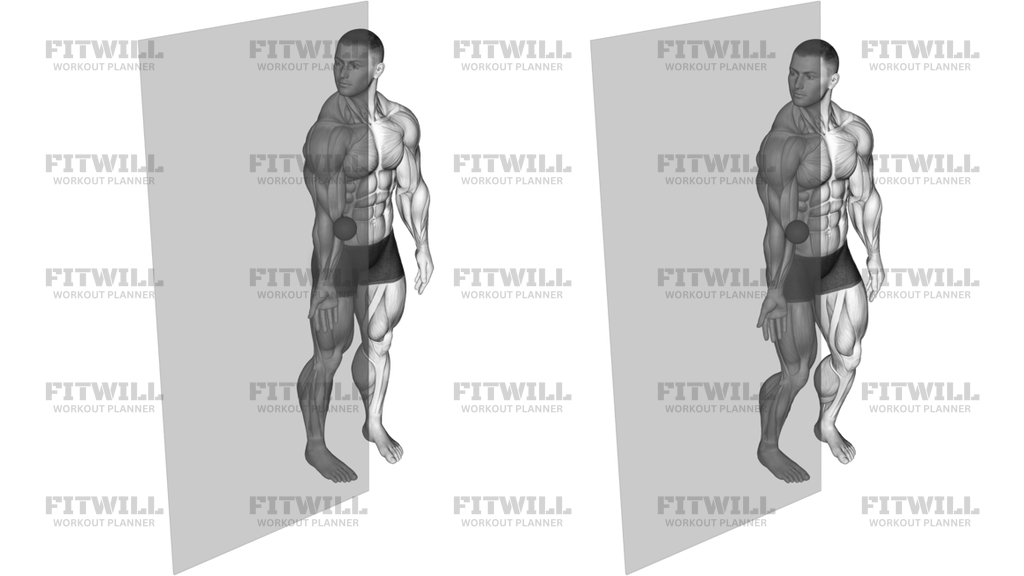
- Place the rollball against the wall just beside your lumbar spine, a little above the top of your pelvis, so it presses into muscle rather than directly on the spine.
- Stand side-on to the wall with one foot slightly in front of the other, knees soft, and the working-side hip close enough to keep steady pressure on the ball.
- Lean your lower back and flank into the ball until you feel firm, even contact, then stack your ribs over your pelvis instead of arching hard through the low back.
- Begin the rep by bending both knees slightly and letting your hips and ribcage shift together in a small diagonal path.
- Trace the diagonal slowly so the ball rolls across a short line on the low back and side waist, not in a fast up-and-down bounce.
- Pause for a moment at the end of the diagonal, breathe out, and let the tight spot soften under the pressure.
- Reverse the same diagonal path to return to the start position without losing contact with the wall.
- Reset the ball a little higher, lower, or more lateral if needed, then repeat for the planned number of reps on each side.
Tips & Tricks
- Keep the ball beside the spine, not on the bony centerline of the vertebrae.
- A small diagonal shift is enough; if the movement turns into a big squat or twist, the pressure stops being specific.
- If the ball feels too sharp, step a little farther from the wall so the pressure drops before you continue.
- Let the knees bend with the hips instead of locking them straight, which keeps the contact smooth as you move.
- Breathe out during the part of the rep where the ball finds the tightest tissue line.
- Keep the head and ribs quiet so the low back does the work instead of the shoulders or neck.
- If one spot is especially tender, hold there and make tiny diagonal pulses rather than forcing more range.
- Stop if you feel tingling, radiating pain, or a pinchy sensation in the spine itself.
Frequently Asked Questions
What does Roll Ball Lumbar Diagonal target?
It mainly targets the muscles beside the lumbar spine, especially the lumbar paraspinals and the side of the lower back.
Where should the rollball sit on my back?
Place it just to one side of the spine above the pelvis, on soft tissue rather than directly on the vertebrae.
Why is the movement diagonal instead of straight up and down?
The diagonal path changes the pressure line across the low back, which helps you find tight tissue beside the spine and near the upper pelvis.
Should I feel this in the spine?
No. You should feel firm pressure in the muscle tissue around the spine, not sharp pressure on the bones or joints.
Is Roll Ball Lumbar Diagonal a stretch or a massage drill?
It acts like a soft-tissue release with an active stretch effect, because you move while keeping steady pressure on the area.
Can I use this before squats or deadlifts?
Yes. It works well as a warm-up when the low back or side waist feels stiff before hinging or squatting.
What should I do if the pressure feels too intense?
Reduce the lean into the wall, shorten the diagonal path, or move the ball slightly farther from the spine.
Who should avoid this movement?
Anyone with sharp back pain, radiating leg symptoms, or a history of lumbar irritation should get clearance before using direct pressure on the low back.