Roll Ball Deltoid Posterior
Roll Ball Deltoid Posterior is a wall-based self-massage and mobility drill for the back of the shoulder. A small ball is pinned between the posterior deltoid and the wall so you can use bodyweight and tiny shifts to release tight tissue around the rear shoulder without loading the joint like a strength exercise.
This movement is most useful after pressing, rowing, throwing, or any upper-body session that leaves the rear delt feeling dense or restricted. The goal is not to force a deep stretch. Instead, you look for a tender spot, apply tolerable pressure, and let slow breathing and small position changes reduce the local tension.
Setup matters because the ball needs to sit on the fleshy back edge of the shoulder, not on the neck, spine, or top of the shoulder joint. Crossing the working arm across the chest usually helps expose the posterior deltoid and keeps the ball from drifting onto bone. The stance should feel relaxed and stable enough that you can fine-tune pressure with your legs and torso.
Once the ball is in place, make tiny up-and-down or forward-and-back adjustments to roll over tight areas. Pause briefly on the most sensitive spot, exhale, and let the shoulder soften before moving to the next point. The sensation should be firm and localized, never sharp, electric, or numb.
Use this drill as a warm-up, cool-down, or between upper-body sets when the rear shoulder needs to feel freer and less guarded. Short, precise passes work better than aggressive grinding, because the aim is to improve tissue tolerance and shoulder comfort while keeping the movement calm and controlled.
[ Workout Log & Planner ]
Put your next workout in Fitwill
Keep your plan and training log ready when you are.


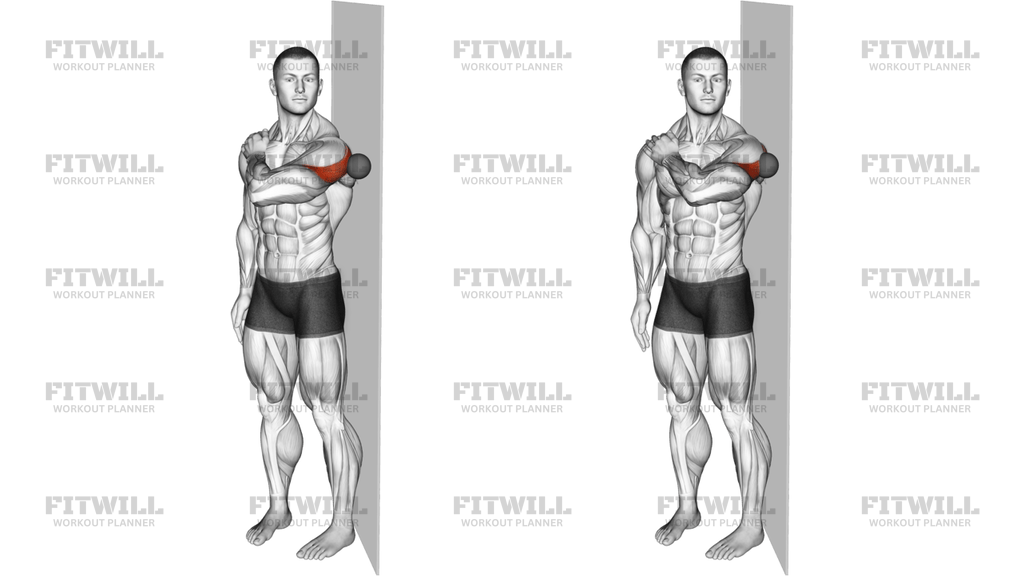
Instructions
- Stand side-on to a wall and place a small massage or lacrosse ball on the back of one shoulder, just behind the deltoid.
- Bring the working arm across your chest or lightly support it with the opposite hand so the rear shoulder tissue is exposed.
- Lean your bodyweight into the ball until you feel firm pressure on the posterior deltoid, not on the neck or shoulder bone.
- Keep your ribs down and chin level, then bend and straighten your knees slightly to control how much pressure the ball creates.
- Make tiny up-and-down or front-to-back shifts to roll the ball over the tightest part of the rear delt.
- Pause for 10 to 20 seconds on a tender point and breathe slowly instead of pressing harder.
- Move a few centimeters to the next spot and repeat, staying away from sharp pain, numbness, or tingling.
- Step away from the wall when finished, let the shoulder relax, and switch sides if needed.
Tips & Tricks
- Place the ball on the fleshy back of the shoulder; if it sits on the top ridge of the joint, slide it lower and slightly farther back.
- Crossing the arm across your chest helps separate the posterior delt from the upper trap and makes the target easier to find.
- Use smaller knee bends to reduce pressure and stand a little closer to the wall if the contact feels too aggressive.
- Keep your neck long and avoid shrugging the shoulder toward your ear while you search for the tender spot.
- Roll in short 1 to 2 centimeter shifts instead of large circles so you stay on the rear delt instead of drifting across the scapula.
- If the ball keeps sliding, hold the arm position more firmly or lower the ball slightly until it sits on a more stable patch of muscle.
- Back off immediately if the sensation becomes sharp, pinchy, or shoots into the arm.
- Use slow exhalations to let the tissue soften rather than trying to grind through the tightness.
Frequently Asked Questions
What does Roll Ball Deltoid Posterior target most?
It mainly targets the posterior deltoid, with some help from the upper back and rotator cuff muscles that stabilize the shoulder.
Is this a stretch or a strengthening exercise?
It is a soft-tissue release and mobility drill, not a strength movement. The goal is to calm tight tissue around the back of the shoulder.
Where should the ball sit on my shoulder?
It should sit on the fleshy back edge of the shoulder, behind the deltoid. Avoid the neck, the spine, and the top of the shoulder joint.
Why is my arm crossed across my chest in the setup?
Crossing the arm helps expose the posterior deltoid and keeps the ball on the rear shoulder instead of sliding toward the front of the joint.
How much pressure should I use?
Use firm but tolerable pressure. If the sensation turns sharp, numb, or electric, reduce the pressure or move the ball to a different spot.
How long should I stay on one spot?
Ten to twenty seconds is usually enough for one tender spot before you move a few centimeters and search for the next one.
When is the best time to use this drill?
It works well in a warm-up, cool-down, or between upper-body sets when the rear shoulder feels tight or overworked.
What are the most common mistakes?
Most people press too hard, shrug the shoulder, or roll onto the bony top of the joint instead of staying on the rear delt.