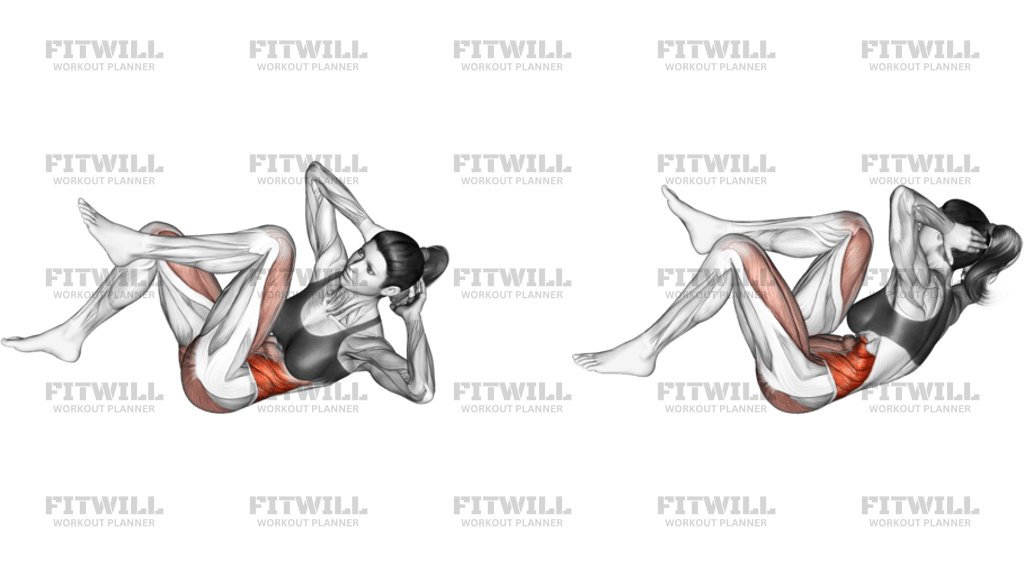
Crunch Arms On Chest
Crunch Arms On Chest is a floor ab exercise that trains trunk flexion with the arms held across the chest instead of behind the head. That arm position removes the temptation to pull on the neck and keeps the focus on curling the ribcage toward the pelvis. It is a simple body-weight movement, but the quality of each rep depends on how well you set up your feet, pelvis, and breathing.
The exercise is useful when you want direct abdominal work without loading the spine with a large range of motion. The upper abs and the deeper trunk stabilizers do most of the work, while the hip flexors, lower back, and neck should stay quiet. If those areas start taking over, the rep usually becomes too big, too fast, or too sloppy.
Start by lying on your back with your knees bent and your feet flat on the floor about hip-width apart. Keep your lower back gently in contact with the floor, then cross your arms over your chest so your hands rest on opposite shoulders or upper arms. From there, the movement is small: lift your shoulder blades off the floor, curl your ribs toward your pelvis, and stop before the hips try to drive the motion.
A good rep feels like the chest is folding toward the hips rather than the whole torso throwing itself upward. Exhale as you crunch up, then lower under control until your shoulder blades touch down again. If your neck or jaw starts tightening, shorten the range and keep your chin slightly tucked so the back of the neck stays long.
Crunch Arms On Chest fits well in core-focused sessions, warmups, and accessory work after bigger lifts. It is also a good option for beginners because the setup is stable and the load is easy to control. The main challenge is not intensity from weight, but precision from position: keep the feet planted, keep the arms crossed, and make every repetition look the same from start to finish.
If your lower back arches off the floor, reduce the range and keep the exhale strong through the top of the crunch. When done cleanly, the exercise gives the abs repeated tension without requiring speed, momentum, or aggressive spinal movement. That makes it a practical choice when you want straightforward abdominal work that is easy to scale up or down.
[ Workout Log & Planner ]
Put your next workout in Fitwill
Keep your plan and training log ready when you are.


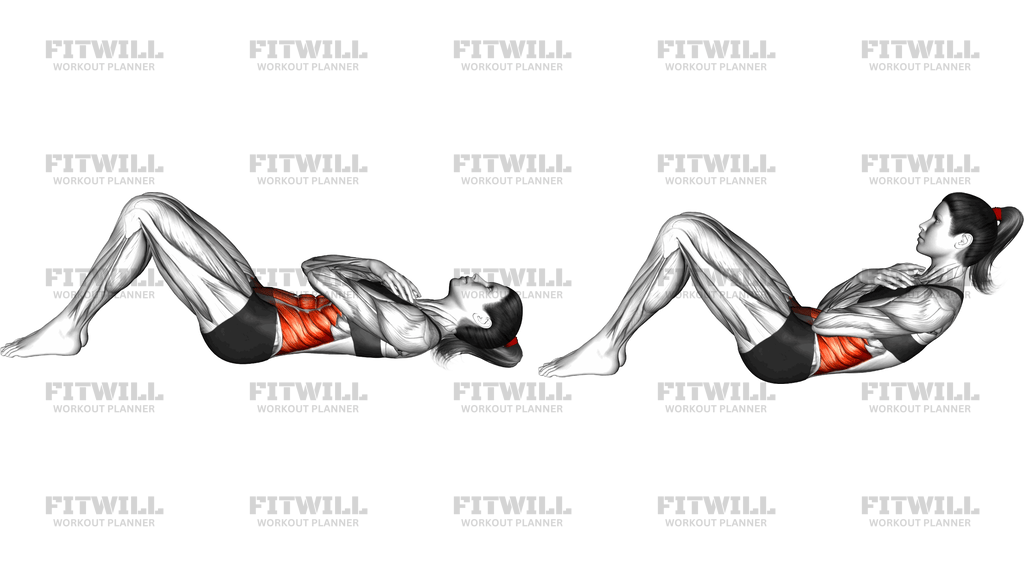
Instructions
- Lie on your back on a mat with your knees bent, feet flat, and heels roughly under your knees.
- Cross your arms over your chest so each hand rests on the opposite shoulder or upper arm.
- Set your feet hip-width apart and gently press your lower back toward the floor before you start.
- Take a breath in, then exhale and curl your head, shoulders, and shoulder blades off the floor.
- Lift only until your ribs move toward your pelvis and your mid-back begins to peel up; keep the movement small and deliberate.
- Keep your elbows from flaring and avoid pulling with your arms or tucking your chin hard into your chest.
- Pause briefly at the top with the abs fully shortened, then inhale as you lower back down under control.
- Lower until your shoulder blades touch down again, reset your brace, and repeat for the planned reps.
Tips & Tricks
- Keep the crunch small; if you are sitting all the way up, the hip flexors are probably taking over.
- Think about lifting your sternum toward your pelvis rather than reaching your chest toward your knees.
- Crossing the arms on the chest should keep the neck relaxed, not make the shoulders hike toward the ears.
- Plant your feet and keep them still; shifting feet usually means you are using momentum instead of the abs.
- If your lower back pops off the floor, shorten the range and stop the rep earlier.
- A slow lowering phase makes this harder without needing extra reps or added load.
- Keep the chin slightly tucked so the back of the neck stays long through the top of the crunch.
- Choose a rep pace that lets you exhale on every lift; holding your breath tends to turn the movement into a jerky sit-up.
- Stop the set when the shoulders start swinging off the floor or the ribs stop curling and the torso just rocks.
Frequently Asked Questions
What muscles does Crunch Arms On Chest work?
It mainly trains the rectus abdominis, with the deeper trunk muscles helping stabilize your torso. Your hip flexors and neck should stay secondary if the setup is correct.
Why are my arms crossed on my chest for Crunch Arms On Chest?
Crossing the arms removes the temptation to pull on the head and makes the abs do the lifting. It also keeps the exercise simple and stable for floor-based core work.
How high should I come up on each Crunch Arms On Chest rep?
Only lift until your shoulder blades leave the floor and your ribs curl toward your pelvis. If you are sitting up high, the movement has turned into more of a sit-up than a crunch.
Can beginners do Crunch Arms On Chest safely?
Yes, it is one of the easier ab exercises to learn because the floor supports your back and legs. Beginners should keep the range small and focus on a controlled exhale at the top.
What is the most common mistake in Crunch Arms On Chest?
The biggest mistake is yanking the torso up with momentum or letting the hips drive the motion. The crunch should come from the abs curling the ribcage, not from swinging the body.
Should my lower back stay on the floor during Crunch Arms On Chest?
Your lower back should stay mostly grounded while you crunch, with only the upper torso peeling up. If the low back arches hard, reduce the range and keep the exhale stronger.
How many reps should I do for Crunch Arms On Chest?
This movement usually works best for moderate to higher reps, such as 10-20 controlled repetitions. Pick a range that lets you keep the same small, precise crunch on every rep.
Is Crunch Arms On Chest the same as a sit-up?
No, a crunch is a shorter spinal curl that keeps the pelvis and feet stable on the floor. A sit-up involves a much bigger range and more hip flexor work.
What should I do if my neck feels strained during Crunch Arms On Chest?
Keep your chin slightly tucked, look upward, and make the curl smaller so the head is not leading the rep. If the neck still takes over, slow down and stop a little earlier at the top.