Wide To Narrow Push-Up
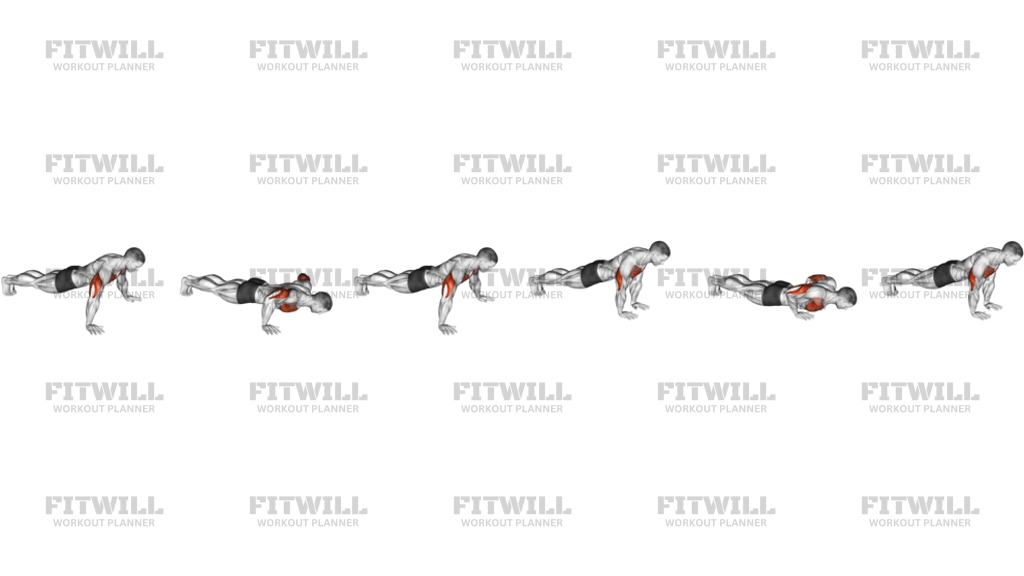
Wide to Narrow Push-Up is a bodyweight pressing variation that combines a wider hand position with a narrower one to challenge the chest, triceps, front shoulders, and trunk at the same time. The wide position puts more demand on the chest and upper-arm support, while the narrower position shifts more work toward elbow extension and shoulder stability. That change in hand width is the point of the exercise, so each rep should look controlled and deliberate rather than rushed.
The setup matters because a sloppy plank turns the movement into a lower-back exercise instead of a clean push. Start in a high plank with the hands set wide enough to open the chest, wrists stacked under the shoulders or slightly wider, legs straight, and feet planted firmly. Keep the neck long and the ribs down so the torso stays in one line from head to heel while you move.
Lower the chest between the hands with the elbows tracking back at a comfortable angle, then press up under control without letting the shoulders collapse forward. Depending on the version you are using, you may switch from the wide hand position to a narrower hand position at the top of the rep or alternate the hand width from rep to rep. Either way, the change should be smooth, not a sudden hop or a twist through the hips.
Breathing and tempo are important because the exercise rewards clean tension more than speed. Inhale on the descent, exhale as you press away from the floor, and keep the midsection braced so the pelvis does not sag or pike. If the range gets short or the shoulders start shrugging, reduce the speed, raise the hands on a bench, or drop to the knees before the set turns into compensation.
This movement fits well in a chest, upper-body, or full-body session when you want a push-up pattern that feels more demanding than a standard repetition but still stays simple and equipment-free. It is useful for accessory work, conditioning circuits, and movement quality blocks because it trains pressing strength while also asking the shoulders and core to coordinate under changing leverage. Keep the reps crisp, use pain-free wrist and shoulder positions, and stop the set when the hand transition or plank position starts to break down.
[ Workout Log & Planner ]
Put your next workout in Fitwill
Keep your plan and training log ready when you are.


Instructions
- Start in a high plank with your hands set wider than shoulder width, fingers spread, shoulders stacked over or just behind the wrists, and feet planted firmly behind you.
- Brace your abs and glutes so your body stays in one long line from head to heels before you begin the first descent.
- Lower your chest toward the floor with the elbows angling back naturally, keeping the shoulders away from your ears.
- Touch down or hover just above the floor while keeping the torso tight and the neck neutral.
- Press up smoothly to full elbow extension without letting the hips sag or rotate.
- If your version changes hand width, bring the hands into the narrower position at the top of the rep, then reset to the wide position for the next rep or next repetition in the pattern.
- Keep the transition controlled so the movement comes from your chest and arms, not from a hop or twist through the torso.
- Inhale on the way down, exhale as you press up, and keep the breathing steady through the whole set.
- End the set when you can no longer hold the plank, control the hand transition, or keep the chest moving in a clean line.
Tips & Tricks
- Use a hand width that feels wide, but not so wide that your shoulders roll forward or your wrists feel strained.
- Keep your elbows from flaring straight out to the sides; a slight back angle is usually easier on the shoulders.
- Think about moving the chest between the hands instead of dropping the head toward the floor.
- If the narrow position feels too hard, shorten the range by using an incline bench or sturdy box.
- A small pause at the bottom can help you stay honest about control, especially during the wide hand phase.
- Do not let the hips swivel when the hands change position; the torso should stay square to the floor.
- Keep pressure through the whole palm so the wrists do not dump forward as the hand width changes.
- When fatigue starts to shorten the rep, switch to knee push-ups or elevate the hands instead of forcing sloppy reps.
Frequently Asked Questions
What muscles does Wide to Narrow Push-Up work?
It mainly trains the chest, triceps, and front shoulders, with the core and serratus muscles helping keep the plank rigid.
What makes this different from a regular push-up?
The wider hand position increases chest demand, while the narrower position shifts more work toward the triceps and shoulder stability.
Do I move my hands during every rep?
That depends on the version you are doing. Some people switch from wide to narrow at the top of each rep, while others alternate wide and narrow reps.
Is this exercise beginner-friendly?
Yes, if you use a shorter range, an incline, or knee support until you can keep the plank and hand transition under control.
What is the most common form mistake?
Letting the hips twist or the shoulders shrug when the hand width changes is the biggest problem.
Should my elbows flare out wide?
No. A moderate elbow angle usually feels better on the shoulders and keeps more tension on the chest and triceps.
What should I do if my wrists hurt?
Use an elevated surface, spread the fingers harder into the floor, or perform the movement on handles or push-up bars if available.
How can I make the exercise easier?
Raise your hands on a bench or box, shorten the depth, or do the movement from your knees while keeping the same hand-width pattern.