Lying Leg Raise
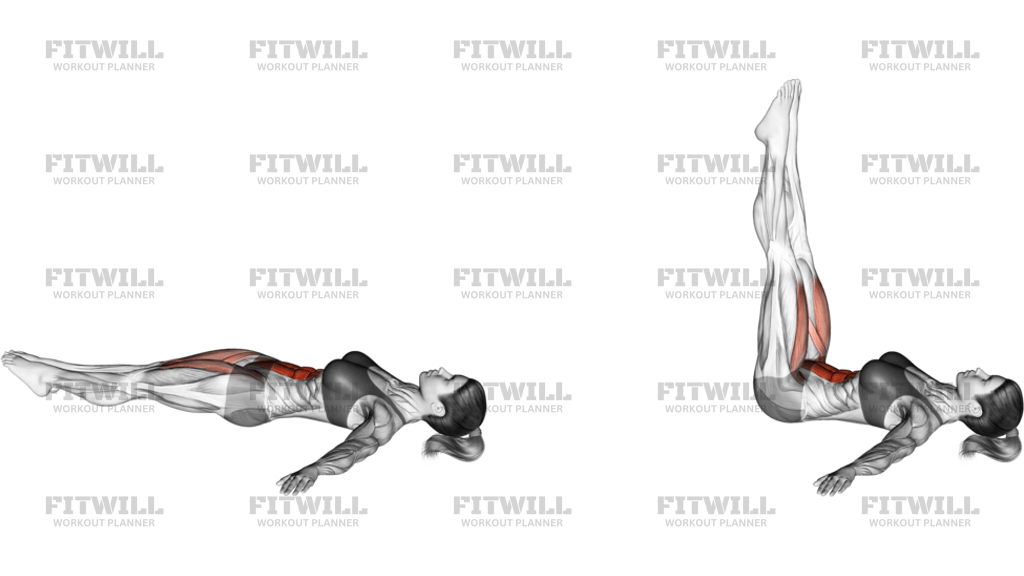
Lying Leg Raise is a bodyweight core exercise performed from the floor with the torso pinned down and the legs moving as one long lever. It is useful for building control through the lower abdominal wall, hip flexors, and deep trunk stabilizers, especially when you want strict reps instead of fast swinging leg raises. The movement looks simple, but the quality of each repetition depends on how well you control the pelvis and rib cage.
The setup matters because the floor gives you feedback about whether your low back is staying organized. Lie flat on your back, keep your legs straight or only slightly bent if needed, and place your arms by your sides or under your hips for support. Before you start, gently tuck the pelvis so the lower back feels long and heavy against the floor. If your back arches as soon as the legs move, the range is too large for the current set.
Each repetition should feel like a controlled lift from the lower trunk rather than a kick from the hips. Raise the legs until they are close to vertical or until the low back is just about to lose contact with the floor, then lower them slowly without letting the movement turn into a swing. Exhale as the legs come up, keep the ribs down, and let the return phase happen under control instead of dropping the heels toward the floor.
Lying Leg Raise is a good accessory exercise after compound lifts, during a core-focused session, or as part of a warm-up when you want to wake up the abdominal wall without loading the spine. It also works well for beginners who need a clear floor-based drill to learn how to brace and control the pelvis. The exercise gets more demanding the lower the legs travel, so the correct progression is usually better control first, then more range.
If you feel the hip flexors doing all the work, shorten the lever by bending the knees slightly or stopping the descent sooner. If your neck or low back starts to compensate, reduce the range and slow the tempo until the torso stays still. Clean sets of Lying Leg Raise should leave the abs working hard while the rest of the body stays quiet and stable.
Fitwill
Log Workouts, Track Progress & Build Strength.
Achieve more with Fitwill: explore over 9600 exercises with images and videos, access built-in and custom workouts, perfect for both gym and home sessions, and see real results.
Start your journey. Download today!




Instructions
- Lie on your back on a mat with your legs extended, your lower back gently pressed into the floor, and your arms by your sides or tucked under your hips for support.
- Keep your legs together with your toes pointed up, and set your head and shoulders down so your rib cage stays relaxed instead of flaring.
- Tighten your lower abs before you move so the pelvis stays slightly tucked and the low back does not arch off the floor.
- Lift both legs together until they are near vertical, using the abs to start the motion rather than kicking the feet upward.
- Pause briefly at the top while keeping the knees straight or only softly unlocked and the hips stacked over the pelvis.
- Lower the legs slowly in one controlled arc, stopping before your lower back starts to lift or your hips begin to tip forward.
- Exhale as the legs rise and inhale on the way down, keeping the torso quiet and the neck relaxed the entire time.
- Finish the set by placing your heels down or bending your knees to reset if your lower back starts to lose contact with the floor.
Tips & Tricks
- If your low back pops off the floor, shorten the range before you try to raise the legs higher.
- Place your hands under your hips only if you need a little feedback or support; do not press so hard that the pelvis tilts forward.
- Keep the legs slightly bent if straight knees make the hip flexors take over too early.
- Lower the legs for three to five seconds to keep the descent from turning into a drop.
- Stop the rep when the heels are still a few inches above the floor if that is the point where the pelvis stays controlled.
- Keep the ribs knitted down instead of chasing the legs with an arched rib cage.
- Do not let the feet drift apart; holding the legs together makes the trunk work harder to resist rotation.
- If the neck strains, keep the head resting on the floor and avoid trying to curl the shoulders up.
Frequently Asked Questions
What does Lying Leg Raise work most?
It emphasizes the lower abs and deep core muscles, with the hip flexors helping to lift the legs.
Should my lower back stay on the floor during Lying Leg Raise?
Yes, that is the main checkpoint. If the lower back starts arching, reduce the range or bend the knees a little.
How low should I lower my legs in Lying Leg Raise?
Lower them only as far as you can while keeping the pelvis tucked and the lower back heavy on the floor.
Why do I feel this more in my hip flexors than my abs?
The hip flexors always assist, but they can dominate if the range is too low or the legs are too straight for your current strength.
Is Lying Leg Raise good for beginners?
Yes, if you keep the legs higher, use a slower tempo, and bend the knees slightly when needed.
How can I make Lying Leg Raise harder without adding weight?
Use a slower lowering phase, pause near the top, or keep the legs straighter while still controlling the pelvis.
Should I hold my breath during Lying Leg Raise?
No. Exhale as the legs rise and inhale as they lower so you can keep the rib cage and pelvis organized.
What is a common mistake in Lying Leg Raise?
Swinging the legs down fast is the big one. The return should stay slow enough that the floor never feels like a crash landing.