Barbell Pin Front Squat
Barbell Pin Front Squat is a front-squat variation performed in a rack with the bar set against the pins or safety arms to control depth and improve positional strength. The bar sits in the front rack across the front of the shoulders, which keeps the torso more upright and makes the thighs, upper back, and core work together through a very strict squat pattern. The pins are not there to make the exercise easier; they are there to give you a consistent depth target and a safe stopping point.
Because the load is held in front of the body, this variation demands a strong rack position, tall chest, and active elbows. If the elbows drop, the bar rolls forward and the torso collapses. When the rack position stays solid, the quads can drive the movement while the upper back and trunk resist the forward pull of the bar. That makes the exercise especially useful for lifters who need cleaner squat mechanics, stronger bottom-end control, or more confidence out of the hole.
Set the pins so they meet the bar at the depth you want to train, usually around parallel or slightly below. From there, descend under control until the thighs lightly contact the pins or the chosen depth marker, keep the torso braced, and drive straight up without bouncing. The pause against the pins removes the stretch reflex and forces the legs and trunk to produce force from a dead stop, which is why this movement feels more demanding than a regular front squat at the same load.
The exercise is useful in strength phases, technique blocks, and accessory work when you want honest squat reps without relying on rebound. It can also help reinforce posture for athletes who need strong knee drive and upright torso control. Start lighter than you would for a standard front squat, especially if your wrists, thoracic mobility, or front rack position are still limiting you.
Keep the movement smooth and repeatable. If you cannot keep the elbows high, heels grounded, and knees tracking over the toes, reduce the load or raise the pin height. A clean pin front squat should feel like controlled pressure through the quads and trunk, not a collapsed forward fold or a dive into the bottom position.
[ Workout Log & Planner ]
Put your next workout in Fitwill
Keep your plan and training log ready when you are.


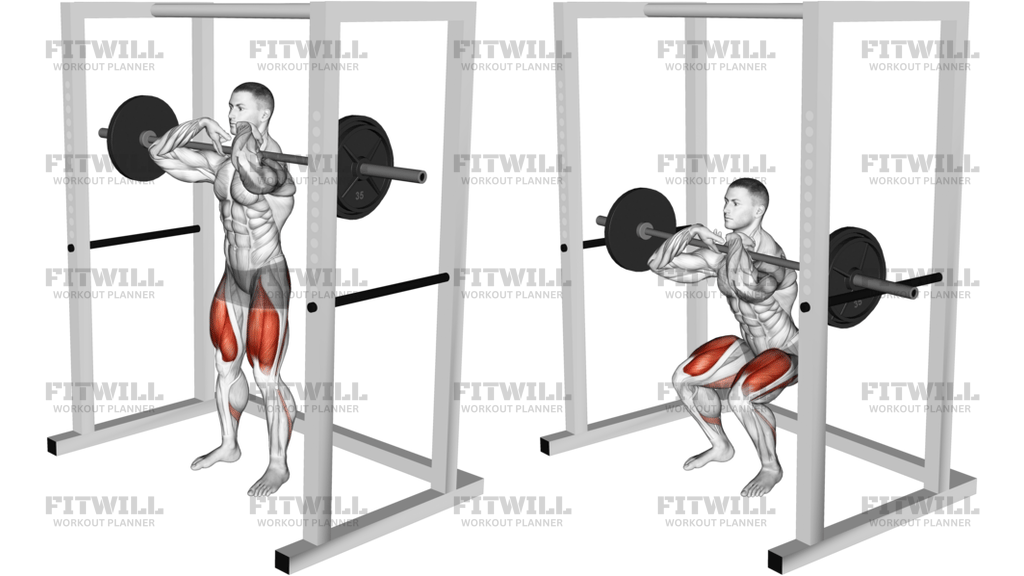
Instructions
- Set the bar on the rack pins or safety arms at the squat depth you want to train, then step under it and secure a front-rack grip with the bar resting across the front of your shoulders.
- Lift your elbows high, keep your upper arms parallel to the floor if possible, and stand tall before you start the first rep.
- Place your feet about shoulder-width apart with toes slightly turned out and distribute pressure through the whole foot.
- Inhale and brace your trunk before each descent so your ribs stay stacked over your pelvis.
- Sit straight down between your heels while keeping the chest up and the knees tracking in line with the toes.
- Lower until the thighs lightly touch the pins or the chosen depth marker without relaxing onto the rack.
- Drive through the midfoot and heels to stand up, keeping the elbows up so the bar stays over the center of your body.
- Exhale as you pass the sticking point, then reset your breath and posture before the next repetition.
Tips & Tricks
- Treat the pins as a depth target, not a place to crash and rest.
- If the bar rolls toward your throat, raise your elbows and lower the load before continuing.
- Use a slightly wider front-squat stance if your ankles or hips limit depth, but keep the knees tracking over the toes.
- A clean rep should feel like the torso stays upright while the knees and hips do most of the bending.
- Do not let the wrists take all the load; support the bar on the shoulders and fingertips rather than gripping it tightly.
- Keep the descent controlled so the thighs meet the pins with tension instead of bouncing off them.
- Choose a load you can pause and restart from the pins without losing brace or balance.
- If your heels lift, reduce depth or heel loading and rebuild the rep with a steadier base.
Frequently Asked Questions
What muscles does the Barbell Pin Front Squat work most?
It emphasizes the quadriceps, with strong help from the glutes, upper back, and trunk to keep the bar in the front rack.
How is this different from a regular front squat?
The pins remove the bounce at the bottom and give you a clear depth target, so each rep starts and finishes more strictly.
Where should I set the pins?
Set them at or just below the bottom position you want to train, usually around parallel or a little deeper if you can stay upright.
Can beginners do the Barbell Pin Front Squat?
Yes, but start light and use the pins to learn control, front-rack position, and consistent depth before adding load.
Why do my elbows keep dropping in the front rack?
Usually the load is too heavy, the upper back is not staying tall, or the rack position needs mobility work and a lighter setup.
Is this hard on the wrists?
It can be if you are gripping the bar too tightly, so let the bar sit on the shoulders and fingertips instead of cranking the wrists back.
Should I bounce off the pins?
No. Light contact is fine, but bouncing turns the exercise into a rebound squat and removes the control that makes pin work useful.
What are the most common mistakes?
Letting the elbows drop, crashing into the pins, lifting the heels, and using so much weight that the torso folds forward.