Barbell Pin Good Morning
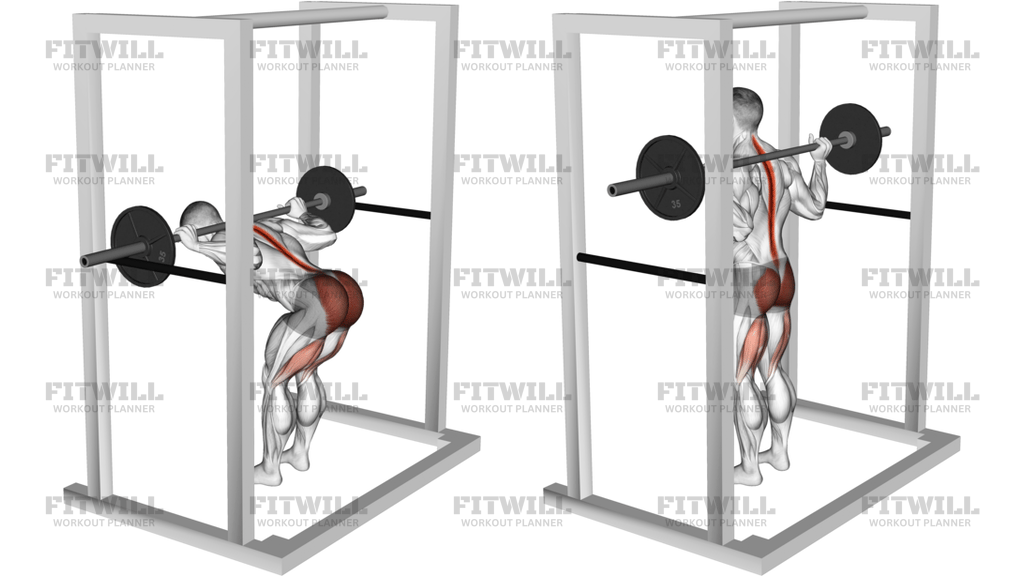
Barbell Pin Good Morning is a rack-supported hip hinge built around a fixed barbell resting on the pins while your torso moves through the repetition. Instead of walking out a bar and squatting the weight, you stay braced against one stable setup and hinge at the hips to train the posterior chain with very strict mechanics. The main work comes from the hamstrings, glutes, adductors, and spinal erectors, with the core keeping the trunk organized as the torso leans forward and then returns to standing.
The pin setup is what makes this variation unique. With the barbell fixed in the rack, the exercise becomes a controlled hinge from a repeatable start position, which is useful when you want to clean up technique or remove extra setup noise from a normal good morning. Set the bar so it sits across the upper traps or rear delts at about upper-chest to shoulder height, then stand close with your midfoot under the bar, feet about hip width, and knees softly unlocked. If the pins are too low or too high, the hinge will feel awkward and the bar will no longer line up with the upper back correctly.
Each repetition should look like a deliberate bow at the hips rather than a squat. Keep the chest long, brace the abdomen, and push the hips straight back until the torso inclines forward and the hamstrings take a clear stretch. The knees only bend enough to let the hips travel back and keep balance. On the way up, drive the hips forward and squeeze the glutes to stand tall, but stop before leaning back or dumping the ribs forward. The bar should stay fixed against the pins the entire time, and the rep should feel smooth at both the bottom and the top.
This is an effective accessory lift for lifters who want more hinge strength without the chaos of a free-bar walkout. It fits well in lower-body sessions, posterior-chain blocks, and technique work before deadlifts or squats. Because the bar path is anchored, the exercise makes it easier to notice when the hips stop moving or the lower back starts doing the job that the hamstrings should own. Keep the load conservative, the range controlled, and the setup consistent so each rep reinforces the same hinge pattern.
If your low back feels like the limiter, shorten the range slightly, reset the brace, and make sure the hips are moving back far enough before the torso drops. The best version of this lift leaves you feeling tension through the back of the legs and a strong glute finish, not a rushed descent or a forced upright posture. Treat the pins as a reference point, not a place to bounce from, and use the movement to build clean posterior-chain strength with precision.
[ Workout Log & Planner ]
Put your next workout in Fitwill
Keep your plan and training log ready when you are.


Instructions
- Set the barbell across the rack pins at upper-trap or rear-delt height so it rests firmly while you set up.
- Step in close, place your upper back under the bar, and take a hip-width stance with your midfoot under the bar.
- Grip the bar lightly for stability, unlock the knees, and stack the ribs over the pelvis before starting.
- Inhale, brace your trunk, and send the hips straight back as the torso tips forward around the pinned bar.
- Keep the spine long and the shins nearly vertical while you lower until the hamstrings reach a strong stretch.
- Reverse the motion by driving the hips forward and squeezing the glutes to stand tall.
- Finish with the body upright without leaning back or losing abdominal tension.
- Reset your breath and posture before the next repetition, then repeat for the planned set.
Tips & Tricks
- If the bar feels too high on your traps, adjust the pins so the contact point sits on the upper back instead of the neck.
- Keep the knees softly bent, but do not let them drift forward into a squat pattern.
- Think hips back first, chest down second; that order helps you load the hamstrings instead of just folding at the spine.
- Stop the descent when you lose the hamstring stretch or your low back starts to round.
- Use a smaller range if needed, especially when learning the hinge or returning from time off.
- The bar should stay quiet on the pins; if it shifts or bounces, reduce the load and tighten the setup.
- Exhale as you drive the hips forward, then re-brace before the next rep begins.
- Keep the neck in line with the torso and avoid looking up at the top of the rep.
Frequently Asked Questions
What muscle does Barbell Pin Good Morning target most?
It primarily trains the posterior chain, especially the hamstrings, glutes, and spinal erectors.
What makes the pin version different from a regular good morning?
The bar stays fixed on the rack pins, so the movement is a stricter hinge from one stable setup instead of a full unrack and walkout.
How high should the pins be set?
Set them so the bar sits securely across the upper traps or rear delts at roughly shoulder height when you are in position.
Should this feel like a squat?
No. The knees stay softly bent, but the main motion should come from the hips moving back and then driving forward.
Can beginners do Barbell Pin Good Morning?
Yes, but only with a light load and a short, controlled range until the hinge pattern feels consistent.
What should I feel during the descent?
You should feel a strong stretch through the hamstrings and a braced torso, not a sharp pinch in the lower back.
What is the most common form mistake?
People usually turn it into a squat or round the lower back instead of keeping the hips moving back with a long spine.
Where does this fit in a workout?
It works well as accessory posterior-chain work, technique practice before deadlifts, or controlled hinge training on lower-body days.