Staggered Leg Side Bridge
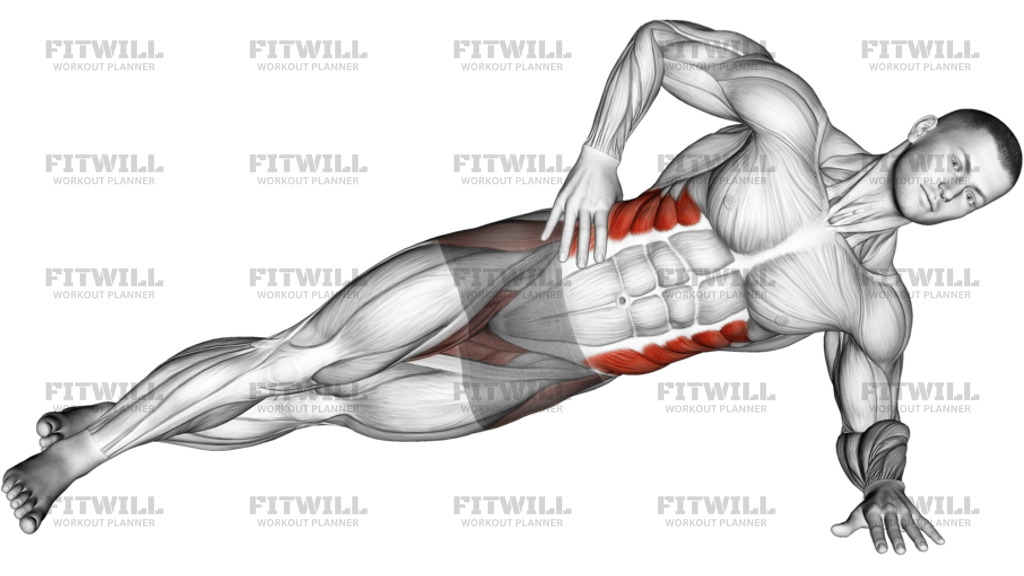
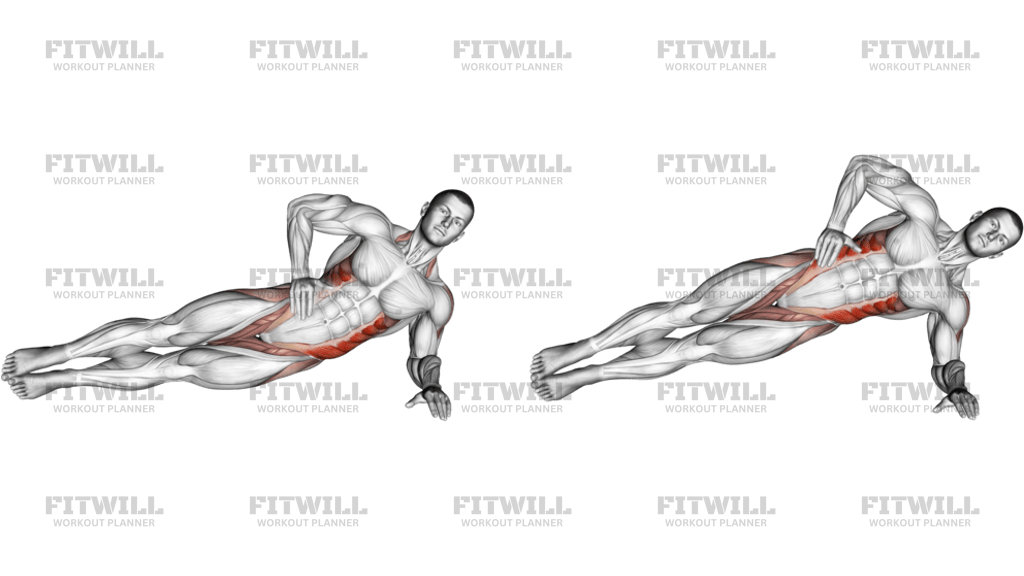
Staggered Leg Side Bridge is a bodyweight side-plank variation built to train lateral core strength, hip stability, and shoulder support without needing external load. The staggered feet make the base of support slightly longer than a standard side plank, which can help you find balance while still forcing the waist and obliques to resist side-bending and rotation.
This exercise is especially useful when you want the trunk to stay rigid while the body is held off the floor. The torso, hips, and shoulders all have to stay stacked, and the working side has to keep the pelvis from dropping or twisting. That makes the movement valuable for core control, anti-lateral-flexion work, and shoulder-position awareness.
The setup matters more than the hold time. Your forearm should be planted directly under the shoulder, the supporting elbow should stay bent at about ninety degrees, and the feet should be staggered rather than stacked so you can keep a clean line from head to heels. The top hand can rest on the hip to help you feel whether the pelvis is turning or drifting forward.
A good repetition is a quiet repetition. Lift into the side bridge by driving the forearm into the floor, then hold the body in a straight line without shrugging the shoulder or letting the ribs flare. Keep the hips level, breathe behind the brace, and lower under control when the set is finished. If the waist starts to sag, the neck tenses up, or the hips rotate, the set is too hard or too long.
Use Staggered Leg Side Bridge as accessory core work, part of a warm-up, or on days when you want unilateral trunk stability without spinal loading. It fits well for athletes, lifters, and beginners who need to learn how to resist sideways collapse while keeping the shoulder packed and the pelvis steady.
[ Workout Log & Planner ]
Put your next workout in Fitwill
Keep your plan and training log ready when you are.


Instructions
- Lie on your side with one forearm on the floor, elbow under the shoulder, and the other hand resting on your hip or upper waist.
- Stagger your feet so one foot is slightly in front of the other, keeping both legs straight and your hips stacked.
- Press the forearm and lower foot into the floor, then lift your hips until your body forms a straight line from head to ankles.
- Keep the supporting shoulder down and away from the ear while the ribs stay tucked instead of flaring open.
- Hold the top position without letting the top hip roll backward or the pelvis sink toward the floor.
- Breathe in a short, controlled way while staying braced through the waist and lower ribs.
- Lower the hips slowly until they nearly touch down, keeping the torso aligned as you descend.
- Reset your shoulder and foot placement before the next repetition or switch sides when the set is complete.
Tips & Tricks
- Keep the supporting elbow directly under the shoulder so the forearm, not the neck, takes the load.
- Think about stacking the shoulder, ribs, and pelvis; if the top shoulder drifts forward, the torso usually twists with it.
- Staggering the feet should improve balance, not turn the exercise into a wide split stance.
- Squeeze the glute on the lower side to help keep the hips lifted and level.
- If the waist sags before the shoulders fail, shorten the hold or reduce the set time.
- Keep the top hand light on the hip so it can act as a cue for unwanted rotation, not as a lever.
- Avoid shrugging into the supporting shoulder; press the floor away and keep the neck long.
- Use slow, deliberate lowers so the obliques and hip stabilizers stay under tension instead of dropping abruptly.
Frequently Asked Questions
What muscles does the staggered leg side bridge work most?
It primarily trains the obliques and other lateral core muscles, with the shoulder and hip stabilizers working hard to keep the body from tipping or rotating.
Why are the feet staggered instead of stacked?
The staggered stance gives you a slightly wider base while still demanding strong side-body control, which can make the hold more manageable than a strict stacked-feet side plank.
Where should my elbow and shoulder be during the hold?
Your supporting elbow should sit directly under the shoulder, with the shoulder packed down instead of shrugging toward the ear.
Should my top hand stay on my hip?
Yes, that is a useful cue. It helps you feel if the pelvis is rotating, and it keeps the torso from twisting open.
What is the biggest form mistake in this exercise?
Letting the hips sag or rotate is the most common error. If the waist drops, the side bridge stops training the line of control the exercise is designed for.
Can beginners use the staggered leg version?
Yes. It is often easier to learn than a fully stacked side plank because the staggered feet help with balance while the core still has to work.
How long should I hold each rep or set?
Hold only as long as you can keep the shoulder packed, ribs down, and hips level. Quality is more important than chasing a long hold time.
What should I do if I feel it mostly in my neck or shoulder?
Shorten the set, check that the elbow is under the shoulder, and press the floor away so the neck is not carrying the position.