Side Plank With Raised Leg Version 2
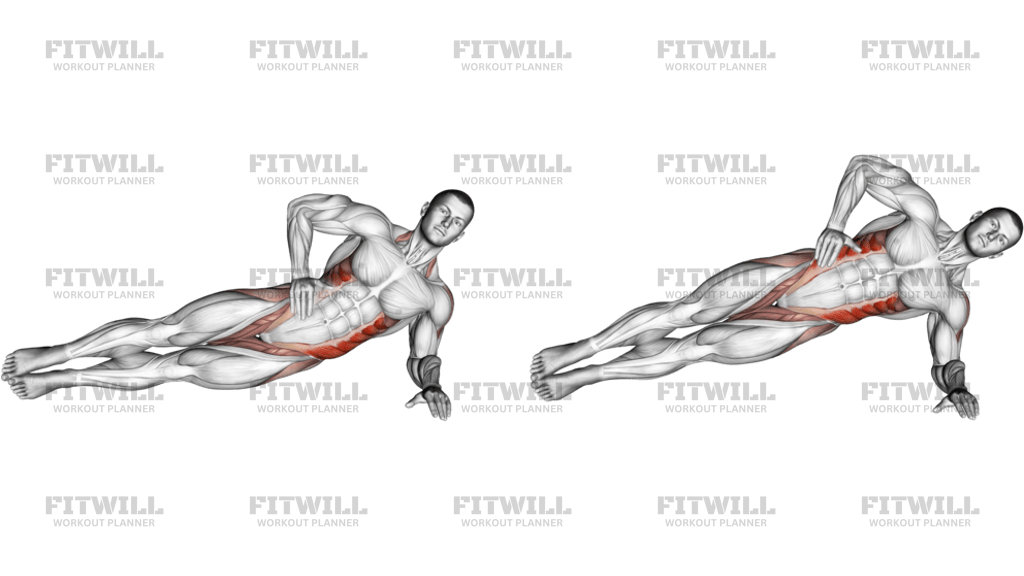
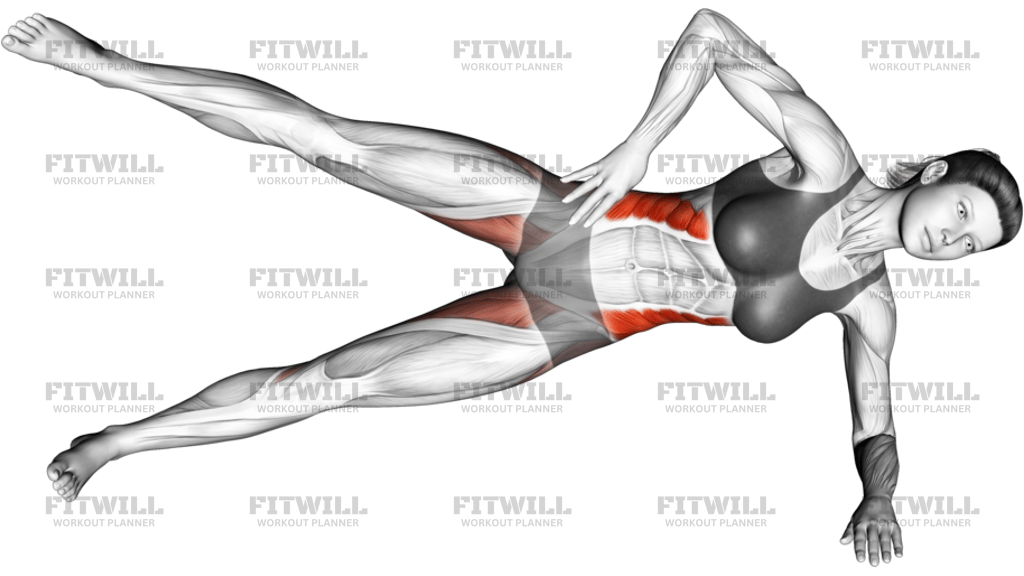
Side Plank With Raised Leg Version 2 is a bodyweight lateral core and hip stability exercise. It uses a forearm support, a stacked torso, and a lifted top leg to challenge the side of the waist, the outer hip, and the shoulder that is holding you up. The goal is not just to stay off the floor. The goal is to keep the pelvis level while the top leg moves without the torso twisting or sagging.
The setup matters because the elbow, shoulder, and hip all have to line up before the lift starts. Place the forearm directly under the shoulder, press the forearm into the floor, and stack the body in one long line from head to heel. Once you are stable, lift the top leg with the hip still stacked and the ribs pulled down so the midsection does not flare open.
As you raise and lower the top leg, the movement should come from the hip, not from swinging the whole body. Keep the standing side active, the lower waist braced, and the neck relaxed. A clean rep looks small and controlled: the torso stays still, the leg lifts to a comfortable height, and the return is just as deliberate as the lift.
This exercise is useful when you want unilateral core work that also trains hip abduction and anti-rotation control. It fits well in core blocks, warmups, accessory work, and athletic prep, especially when you want to clean up side-to-side stability for running, cutting, pressing, or overhead work. Because the hold is demanding on the shoulder and obliques, it is better to start with short sets and perfect shape than to chase long holds with a collapsing hip.
If the position feels too advanced, shorten the lever by bending the bottom knee or keep the top leg lower until the body stays stacked. If the shoulder starts to shrug, the hips drop, or the waist twists toward the floor, the set is done. The best version of Side Plank With Raised Leg Version 2 looks calm and rigid, with steady breathing and a clear lift from the outer hip rather than a rushed kick.
[ Workout Log & Planner ]
Put your next workout in Fitwill
Keep your plan and training log ready when you are.


Instructions
- Lie on your side and place your forearm on the floor with the elbow directly under the shoulder, then extend both legs long and stack your body in a straight line.
- Press the forearm and the lower foot into the floor, lift your hips until your body is straight, and keep the top hand on your hip or along your side.
- Brace your midsection so your ribs do not flare and your pelvis stays stacked instead of rolling forward or backward.
- Lift the top leg a controlled distance without letting the torso sway or the bottom shoulder shrug toward the ear.
- Pause briefly at the top while keeping the supporting hip high and the standing side active.
- Lower the top leg slowly until it is nearly level with the lower leg, but keep tension through the side plank the whole time.
- Keep breathing steadily through the hold or repetition, taking short controlled breaths instead of holding your breath for too long.
- Lower the hips to the floor with control when the set is done, then reset your forearm before the next set.
Tips & Tricks
- Keep the elbow right under the shoulder; if it drifts too far forward, the front of the shoulder takes over.
- Think about lifting the lower ribs away from the floor instead of just squeezing the hip up.
- The top leg should rise from the outer hip, not from a big kick that twists the torso.
- Keep the top foot pointed or neutral, but do not rotate the pelvis to get extra height.
- If your waist cranks or your hip drops, shorten the hold or reduce the leg-raise height.
- A slightly staggered stance can be easier than stacked feet when balance is the limiting factor.
- Use the top hand on the hip to feel whether the pelvis is staying level during the lift.
- Stop the set when the supporting shoulder starts to shrug or the neck starts to tense.
Frequently Asked Questions
What muscles does Side Plank With Raised Leg Version 2 work?
It mainly hits the obliques and deep core while also challenging the outer hip, especially the glute medius, and the shoulder that is supporting your body.
Should I keep my feet stacked in Side Plank With Raised Leg Version 2?
You can stack the feet if your balance is solid, but a slight stagger is fine if it helps you keep the pelvis level. The key is that the torso stays aligned while the top leg lifts.
How high should I lift the top leg?
Only lift it as high as you can without rolling the chest open or hiking the hip. A smaller, cleaner raise is better than forcing height.
Can beginners do Side Plank With Raised Leg Version 2?
Yes, but they should start with short holds and a lower top-leg lift. If the full version is too hard, bend the bottom knee or do a regular side plank first.
Why does my shoulder get tired first?
The supporting shoulder has to hold your body in place while the core and hip work, so fatigue there is common. Make sure the elbow is under the shoulder and the forearm is pressing firmly into the floor.
What should I do if my hips keep rotating forward?
Reduce the leg height and think about stacking the ribs over the pelvis before you lift. If needed, place the top hand on the hip so you can feel whether the pelvis stays square.
Is this more of a core exercise or a glute exercise?
It is primarily a core stability drill, but the lifted leg adds a strong outer-hip demand. If you do it well, both areas should work together instead of one taking over.
What is the easiest way to regress Side Plank With Raised Leg Version 2?
Keep both legs on the floor and hold the side plank first, or bend the bottom knee to shorten the lever. You can add the leg lift back in once your torso stays steady.