Kneeling Modified Hindu Push-Up
Kneeling Modified Hindu Push-Up is a bodyweight push-and-glide exercise that combines a kneeling push-up, a forward chest drop, and an open-shoulder press. The pattern is useful when you want a controlled upper-body strength movement that also asks for shoulder mobility, thoracic extension, and trunk control through a longer range than a standard floor press or basic kneeling push-up.
The kneeling setup matters because it changes the leverage and keeps the movement easier to control than a full Hindu push-up. With the knees down, you can focus on the line from hands to shoulders to knees, then guide the chest forward and down before pressing back into the opening phase. That makes the exercise especially valuable as an accessory drill, a warm-up variation, or a technique-based pushing movement.
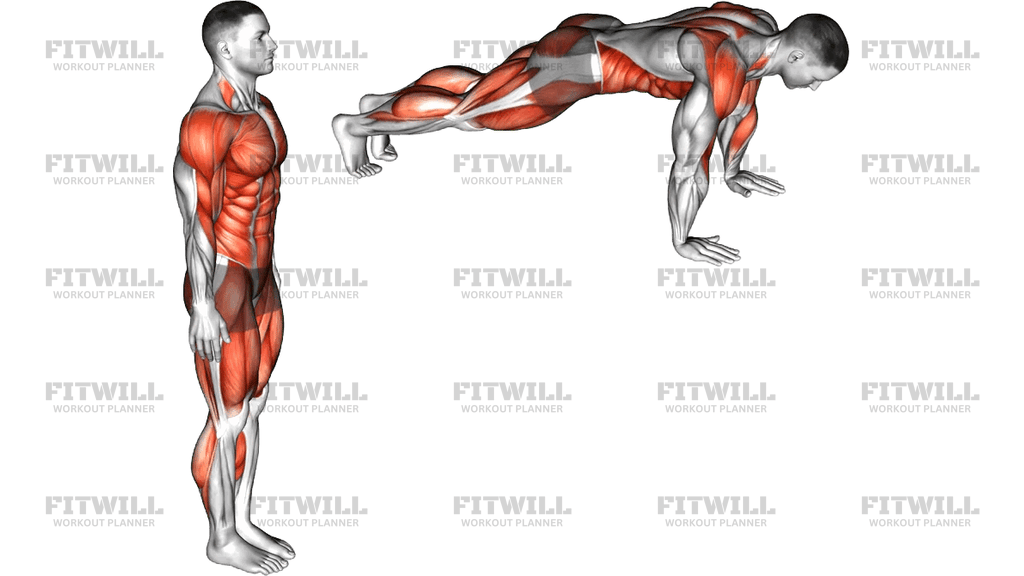
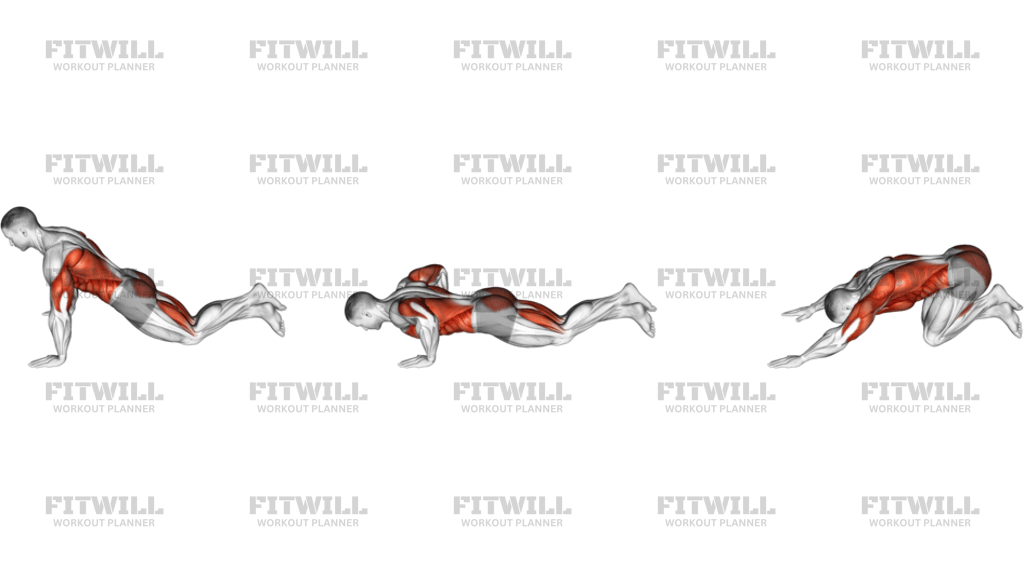
In the image, the body travels through a low, wave-like path rather than a straight up-and-down push-up. The torso lowers between the hands, then glides forward as the chest opens and the shoulders move into a deeper press. The key is to keep the motion smooth, with the hips following the torso instead of lagging behind or dumping into the lower back.
Because this is a long-range bodyweight pattern, the quality of each rep matters more than the number of reps. Good execution keeps the ribs controlled, the neck long, and the elbows tracking in a path that feels smooth at both the bottom and the top. If you lose the glide, shrug at the shoulders, or collapse into the low back, shorten the range and slow the rep down.
Use Kneeling Modified Hindu Push-Up when you want a pushing drill that also builds coordination and mobility in the shoulders and upper torso. It fits best in a general strength session, a movement prep block, or as a controlled accessory between heavier pressing work. Beginners can use it as long as the range stays pain-free and the press remains smooth, deliberate, and repeatable.
[ Workout Log & Planner ]
Put your next workout in Fitwill
Keep your plan and training log ready when you are.


Instructions
- Kneel on a mat with your hands slightly wider than shoulder width, fingers spread, shins on the floor, and hips set just behind the knees.
- Press the floor away, brace your midsection, and keep your neck long with your gaze slightly ahead of your hands.
- Lower your chest between your hands as you bend the elbows and let the torso travel forward instead of dropping straight down.
- Keep the knees and shins anchored while you glide the body forward into a smooth, wave-like path.
- Finish the forward phase by opening the chest and pressing through the palms until the arms are long and the shoulders stay down.
- Reverse the motion by shifting the hips back and bending the elbows again, keeping the movement controlled rather than abrupt.
- Return to the kneeling start position with steady tension through the torso and shoulders.
- Inhale on the return and exhale as you press through the opening phase of each repetition.
Tips & Tricks
- Keep your hands a little in front of your shoulders if the wrists feel stacked or crowded in the bottom position.
- Think about sliding the chest forward and through the hands, not just dropping the torso straight down.
- Keep light tension in the glutes and lower abs so the low back does not take over when you open the chest.
- Let the elbows bend and straighten along the same smooth path each rep instead of flaring wildly outward.
- If the shoulders pinch, shorten the forward glide and stay in a smaller pain-free range.
- Move slowly enough that you can feel the transition from the lowered phase into the open press without bouncing.
- Use a mat or folded pad under the knees so you can keep pressure on the shins without losing control.
- Stop the set when the torso starts wobbling side to side or the neck starts jutting forward.
Frequently Asked Questions
What muscles does Kneeling Modified Hindu Push-Up train?
It mainly trains the chest, shoulders, and triceps, while the core and upper back help control the glide and the open position.
How is this different from a regular push-up?
Your knees stay on the floor and the torso follows a forward, wave-like path instead of moving straight down and straight up.
Where should my hands be for the best setup?
Start with the hands slightly wider than shoulder width and far enough forward that you can glide the chest between them without collapsing.
Should my knees stay on the floor the whole time?
Yes. The knees and shins should stay anchored so the movement comes from the torso and shoulders rather than a full-body plank.
What is the most common form mistake?
The biggest error is dumping into the lower back instead of keeping the ribs controlled while the chest opens.
Is this exercise good for beginners?
Yes, as long as you keep the range short, move slowly, and stop before the shoulders or wrists lose comfort.
What should I do if my wrists hurt?
Use a mat, place the hands a little farther forward, or switch to push-up handles so the wrists are not forced into a sharp angle.
How should the rep feel at the top?
The top should feel like an open-chest press with steady shoulders, not a hard shrug or a painful low-back arch.