Glute Ham Twist
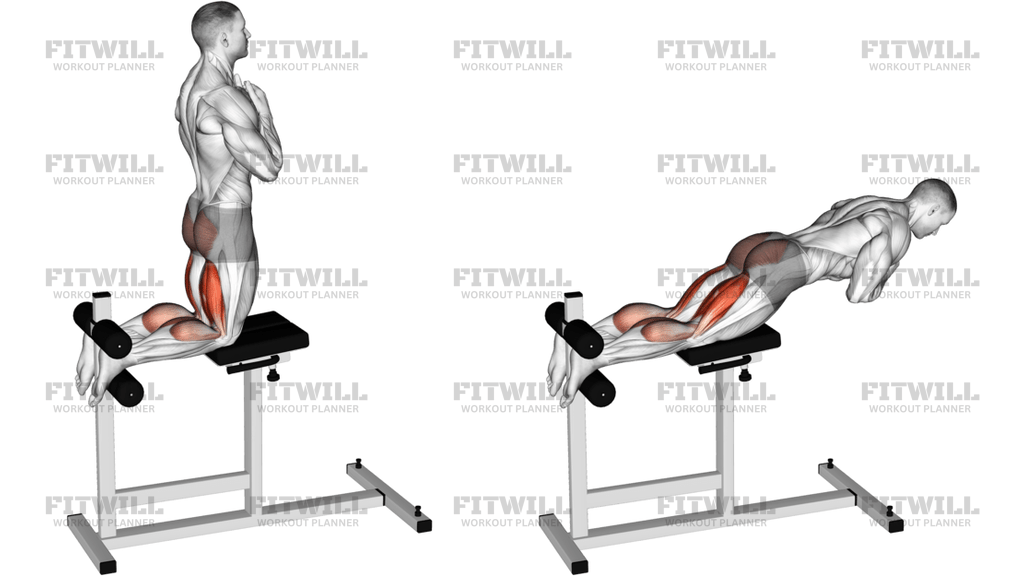
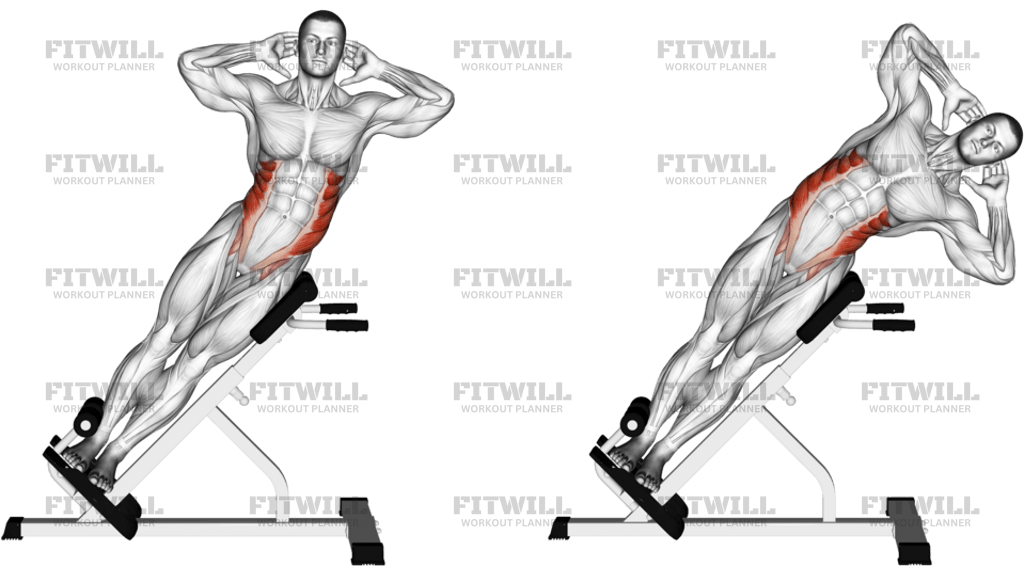
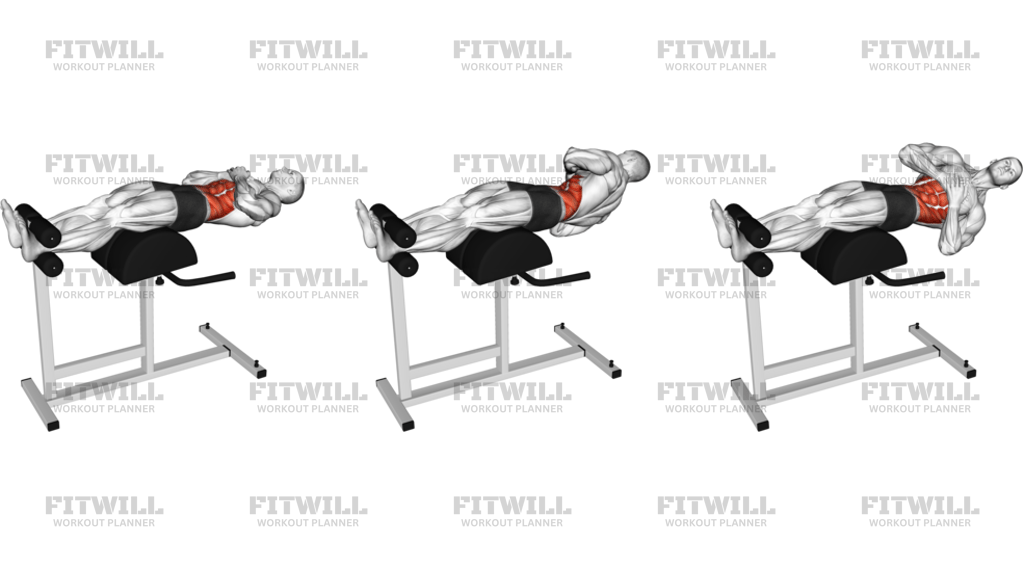
Glute Ham Twist is a bodyweight rotational core exercise performed on a glute-ham developer. It locks the lower body into place while the torso twists, so the obliques, deep abdominals, and hip stabilizers have to control the movement instead of letting the body swing around the pad.
The setup matters because the machine creates a long lever. When the hips are centered on the pad and the ankles are anchored under the rollers, the movement stays focused on the waist and trunk; if the body slips, the rep turns into a sloppy back extension or a sideways sway. A good setup lets you keep the torso organized while the upper body rotates.
Each rep should feel deliberate and compact. Keep the torso long, brace before you turn, and rotate the ribcage and shoulders together as one unit while the legs stay quiet. The twist should stop before the lower back takes over, and the return should be just as controlled as the turn.
Glute Ham Twist is useful as an accessory drill for rotational strength, core endurance, and better control through the midsection. It fits well in warm-ups, core sessions, and conditioning blocks when you want bodyweight work that still demands precision. Beginners can use it if they keep the range small and the tempo slow, but the exercise becomes much less effective once momentum starts driving the rep.
Treat it like a quality movement, not a race for more reps. Clean positioning, steady breathing, and a controlled range will keep the tension on the target area and off the lower back. If the hips start sliding, the chest drops, or the neck starts cranking to one side, shorten the twist and reset the body before continuing.
Fitwill
Log Workouts, Track Progress & Build Strength.
Achieve more with Fitwill: explore over 9600 exercises with images and videos, access built-in and custom workouts, perfect for both gym and home sessions, and see real results.
Start your journey. Download today!




Instructions
- Set the glute-ham developer so your hips rest on the top of the pad and your ankles are locked under the rollers.
- Lie face down with your thighs supported, your body long, and your torso able to move freely over the front of the pad.
- Cross your arms over your chest and square your hips to the machine before you start.
- Press your legs firmly into the rollers, brace your abs, and hold your torso in a straight line from head to heels.
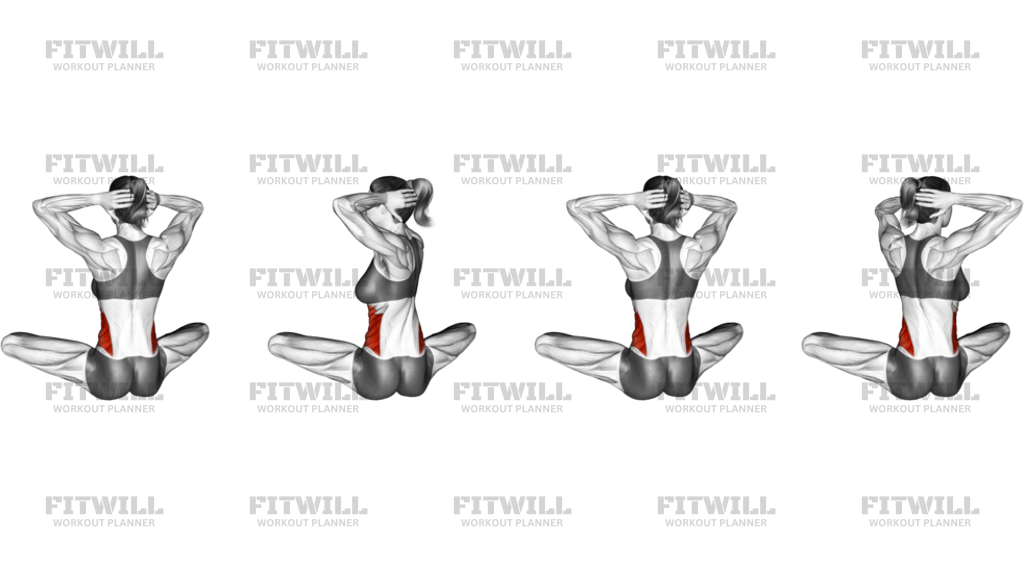
- Rotate your chest and shoulders to one side in a smooth, controlled arc without letting your hips slide off the pad.
- Keep the movement small enough that your lower back stays quiet and your neck stays relaxed.
- Pause briefly at the end of the twist, then return through center with the same control.
- Twist to the other side on the next rep or on the opposite half of the rep cycle, keeping the same range and tempo.
- Exhale as you rotate and inhale as you come back to center.
- Step off the rollers carefully after the set and reset your position before starting another round.
Tips & Tricks
- Think about turning your ribs, not yanking with your shoulders.
- Keep both hips pressed into the pad; if one side lifts, the range is too big.
- Crossing the arms over the chest helps stop the hands from cheating the twist.
- Use a smaller arc than you think you need; this movement is about control, not distance.
- Keep your glutes lightly squeezed so the torso stays long while you rotate.
- Move slowly on the way back to center so the obliques do the work instead of momentum.
- If your feet start to slip in the rollers, adjust the setup before adding more reps.
- Stop the set when your chest starts dipping or your low back begins to arch.
- A smooth alternating rhythm usually works better than trying to spin through fast reps.
Frequently Asked Questions
What muscles does Glute Ham Twist work most?
It mainly trains the obliques and deep core, with the glutes and hip stabilizers helping keep the body anchored on the developer.
Is Glute Ham Twist the same as a glute-ham raise?
No. A glute-ham raise is mostly a hip extension and hamstring exercise, while Glute Ham Twist adds trunk rotation on the same type of bench.
Should my hips stay on the pad the whole time?
Yes, the hips should stay centered and supported on the pad. If they slide, the twist is getting too big or the setup is off.
How far should I twist on each rep?
Twist only as far as you can keep the torso controlled and the lower back quiet. A smaller, cleaner range is better than a big uncontrolled one.
Can beginners do this exercise?
Yes, but they should start with slow reps and a very small rotation. The GHD makes even bodyweight challenging if you rush it.
Where should I feel the movement?
You should feel the sides of the waist working, along with a steady hold through the abs and hips. You should not feel it becoming a back-arching exercise.
What is the most common mistake?
The biggest mistake is letting the body swing or the chest drop instead of keeping the torso braced and rotating under control.
How can I make it easier?
Shorten the twist, slow the tempo, and keep your hands crossed on your chest instead of reaching overhead or adding extra load.