Barbell Reverse-Grip Bench Press
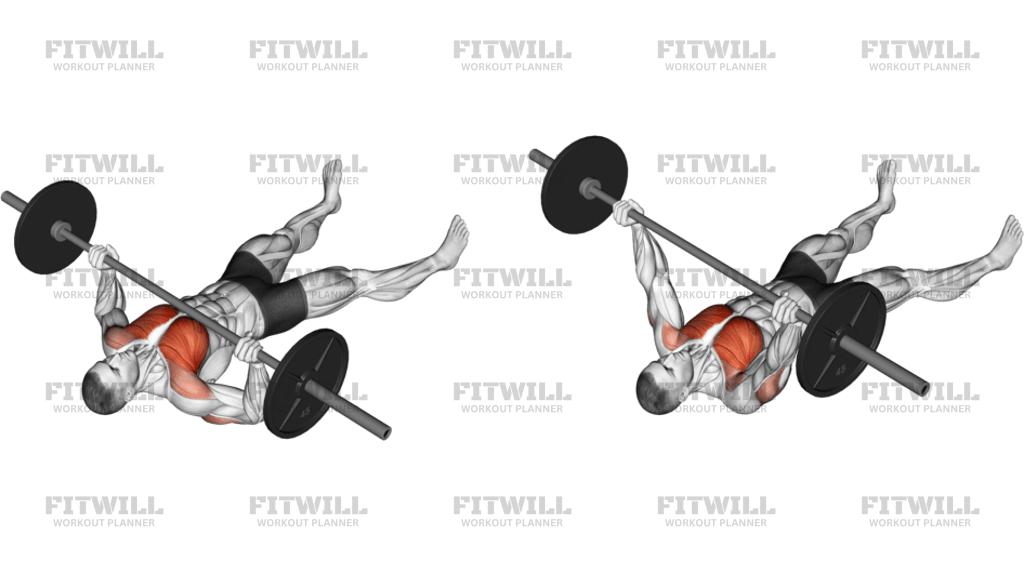
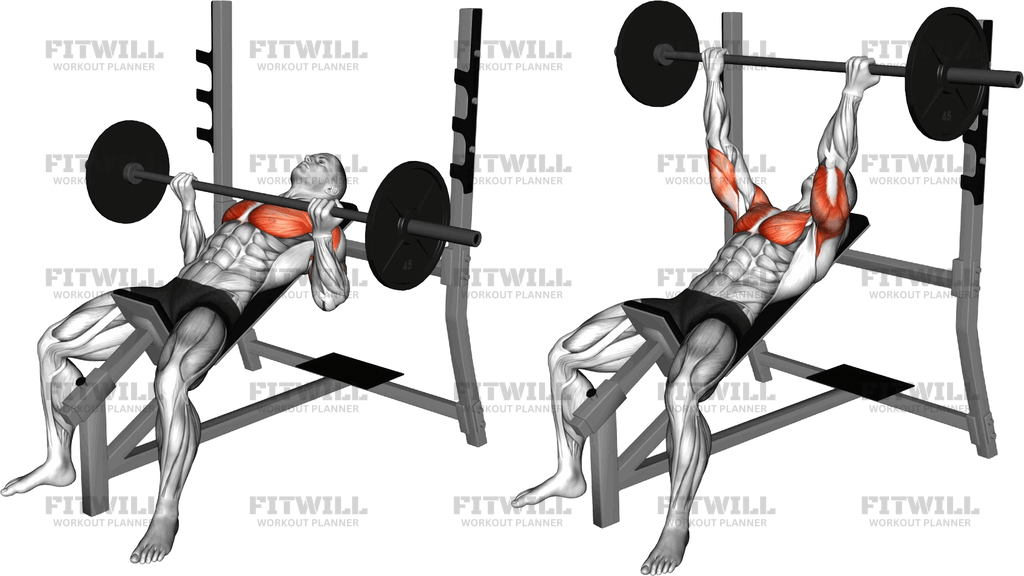
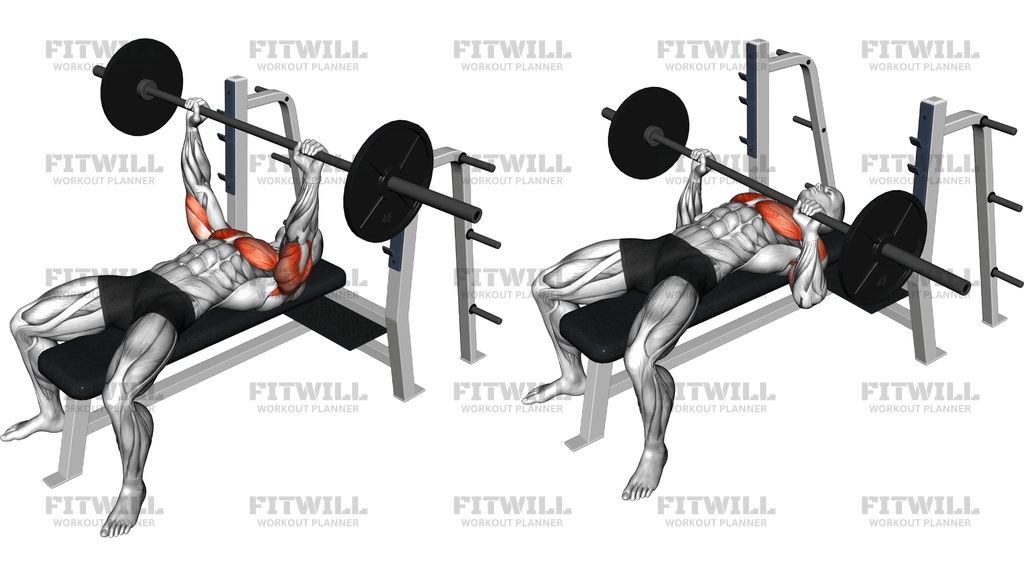
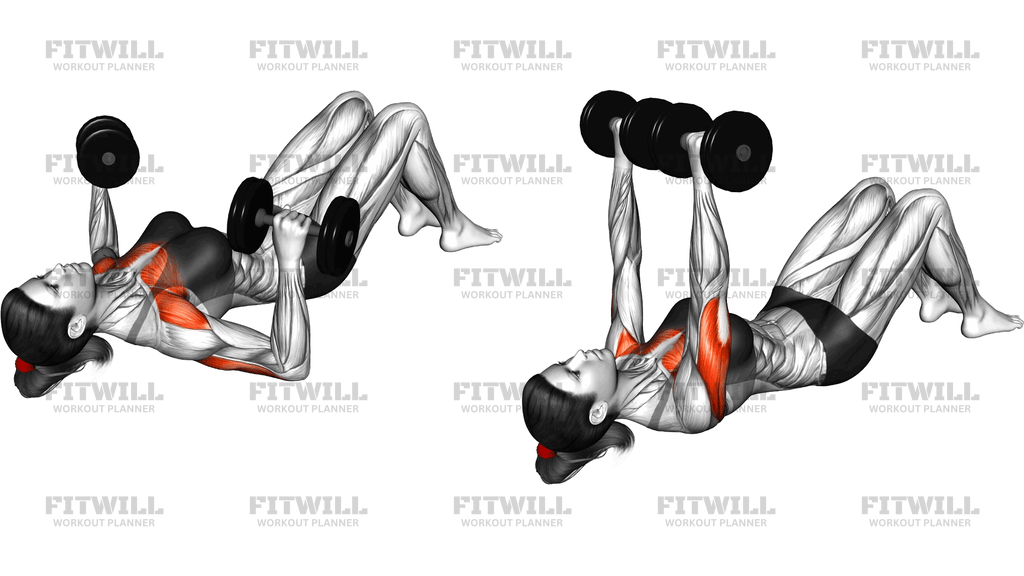
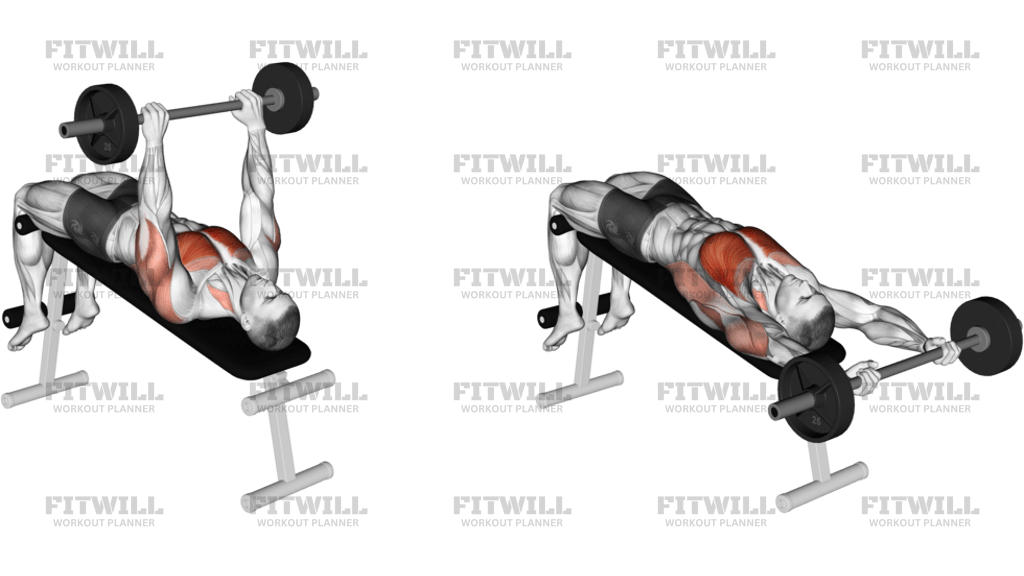
Barbell Reverse-Grip Bench Press is a flat-bench pressing variation that uses an underhand grip to shift the pressing line and encourage a tighter elbow path. It is still a chest-dominant compound lift, but the reverse grip changes the feel at the shoulders, wrists, and upper chest compared with a standard bench press. The image shows a lifter lying on a flat bench with the bar lowered toward the chest and pressed back up over the same line, which is the pattern this exercise should follow.
The main training focus is the pectorals, especially the upper portion of the chest, with the triceps and front shoulders assisting through the press. The setup matters more here than in many other bench variations because the underhand grip changes wrist position and makes bar control feel less familiar. A clean setup keeps the forearms stacked, the elbows from flaring early, and the bar path from drifting toward the face.
Barbell Reverse-Grip Bench Press is usually best when you want a pressing accessory that emphasizes chest drive while keeping the elbows tucked a little closer to the torso. Lifters often use it after their main bench work, for chest-focused volume, or when they want a variation that feels different without abandoning the basic horizontal press pattern. Because the grip is less natural for many people, the load should stay honest and the descent should stay deliberate.
Execution should start with the bar fixed securely above the chest, shoulder blades set on the bench, feet planted, and the wrists kept as straight as the reverse grip allows. Lower the bar under control until it reaches the lower chest or upper sternum area, then press it back up along the same path. The lift should feel smooth, with no bouncing off the chest and no wrist collapse when the bar gets heavy.
This movement is effective, but it is not the place to chase sloppy maximal loads. The reverse grip can be demanding on the wrists and can make the bar feel less stable if the hands are too wide, the elbows flare, or the shoulders lose position on the bench. Use a spotter or safety arms when the load gets challenging, and stop the set if the bar path starts drifting or the wrists begin to fold back under pressure.
[ Workout Log & Planner ]
Put your next workout in Fitwill
Keep your plan and training log ready when you are.


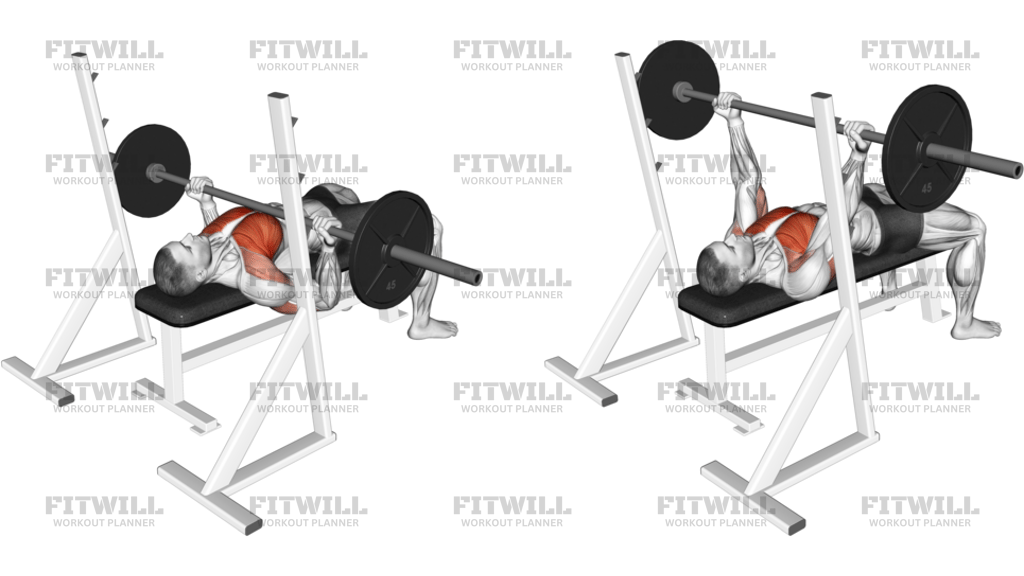
Instructions
- Lie on a flat bench and plant both feet firmly on the floor with your eyes roughly under the bar.
- Take a reverse, underhand grip on the barbell with your hands a little inside shoulder width so your wrists stay stacked over your forearms.
- Pin your shoulder blades down and back against the bench, then keep a small natural arch through your upper back without losing contact through the shoulders and hips.
- Unrack the bar and hold it above the mid to lower chest with your elbows tucked slightly toward your sides.
- Lower the bar in a controlled line toward the lower chest or upper sternum while keeping the wrists straight and the elbows from flaring.
- Lightly touch the chest, pause without bouncing, and keep tension through the upper back and lats.
- Press the bar back up by driving it along the same path until the elbows are straight and the bar is stable over the chest.
- Exhale as you press, inhale on the way down, and keep your feet pressing into the floor for the full rep.
- Rack the bar with control once the set is complete, then reset your shoulder position before the next set.
Tips & Tricks
- Keep the bar in the heel of your palm so the underhand grip does not force the wrists far back.
- A slightly narrower grip usually feels more secure here than a wide reverse grip and helps keep the elbows tucked.
- If the bar drifts toward your face on the way down, shorten the range and bring it to the lower chest instead of chasing extra depth.
- Treat this as a controlled chest variation, not a max-effort bench press; the reverse grip gets unstable quickly when the load is too heavy.
- Keep your shoulder blades locked to the bench so the bar does not press from a loose shoulder position.
- Do not let the elbows flare early at the bottom, or the bar will feel harder to control and the shoulders will take over.
- A brief pause on the chest helps remove bounce and keeps the reverse grip from turning into a sloppy rebound press.
- If your wrists ache, reduce the load first and check that the bar is sitting low in the palm with the knuckles pointed to the ceiling.
- Use a spotter or rack safeties when the bar is close to failure because underhand pressing is harder to dump safely than a normal bench press.
Frequently Asked Questions
What does the Barbell Reverse-Grip Bench Press target most?
It mainly trains the chest, with extra work from the triceps and front shoulders. Many lifters feel the upper chest more strongly than they do on a standard bench press.
Is the reverse underhand grip harder on the wrists?
It can be. Keep the bar low in the palm, use a modest grip width, and start light until the wrist position feels stable.
Where should the bar touch on the chest?
Aim for the lower chest or upper sternum area, not the neck. The bar should travel back up along the same line it used to descend.
Should my elbows flare out on the Barbell Reverse-Grip Bench Press?
No. Keep them tucked a bit closer to your torso so the press stays controlled and the shoulders do not take over at the bottom.
Can beginners use the Barbell Reverse-Grip Bench Press?
Yes, but only with a light load and a spotter or safeties. It is less familiar than a standard bench press, so the setup has to stay strict.
Why use a reverse grip instead of a normal bench grip?
The reverse grip changes the pressing angle and often gives the upper chest a different stimulus. It is useful as a variation when you want a chest-focused press that feels distinct from the standard bench.
What is the biggest mistake on the barbell reverse grip bench press?
Letting the wrists fold back or the bar drift off the chest line. Both make the reverse grip feel unstable and can turn the set into a shoulder-dominant press.
How heavy should I go on the Barbell Reverse-Grip Bench Press?
Use a load you can lower smoothly, pause on the chest, and press without losing wrist position. This is usually an accessory lift rather than the place to chase a one-rep max.