Seated Rotation Stretch
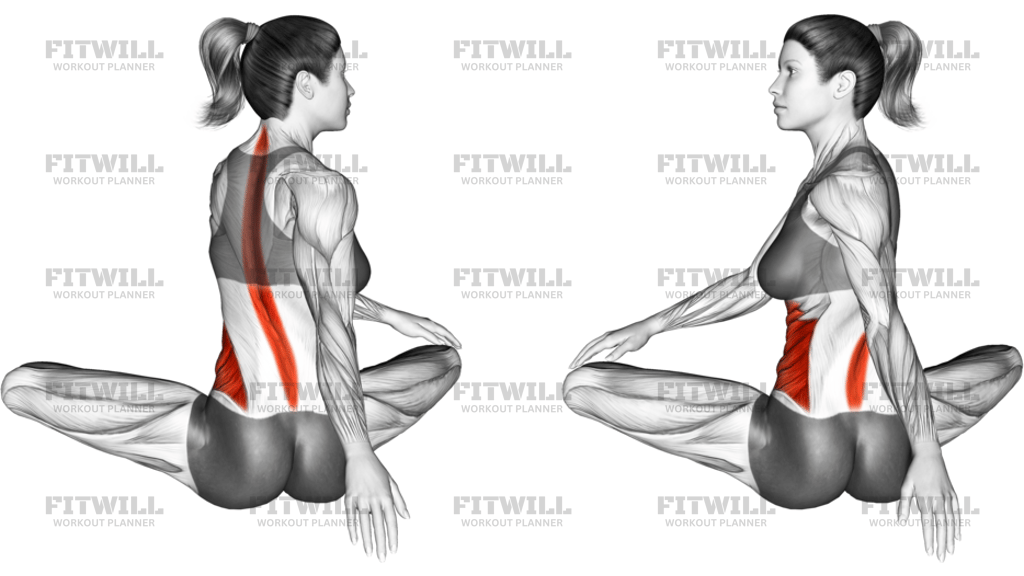
Seated Rotation Stretch is a floor-based spinal mobility drill that uses a mat and your own body weight to open the trunk through gentle rotation. The exercise is usually performed from a tall seated position with the pelvis anchored and the rib cage turning over the hips, which makes it useful for improving thoracic rotation, postural awareness, and the ability to rotate without collapsing through the low back.
The stretch is especially relevant when the goal is to loosen the mid-back, obliques, and surrounding trunk musculature after sitting, lifting, or training that leaves the torso stiff. It can also help you check whether one side rotates more easily than the other. Because the movement is slow and self-limited, the quality of the setup matters more than how far you can force the turn.
A good repetition begins with a stable seat on the mat, an upright spine, and both sides of the pelvis grounded. From there, you rotate through the ribs and shoulders while the hips stay quiet. The hands are only there to guide the position and provide light leverage; they should not yank the body into a deeper twist or pull the knee across the midline. The goal is a long, even rotation with the chest leading and the neck staying relaxed.
Use a smooth exhale as you turn, then settle into the end range for a brief pause without bouncing. On the way back, unwind under control and reset the posture before switching sides. If the low back pinches, the knees lift, or the breath gets held, the stretch is too aggressive or the seat is too unstable. Smaller rotations done cleanly are more useful than forcing a bigger range with tension.
This movement fits well in warm-ups, cool-downs, mobility blocks, and recovery sessions where you want to restore comfortable trunk rotation without adding load. It is generally beginner-friendly because the intensity is easy to regulate, but it still rewards precise positioning and calm breathing. Keep the motion controlled, repeat both sides evenly, and treat the exercise as a mobility drill rather than a strength effort.
[ Workout Log & Planner ]
Put your next workout in Fitwill
Keep your plan and training log ready when you are.


Instructions
- Sit on the mat with both sit bones grounded and your spine tall.
- Bend and position the legs so you can stay balanced without leaning back.
- Place one hand lightly behind you for support and the other hand on the outside of the opposite thigh or knee.
- Inhale to lengthen through the crown of the head and keep the chest open.
- Exhale and rotate the ribs toward the back shoulder without sliding the hips.
- Keep the support hand light; use it to guide the turn, not force it.
- Pause in the end range for a brief, calm breath while keeping both shoulders down.
- Slowly unwind back to center with control and re-stack the spine.
- Repeat on the other side with the same height, breathing, and range.
Tips & Tricks
- Keep both hips rooted so the twist comes from the trunk, not a hip shift.
- Think about turning the sternum first, which helps the upper back contribute instead of the low back cranking.
- If the knee is being pulled hard across the body, reduce the leverage and let the rotation stay smaller.
- Use a long exhale to soften the ribs before asking for more range.
- A taller seat usually makes the twist cleaner; slumping tends to dump motion into the lumbar spine.
- Keep the neck in line with the torso instead of cranking the head farther than the chest can turn.
- A brief hold at end range is enough; bouncing makes the stretch less useful and more irritating.
- If one side feels tighter, do not chase symmetry by forcing it with the hands.
Frequently Asked Questions
What does Seated Rotation Stretch work most?
It mainly targets trunk rotation, especially the obliques, thoracic spine, and the muscles around the lower back and hips that resist twisting.
Do I need to keep both sit bones on the mat?
Yes. Keeping the pelvis grounded helps the rotation come from the torso instead of turning it into a hip lift or a side bend.
How far should I rotate in the seated twist?
Turn only as far as you can keep both shoulders down and the spine long. A smaller clean twist is better than a forced end range.
What hand position should I use?
Use one hand behind you for light support and the opposite hand on the outside of the knee or thigh to guide the rotation.
Should this stretch feel in my low back?
You may feel some low-back tension, but the main stretch should be in the ribs, upper back, and the side of the torso. Sharp low-back pain means you should back off.
Is this exercise suitable for beginners?
Yes. It is usually beginner-friendly because the range is easy to control, but beginners should keep the twist small and avoid pulling with the arms.
When is the best time to use this stretch?
It works well in warm-ups, cool-downs, and mobility sessions, especially after workouts that leave the torso stiff.
How can I make the stretch easier?
Sit taller, reduce the twist angle, and use less pressure from the guiding hand. You can also pause in a shorter range and build from there.