Seated Neck Side Stretch
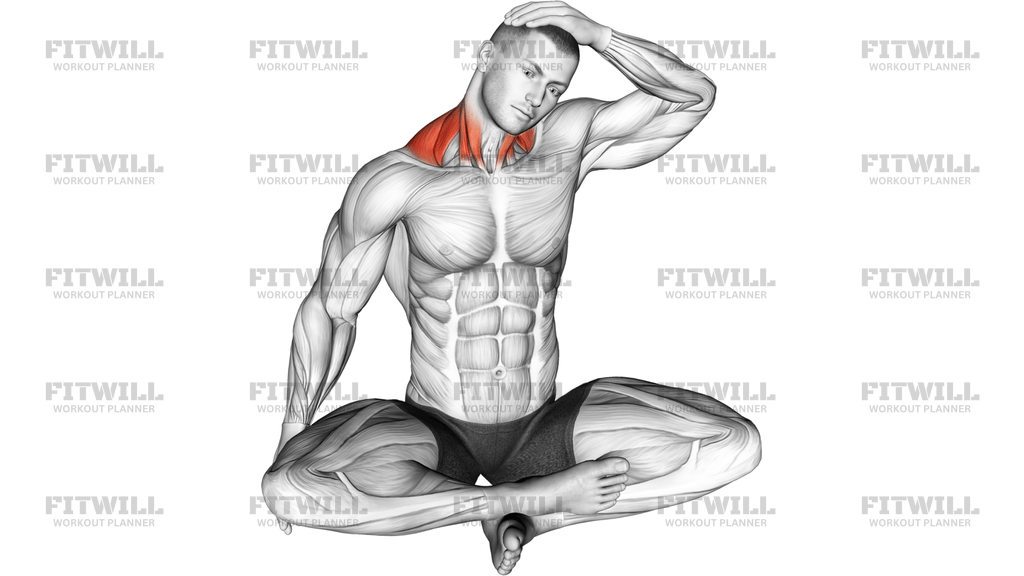
Seated Neck Side Stretch is a gentle neck mobility drill for opening the side of the neck after lifting, desk work, or any session that leaves the upper traps tight. The image shows a seated position with one hand resting on top of the head to guide the stretch, which makes the movement feel controlled instead of forced. The goal is not to crank the neck farther; it is to create a smooth line of tension along the side you are lengthening while the shoulders stay quiet.
This stretch is most useful when the neck starts to feel stiff from shrugging, pressing, pulling, or sitting with the head drifting forward. It can help you find a cleaner position before training or help you wind down afterward, especially if your upper back and neck tend to hold tension together. Because it is a low-load movement, the quality of the setup matters more than range of motion.
Sit tall on the floor, a mat, or the edge of a bench with your ribs stacked over your pelvis and both sit bones grounded. Keep the chest facing forward, then place the hand on the side of the head you are using as a guide. Let the opposite shoulder drop away from the ear so the neck can lengthen before the head tilts. If the shoulder hikes up while you reach, the stretch becomes noisier and less useful.
Once you are set, tip the ear toward the opposite shoulder slowly until you feel a mild pull along the side of the neck. The hand should assist, not drag, and the chin should stay relaxed rather than jutting forward or rolling back. Hold the end position with calm breathing and a steady, comfortable stretch, then release back to center with the same control. Repeat on the other side so the neck stays balanced.
A good Seated Neck Side Stretch feels like an even line of tension from the top of the shoulder up toward the base of the skull, not a sharp pinch or a forced bend. The stretch is small enough that you can breathe normally and keep the jaw unclenched. If you use it regularly, it works best as a reset between heavier upper-body efforts or as part of a mobility block where you want the neck to relax without losing posture.
[ Workout Log & Planner ]
Put your next workout in Fitwill
Keep your plan and training log ready when you are.


Instructions
- Sit cross-legged on a mat or upright on a bench edge with your ribs stacked over your pelvis and your shoulders relaxed.
- Place the hand on the side of your head that will guide the stretch, resting the palm lightly above the temple.
- Keep the opposite shoulder heavy and let it drift away from your ear before you begin to tilt the head.
- Slowly tip your ear toward the opposite shoulder until you feel a gentle stretch along the side of the neck.
- Use the hand only as light assistance; do not pull the head into a hard side bend.
- Keep your chin relaxed and your face pointing forward instead of rotating the head up or down.
- Breathe steadily and hold the position for a smooth, comfortable stretch without bouncing.
- Return the head to center with control, reset both shoulders, and repeat on the other side.
Tips & Tricks
- If the shoulder on the stretching side starts to rise, pause and let it settle before going deeper.
- Keep the chin slightly tucked so the stretch stays on the side of the neck instead of dumping into the back of the head.
- A lighter hand pressure usually works better than a stronger pull, especially when the neck feels irritated from desk posture.
- If your jaw tightens, reduce the range and relax the tongue and teeth before holding the stretch again.
- Stay square through the chest; turning the torso makes the neck stretch feel uneven and harder to control.
- Use the exhale to soften into the hold instead of forcing a bigger angle with the hand.
- If you are stiff on one side, take an extra reset to the center before repeating so you do not rush the second side.
- Stop short of any pinching, tingling, or sharp pull at the base of the skull and use a smaller range.
Frequently Asked Questions
What does Seated Neck Side Stretch actually target?
It mainly lengthens the side of the neck, especially the upper trapezius and nearby tissues that get tight when you shrug or sit forward.
Do I need to sit cross-legged for Seated Neck Side Stretch?
No. Cross-legged works well on a mat, but a bench edge or chair is fine as long as you can keep your spine upright and your shoulders relaxed.
How hard should I pull on my head?
Very lightly. The hand should guide the head, not yank it, because the best stretch comes from position and breathing rather than force.
Why should my opposite shoulder stay down?
Dropping that shoulder away from the ear creates the length you want along the side of the neck and keeps the stretch from collapsing into a shrug.
What if I feel Seated Neck Side Stretch in my jaw or face?
Back off the range and soften the grip. The stretch should stay in the neck and shoulder line, not turn into a jaw strain.
Can I use Seated Neck Side Stretch before training?
Yes. It works well in a warmup or cooldown, especially before or after pressing, pulling, or long sitting periods.
How long should I hold each side?
A gentle 15 to 30 second hold is usually enough, and you can repeat for a second round if the first one feels easy and clean.
What is the most common mistake with Seated Neck Side Stretch?
The biggest error is forcing the head with the hand while the shoulder creeps upward, which reduces the stretch and makes the neck work harder than it should.