Smith Wide Shrug
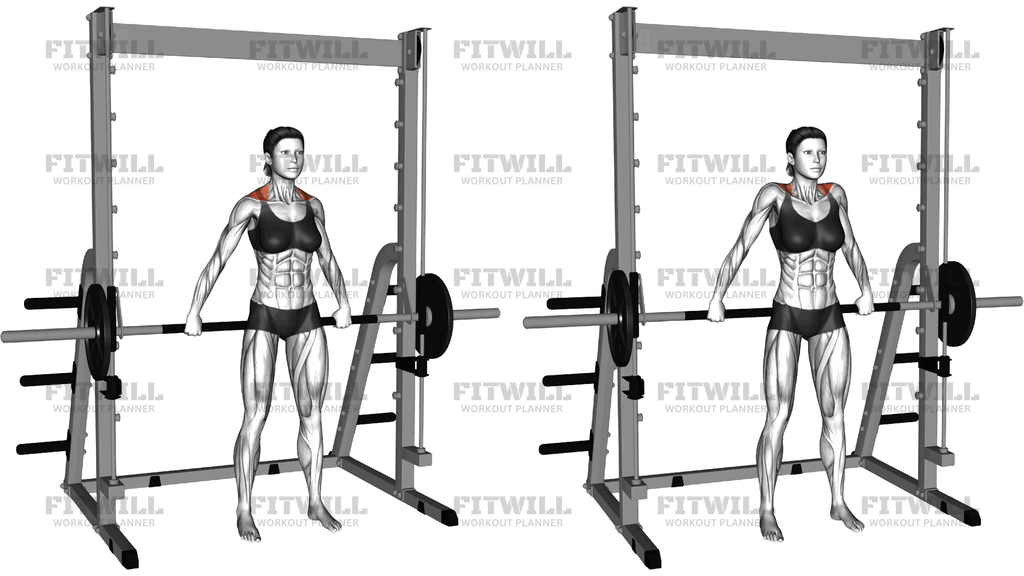
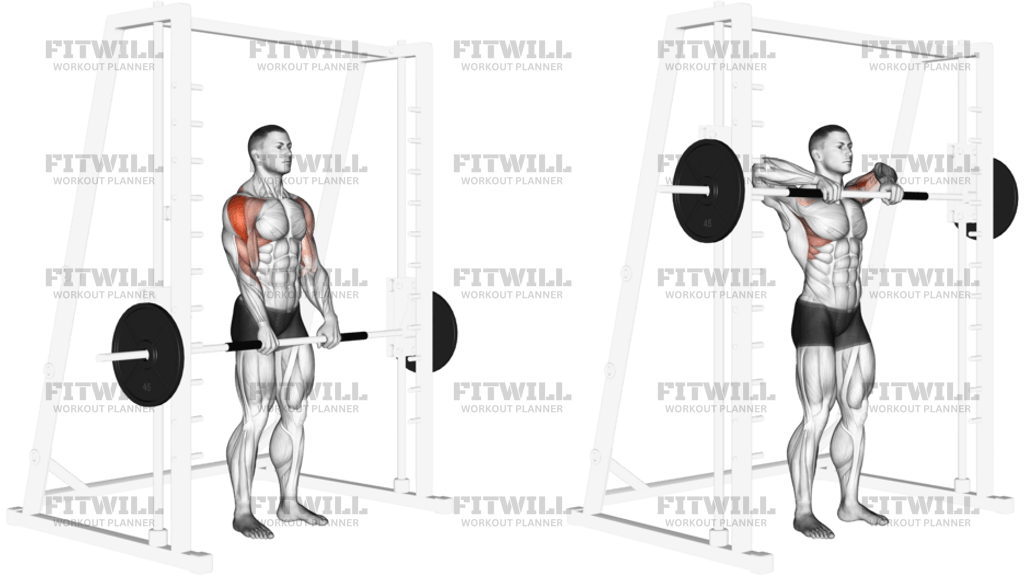
Smith Wide Shrug is a standing trap exercise performed with a fixed bar in a Smith machine. The wide hand position keeps the arms long and open so the movement stays focused on shoulder elevation instead of turning into a curl or a row. It is mainly used to build the upper traps, with the upper back helping stabilize the shoulder blades.
The setup matters because the bar should travel straight up and down along the front of the thighs. Stand centered under the bar, take an overhand grip slightly wider than shoulder width, and let the bar settle against the upper thighs with the arms straight. Keep the chest tall, the neck long, and the ribs stacked so the shrug comes from the shoulders, not from a lean or bounce.
From there, drive the shoulders toward the ears as if you are trying to make the neck disappear, then pause briefly at the top. The elbows stay mostly straight and the wrists stay neutral, while the bar rises only because the shoulders lift. Lower it slowly until the traps are fully stretched, but stop before the shoulders roll forward or the torso starts to drift.
Smith Wide Shrug is a useful accessory after presses, rows, deadlifts, or carries when you want direct trap work without much balance demand. It is also a good option when you want consistent loading and a simple setup for higher-rep hypertrophy work. Choose a load that lets every rep look identical; the moment you have to hitch, lean back, or bounce the bar, the set has gone past its useful range.
Treat the movement as a controlled shrug, not a shoulder circle. The most productive reps are usually short at the top, deliberate on the way down, and strict from the first rep to the last. If the grip starts failing before the traps do, use straps so the shoulders can keep doing the work instead of the hands ending the set early.
[ Workout Log & Planner ]
Put your next workout in Fitwill
Keep your plan and training log ready when you are.


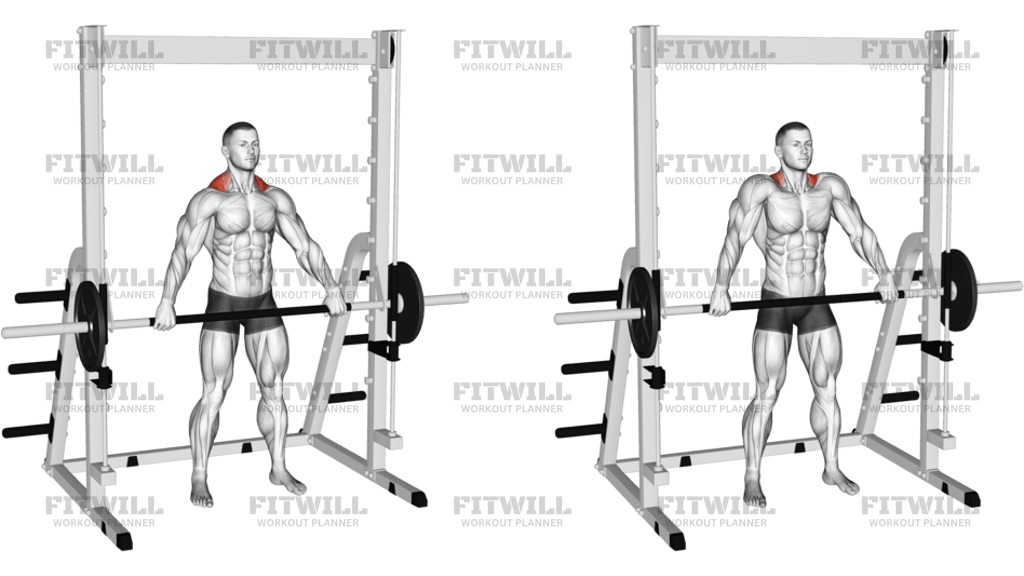
Instructions
- Stand inside the Smith machine with the bar in front of your thighs, feet about hip-width apart, and an overhand grip slightly wider than shoulder width.
- Unrack the bar so it rests against your upper thighs, keep your arms straight, and set your wrists, chest, and chin in a neutral position.
- Soften your knees and brace your torso without leaning back or flaring your ribs.
- Shrug your shoulders straight up toward your ears as high as you can without bending your elbows.
- Pause briefly at the top while keeping the bar close to your thighs and your neck long.
- Lower your shoulders slowly until the traps are fully lengthened and the bar returns to the start.
- Keep the bar path vertical and your torso still; if you start swaying, lighten the load.
- Re-rack the bar after the last rep and release your grip under control.
Tips & Tricks
- A slightly wider-than-shoulder grip helps keep the elbows straight and discourages arm drive.
- Think "up" instead of "back" so the shrug does not turn into a rear-delt row.
- Keep the bar brushing the thighs; if it drifts forward, the set gets swingy and harder to control.
- A one-second hold at the top is more useful than trying to yank the bar even higher.
- Stop the descent when the shoulders are fully lowered, but before the chest collapses forward.
- Use straps if your grip fails before your upper traps do.
- Moderate-heavy loads work best, but only if every rep stays smooth and vertical.
- If your neck gets sore, reduce the range and keep the chin slightly tucked instead of jutting forward.
- This should not feel like a row; if your elbows bend, the weight is too heavy or the grip is too narrow.
Frequently Asked Questions
What muscles does Smith Wide Shrug work?
It mainly trains the upper traps, with the upper back and grip helping stabilize the bar.
Is Smith Wide Shrug good for beginners?
Yes. The Smith machine keeps the path simple, so beginners can learn the shrug with light load and clean control.
How wide should my grip be on Smith Wide Shrug?
Use a grip slightly wider than shoulder width, just wide enough to keep your arms straight and clear of the thighs.
Should I roll my shoulders during Smith Wide Shrug?
No. Shrug straight up and down; shoulder circles reduce control and usually shift tension away from the traps.
Why use a Smith machine for this shrug?
The fixed bar path makes it easier to keep the load close to the body and focus on trap elevation instead of balance.
Can I use straps for Smith Wide Shrug?
Yes. Straps are useful if your grip gives out before your upper traps and you want the set to stay trap-focused.
Where should Smith Wide Shrug feel hardest?
You should feel it mostly across the top of the shoulders and the base of the neck, not in the lower back.
How heavy should I go on Smith Wide Shrug?
Use a load you can pause and lower smoothly. If you need to lean back, bounce, or bend your elbows, it is too heavy.