Kettlebell Forward Lunge Version 2
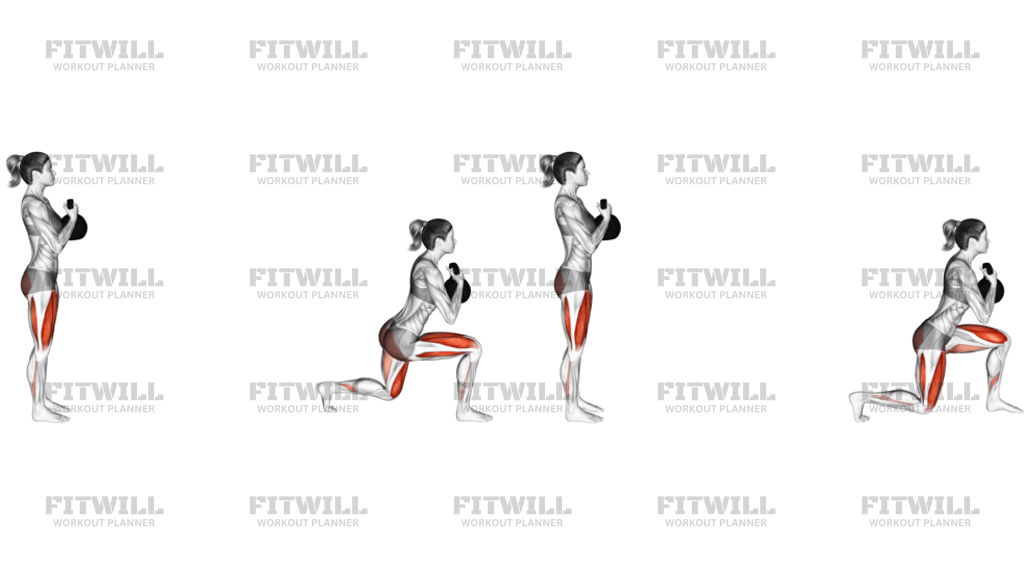
Kettlebell Forward Lunge (Version 2) is a loaded forward step that trains one leg at a time while the kettlebell adds balance, grip, and trunk-control demand. It is a straightforward lower-body strength exercise, but the extra load makes the setup matter more than it does in a bodyweight lunge. The goal is not to lunge as far as possible; it is to step to a distance you can own, keep the torso stacked, and return to standing without wobbling or collapsing at the knee.
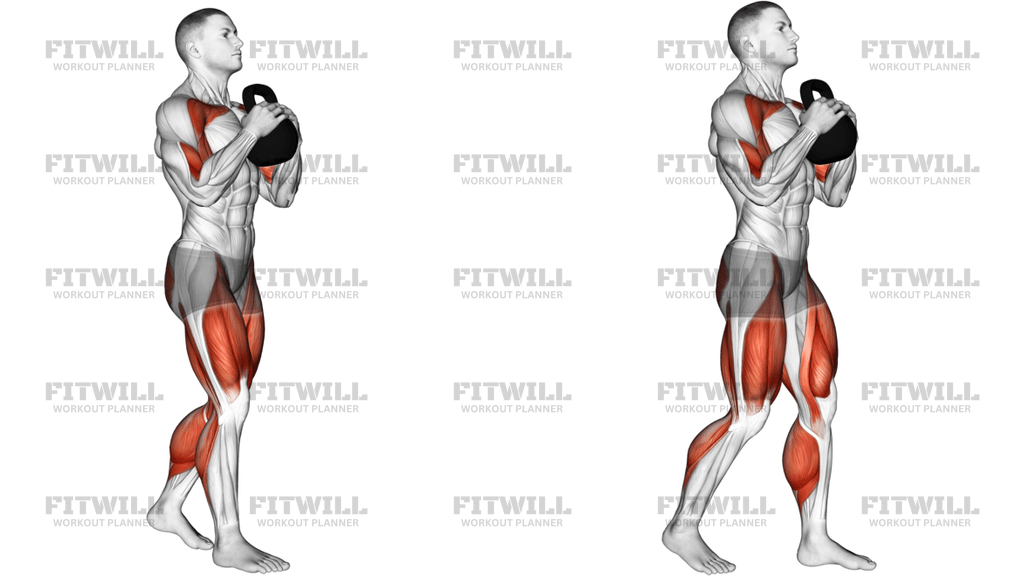
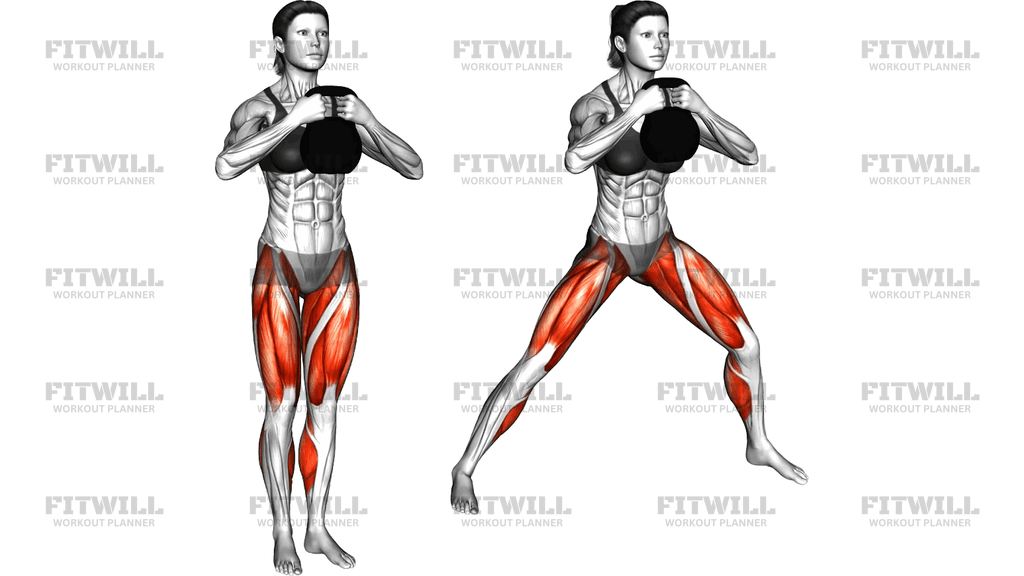
This version is usually performed with the kettlebell held at your side or in a front rack position at chest height. A side hold increases anti-tilt work through the torso and hip, while a rack hold makes it easier to stay upright and keep the front leg doing most of the work. In both cases, the front foot should stay planted, the back knee should travel down under control, and the pelvis should stay square instead of twisting toward the stepping leg.
As you lower, think about placing the front heel and then bending both knees until the back knee comes close to the floor. The front shin can travel slightly forward, but the knee should still track in line with the second toe and the arch should stay supported. If the kettlebell pulls your shoulder down, or if your torso folds forward to save the rep, the load is too heavy or the stride is too short or too long.
Use this exercise when you want unilateral leg strength, better balance under load, or a more athletic lunge pattern than a machine or bilateral squat variation can provide. It fits well in strength blocks, lower-body circuits, and accessory work after a squat or hinge pattern. Beginners can use a light kettlebell and a shorter stride; more advanced lifters can slow the descent, pause briefly at the bottom, or increase the load while keeping the same clean path on every rep.
Fitwill
Log Workouts, Track Progress & Build Strength.
Achieve more with Fitwill: explore over 9600 exercises with images and videos, access built-in and custom workouts, perfect for both gym and home sessions, and see real results.
Start your journey. Download today!




Instructions
- Stand tall with your feet about hip-width apart and hold one kettlebell in the side carry or front rack position that your version uses.
- Set the working shoulder down and back, keep your wrist straight, and choose a step length that will let both feet stay flat.
- Brace your trunk, look straight ahead, and take a controlled step forward with one leg.
- Land heel first, then let the front foot accept your weight as the back heel lifts.
- Lower by bending both knees until the back knee approaches the floor and the front thigh moves toward parallel.
- Keep the front knee tracking over the second toe and keep your pelvis facing forward instead of twisting.
- Pause briefly at the bottom without bouncing off the floor or losing your balance.
- Drive through the entire front foot to stand back up, bringing the rear leg forward to the start position.
- Reset your stance, switch sides if programmed, and repeat for the planned number of reps with steady breathing.
Tips & Tricks
- A front rack hold usually makes it easier to stay tall; a side carry hold asks more of your obliques and glute medius.
- If the front heel pops up, shorten the step rather than forcing the knee farther forward.
- Keep the kettlebell close to your body so it does not swing and pull your torso off line.
- Think about lowering the back knee straight down instead of reaching it forward under the hip.
- Use a stride long enough to keep the front shin roughly angled, but not so long that the pelvis tips or the rear hip pinches.
- Exhale as you drive back to standing; that helps keep the ribs stacked over the pelvis.
- Stop the rep if the front knee caves inward or the arch collapses on the landing leg.
- Lightweight, crisp reps are usually better than heavy, sloppy reps on this movement.
- If balance is the limiter, reduce depth slightly before reducing control of the torso.
Frequently Asked Questions
What muscles does the Kettlebell Forward Lunge (Version 2) train?
It mainly trains the front-leg quadriceps and glutes, with hamstrings, adductors, calves, and core muscles helping you stay stable.
Should I hold the kettlebell at my side or in a front rack?
Either works. A front rack hold usually keeps the torso more upright, while a side carry hold challenges your anti-tilt control more.
How far forward should I step?
Step far enough that both feet stay flat and you can lower under control without the front heel lifting or the torso folding forward.
How deep should the lunge be?
Lower until the back knee comes close to the floor and the front leg is working hard without the pelvis twisting or the front arch collapsing.
Can beginners do the kettlebell version safely?
Yes. Start with a light bell, use a shorter step, and own the bodyweight version first if balance is still inconsistent.
Why does my torso lean forward on this lunge?
Usually the kettlebell is too heavy, the stride is off, or the core is losing position. Reduce the load and keep the ribs stacked over the pelvis.
What is the biggest form mistake with this exercise?
Letting the front knee cave inward or bouncing off the back knee instead of controlling the descent and rise.
How can I make the exercise harder without adding much weight?
Slow the lowering phase, pause for a second near the bottom, or keep the kettlebell in the side carry hold for more trunk demand.