Negative Push-Up
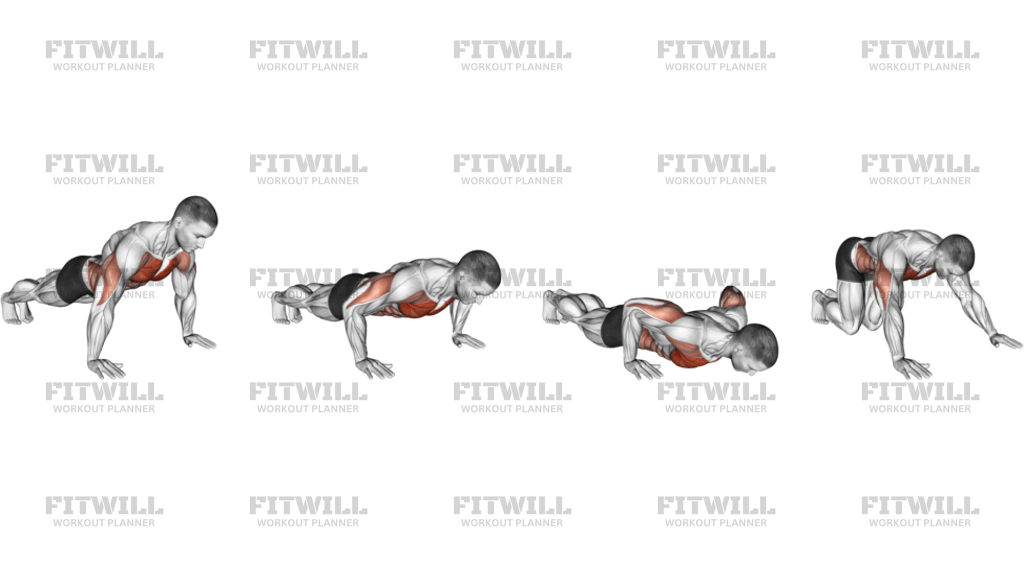
Negative Push-Up is the lowering half of a push-up performed with full control. You start in a strong high plank and spend the entire rep resisting gravity as the chest travels toward the floor. That eccentric emphasis makes it useful for building pressing strength, teaching shoulder and trunk control, and preparing for cleaner full push-ups.
Because the exercise is built around the descent, the setup matters more than the rep speed. Place your hands slightly wider than shoulder width, spread the fingers, and create a long line from head to heels. Stack the shoulders over the hands, brace the midsection, and squeeze the glutes so the ribcage does not flare when the body begins to drop. A solid starting position lets the chest, triceps, and front shoulders do the work instead of the low back taking over.
On each repetition, unlock the elbows slowly and lower your body in one controlled piece. Keep the elbows angled back rather than flaring straight out, and keep the neck in line with the spine as the chest moves toward the floor. The goal is a smooth, deliberate descent of about 3-5 seconds, with the hands staying planted and the hips moving at the same pace as the shoulders. When the chest touches down or you reach your planned depth, reset cleanly before the next rep.
Negative Push-Up is especially useful when full push-ups are still too hard, when you want to build eccentric pressing strength, or when you need a strict accessory movement after heavier chest work. It also fits well in warmups, skill blocks, or bodyweight circuits because it teaches tension without needing load plates or machines. Beginners can shorten the range or use a higher hand position on a sturdy bench or box if they cannot keep the torso rigid through the entire lowering phase.
The safest version is the one you can repeat without sagging through the lower back or collapsing through the shoulders. Stop the set when the descent speed changes, the elbows flare hard, or the chest can no longer stay aligned with the hips. Consistent, controlled negatives create the strength transfer; rushing the lowering phase usually just turns the rep into a drop.
Fitwill
Log Workouts, Track Progress & Build Strength.
Achieve more with Fitwill: explore over 9600 exercises with images and videos, access built-in and custom workouts, perfect for both gym and home sessions, and see real results.
Start your journey. Download today!




Instructions
- Place your hands slightly wider than shoulder width on the floor, spread your fingers, and set your wrists under or just outside the chest line.
- Step both feet back into a high plank so your body forms a straight line from head to heels.
- Brace your ribs down, squeeze your glutes, and keep your neck long and neutral before you start the descent.
- Inhale and lower your chest toward the floor over 3-5 seconds, letting the shoulders and hips descend together.
- Keep your elbows angled back about 30-45 degrees from your torso instead of flaring them straight out to the sides.
- Lower under control until your chest lightly touches the floor or you reach the deepest position you can hold without losing alignment.
- Set your knees down or step back to the start position between reps, then re-brace before the next negative.
- Repeat for the planned number of reps, keeping each lowering phase smooth and deliberate.
Tips & Tricks
- Keep your hands a little wider than shoulder width; placing them too far forward often makes the shoulders take over too early.
- Use a deliberate 3-5 second count on the way down instead of dropping to the floor.
- Squeeze the glutes and quads so the hips and shoulders descend at the same speed.
- Angle the elbows back 30-45 degrees to keep the chest loading clean and avoid a hard flare.
- Touch the chest lightly before the belly or chin reaches the floor.
- If you cannot hold a straight plank, raise the hands on a sturdy bench or box and keep the same lowering pattern.
- If the wrists feel uncomfortable, use push-up handles or make fists so the wrist angle stays more neutral.
- End the set as soon as the lowering speed gets noticeably faster or the torso starts to sag.
Frequently Asked Questions
What muscles does Negative Push-Up work most?
It mainly trains the chest, triceps, and front shoulders, with the core and glutes helping keep the body in a straight line.
Is Negative Push-Up just a slow push-up?
It is the lowering half of a push-up. You lower under control, touch down, then reset instead of pressing back up for the rep.
Can beginners do Negative Push-Up?
Yes. A higher hand position on a bench or box makes it easier to keep the torso rigid while you learn the lowering pattern.
How low should I lower on each rep?
Lower until the chest lightly touches the floor or until you can no longer keep the shoulders and hips lined up.
Why do my hips drop before my chest?
That usually means the brace is fading or the descent is too fast. Tighten the glutes and slow the eccentric phase.
Do I need to press back up after touching the floor?
Not for a true negative rep. Reset from the floor or from your knees before starting the next lowering phase.
What should I do if my shoulders feel pinchy?
Bring the hands a little closer to the body, keep the elbows from flaring hard, and use a higher surface until control improves.
How do I progress Negative Push-Up?
Slow the lowering phase, pause closer to the floor, reduce hand elevation, or move on to full push-ups once the eccentric is solid.