Kettlebell Calf Raise And Front Squat
Kettlebell Calf Raise and Front Squat is a front-rack lower-body exercise that combines ankle control with a deep squat pattern. Holding the kettlebells at the shoulders keeps the torso upright, while the calf raise adds an extra demand on balance, foot pressure, and lower-leg strength. It is useful when you want one movement that trains quads, glutes, calves, and the trunk together instead of isolating only one joint action.
The setup matters because both parts of the rep depend on a stable rack position. The kettlebells should rest high at the shoulders with the elbows angled forward, the ribs stacked over the pelvis, and the feet placed far enough apart to let the knees track naturally. If the rack collapses or the heels drift wildly, the calf raise and squat both become harder to control and the set turns into a balance drill instead of a strength exercise.
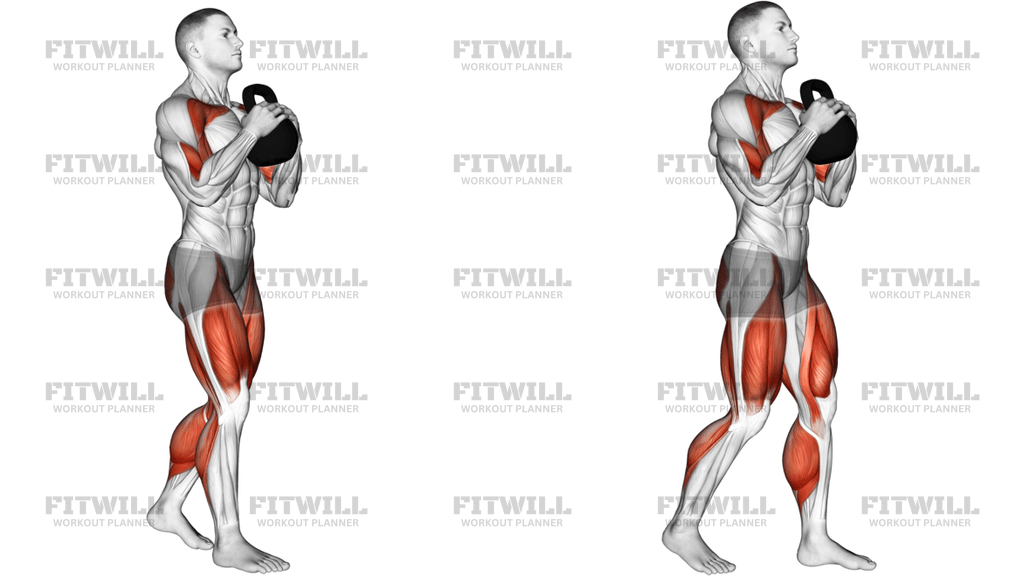
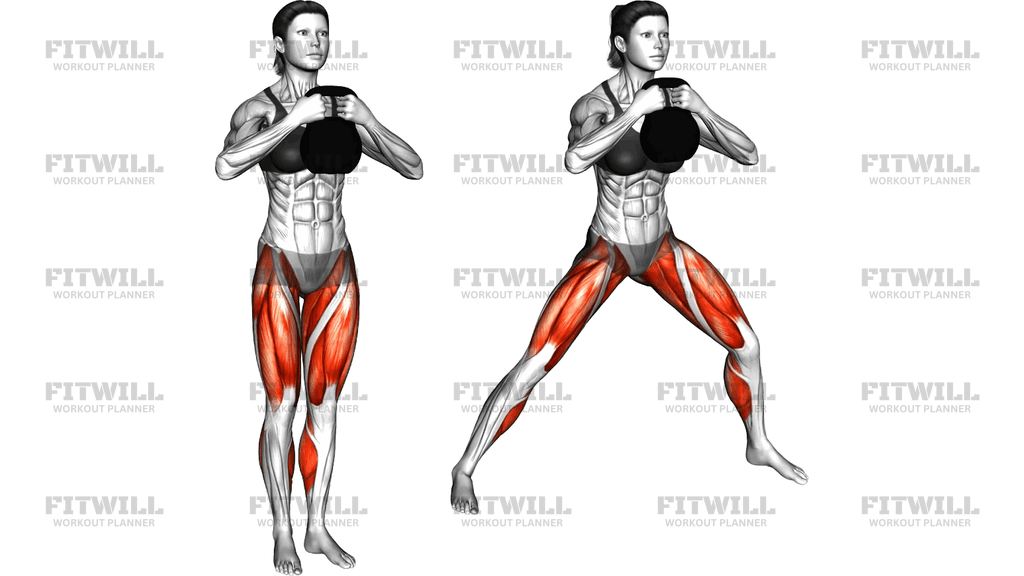
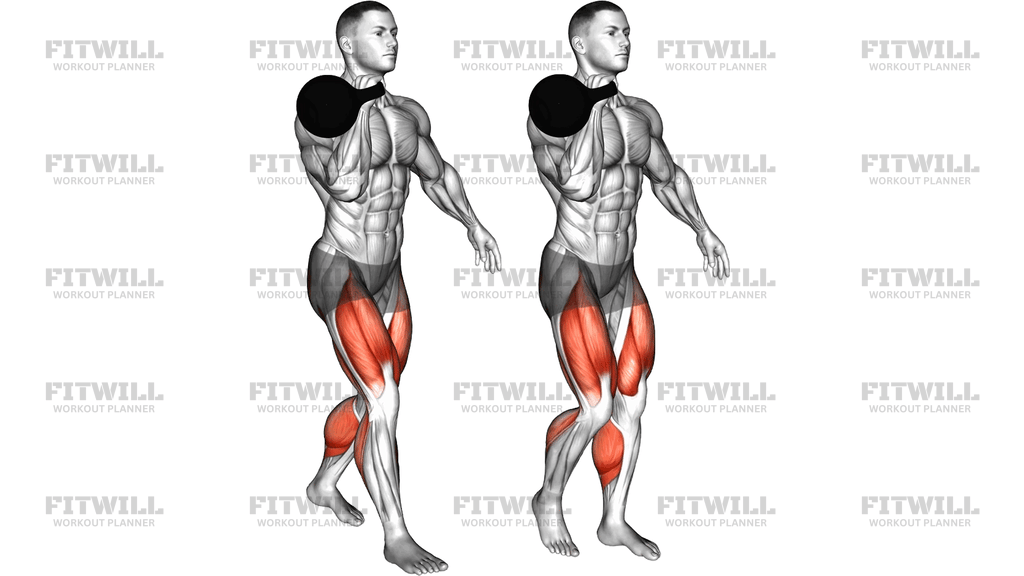
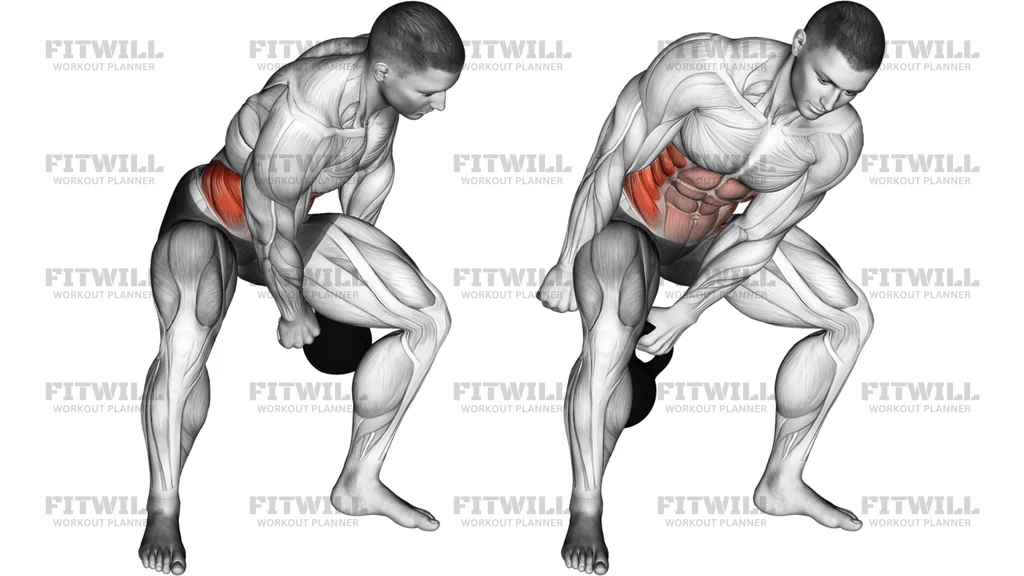
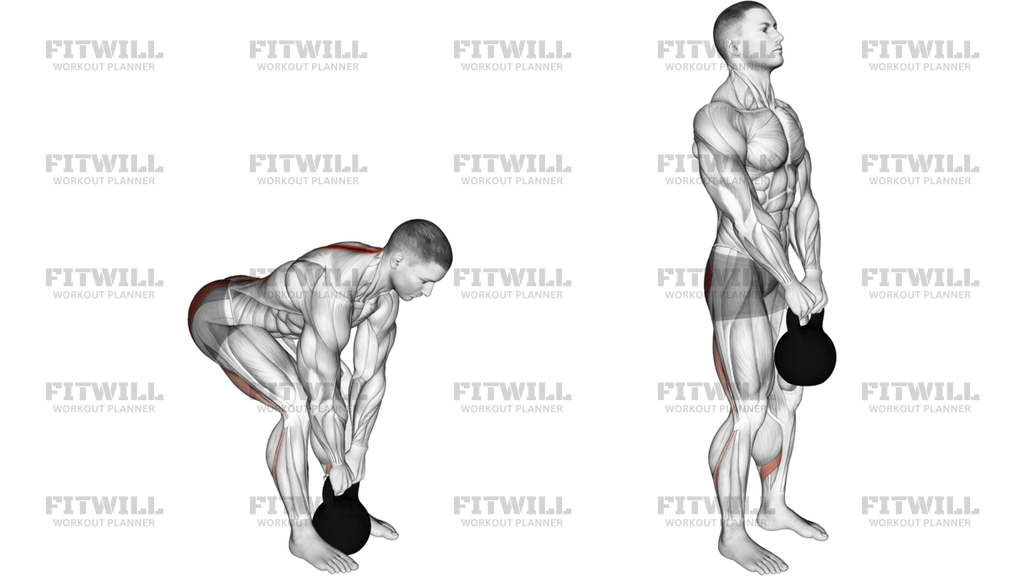
In the image, the athlete stands tall in the front rack, rises onto the balls of the feet for the calf raise, and then drops into the squat with the heels controlled and the chest lifted. That sequence keeps the movement crisp and makes the lower legs part of the work rather than an afterthought. The squat should stay smooth and upright, with the knees tracking over the toes and the bells staying quiet over the shoulders.
This exercise is a practical choice for accessory strength work, full-body circuits, or lower-body sessions where you want more demand from the feet and ankles without abandoning squat mechanics. It also teaches control in a front-loaded stance, which can carry over to goblet squats, clean-and-front-rack positions, and athletic change-of-direction work. The goal is not to bounce through the range, but to stay organized through the rack, calf raise, and squat so every rep looks repeatable.
Use a load that lets you keep the heels and knees under control through both phases. If the calves cramp, the torso leans forward, or the bells start to wobble off the shoulders, the weight is too heavy or the stance is too narrow. With lighter kettlebells and a deliberate tempo, beginners can use this movement safely to build coordination, ankle strength, and squat confidence.
Fitwill
Log Workouts, Track Progress & Build Strength.
Achieve more with Fitwill: explore over 9600 exercises with images and videos, access built-in and custom workouts, perfect for both gym and home sessions, and see real results.
Start your journey. Download today!




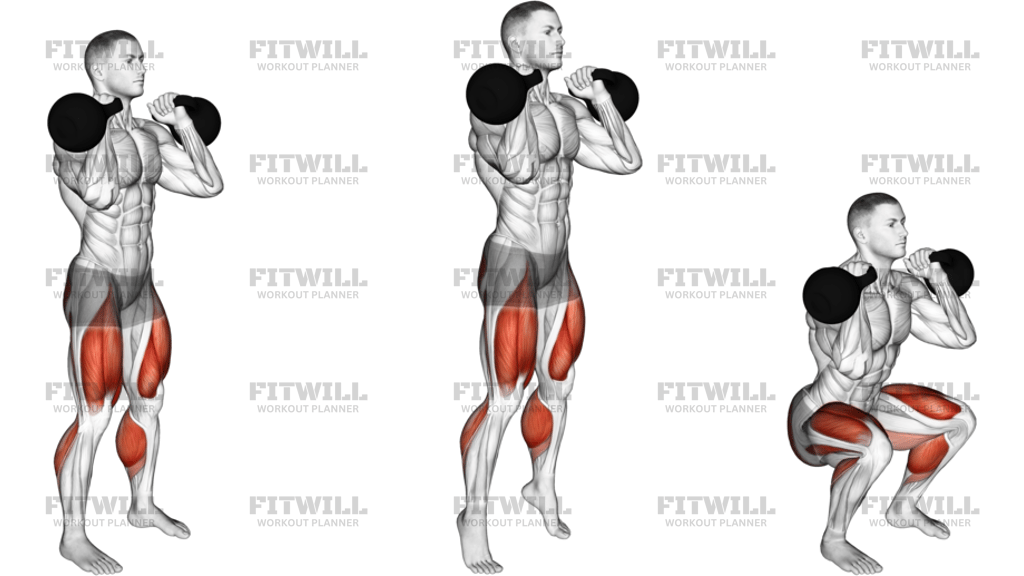
Instructions
- Clean or lift the kettlebells into a front-rack position at shoulder height, with the elbows slightly forward and the wrists stacked over the forearms.
- Stand with your feet about shoulder width apart, toes slightly turned out, and keep your weight centered through the big toe, little toe, and heel.
- Brace your midsection and keep your chest tall before you start the first rep.
- Rise onto the balls of your feet for the calf raise without letting the bells drift forward or your torso lean back.
- Lower your heels under control, then sit down into the front squat by bending the knees and hips together.
- Keep the knees tracking over the toes as you lower until your thighs reach the deepest pain-free position you can control.
- Drive back up through the whole foot, stand tall, and finish each rep by re-establishing the rack and foot pressure.
- Exhale as you stand, then reset your balance before the next rep.
- Repeat for the planned number of repetitions with the same tempo and stance.
Tips & Tricks
- Keep the kettlebells pinned to the shoulders; if they start to float away from the rack, the front squat becomes much harder to stabilize.
- Do not turn the calf raise into a bounce. Pause briefly at the top so the ankles do the work instead of momentum.
- Press through all three points of the foot on the way down and up. Losing the big toe or heel usually makes the squat wobble.
- Let the knees travel forward as you squat, but keep them tracking in line with the toes instead of caving inward.
- Stay tall through the torso. If you fold forward, the load has become more like a hinged squat than a front squat.
- Use a shallow calf raise if your balance is limited; a smaller rise is easier to control and still trains the calves.
- Slow the lowering phase so the heels return under control before you sink into the squat.
- Choose kettlebells that let you keep the elbows up. Dropping the elbows usually pulls the chest forward and shortens the squat.
- Stop the set when the feet start to roll inward or the rack position gets sloppy, because those are the first signs that control is gone.
Frequently Asked Questions
What muscles does the kettlebell calf raise and front squat work?
It primarily trains the quads, glutes, and calves, with the core and upper back working hard to keep the front rack stable.
Can beginners perform this exercise?
Yes, as long as the kettlebells are light enough to keep the rack position steady and the calf raise controlled.
Should I rise onto my toes before or during the squat?
The calf raise happens from the tall standing position before you descend, then the heels lower under control as you move into the squat.
What is the most common mistake in this kettlebell front-rack combo?
Letting the bells drift forward while the heels lift, which throws off balance and turns the squat into a forward lean.
How low should I squat on this movement?
Go only as low as you can while keeping the heels, knees, and chest organized; depth matters less than clean control.
Do I need to keep my heels up the whole time?
No. The heels rise for the calf raise, then return to the floor before you sink into the front squat.
What stance works best for the front squat portion?
A shoulder-width stance with slightly turned-out toes usually gives enough room for the knees to track cleanly.
How can I make this exercise harder without adding a lot of weight?
Slow the lowering phase, hold the top of the calf raise for a second, or pause briefly at the bottom of the squat.