Revolved Chair
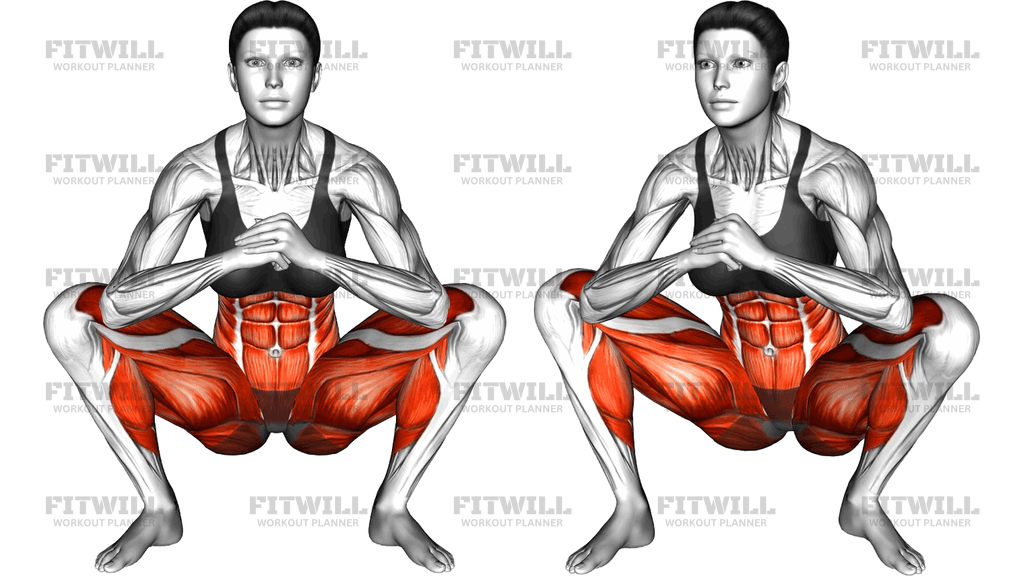
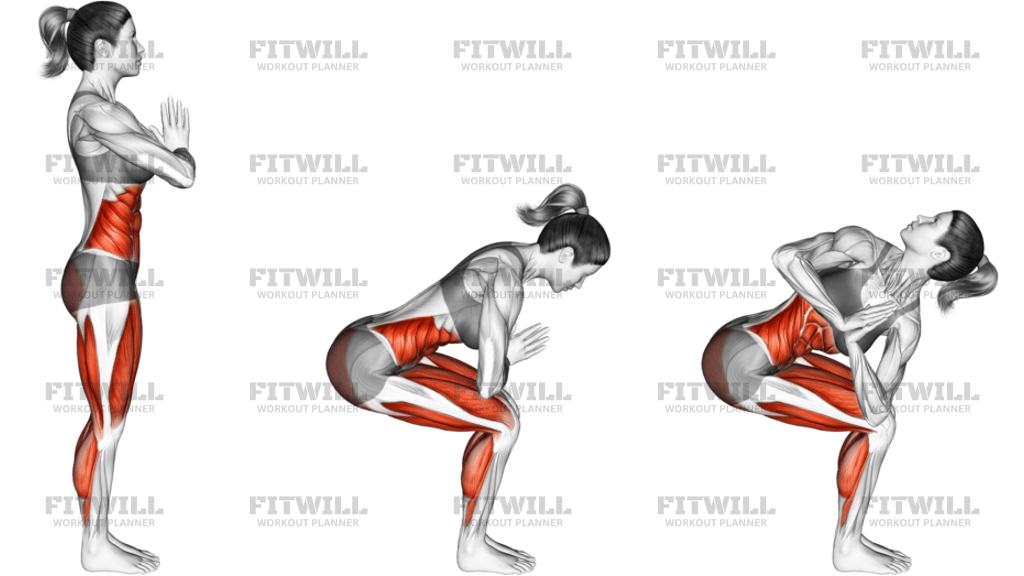
Revolved Chair is a yoga-style bodyweight squat twist built from the chair pose position. You lower into a compact seated squat, keep the spine long, and rotate the torso so the elbow can press across the outer thigh while the palms stay in prayer. The position asks for more than just flexibility: it also tests ankle mobility, hip control, thoracic rotation, and balance in a very small base of support.
The main training effect comes from the combination of loaded isometric work and controlled rotation. The quadriceps, glutes, adductors, calves, and feet work to hold the squat, while the obliques and upper back help organize the twist. Because the image shows the body staying low with the chest lifted rather than collapsing forward, the exercise should feel like a disciplined squat hold with a deliberate twist, not a loose spinal crank.
Setup matters because the movement gets unstable quickly if the feet, knees, and hips are not aligned before the twist begins. Sit the hips back, keep the heels grounded when possible, and make enough room in the stance that the knees can track over the toes. Once the squat is set, lengthen through the crown of the head before turning the rib cage. That upward reach keeps the chest open and makes the twist cleaner.
Each repetition should move through a clear sequence: lower into the chair, bring the hands to prayer, rotate from the torso, and let the opposite elbow or upper arm meet the outside thigh for leverage. The twist should deepen from the ribs and upper back while the knees stay steady. On the way out, unwind with control, re-stack the spine, and stand or reset without bouncing out of the squat.
This exercise fits well in yoga flows, warm-ups, mobility sessions, and lower-body work where balance and trunk control matter. It is useful for athletes and general trainees who want more hip and spinal rotation tolerance without load. Keep the motion pain-free, reduce the squat depth if the heels lift, and avoid forcing the twist through the lower back or knee.
Fitwill
Log Workouts, Track Progress & Build Strength.
Achieve more with Fitwill: explore over 9600 exercises with images and videos, access built-in and custom workouts, perfect for both gym and home sessions, and see real results.
Start your journey. Download today!




Instructions
- Stand with your feet about hip-width apart, then sit your hips back and down as if lowering into a chair.
- Keep your chest lifted, your heels rooted, and your knees tracking in line with your toes.
- Bring your palms together at your sternum before you rotate.
- Lower into the squat until your thighs are as low as you can hold with control.
- Exhale and turn your rib cage to one side while keeping the hips as square as possible.
- Press the outside elbow or upper arm into the opposite thigh to help deepen the twist.
- Lengthen through the spine, then hold the position for the planned breath or rep count.
- Unwind slowly to center, then repeat the twist on the other side before standing up.
Tips & Tricks
- Keep your weight over the heels and midfoot so the squat does not dump into the toes.
- Think about lifting the chest before you twist; collapsing forward shortens the rotation and stresses the back.
- Let the rotation come from the ribs and upper back instead of trying to wrench the lower spine.
- If your heels pop up, take a wider stance or come out of the squat a few inches.
- Press the forearm gently into the thigh for leverage, but do not shove the knee inward.
- Keep the prayer hands centered at the chest so the shoulders do not drift and over-rotate.
- Move with the breath: exhale into the twist and inhale to grow taller through the spine.
- Use a smaller twist range if you feel pinching in the knee, hip, or low back.
Frequently Asked Questions
What muscle does Revolved Chair target most?
It mainly challenges the quadriceps and glutes in the squat, with the obliques and upper back helping drive the twist.
Is Revolved Chair more of a stretch or a strength move?
It is both: the squat builds isometric leg strength, while the rotation and hold create a mobility challenge for the spine and hips.
Should my heels stay on the floor?
Yes if possible. If the heels lift, reduce the squat depth or widen the stance so you can keep the feet grounded.
Where should the twist come from?
The twist should come mainly from the rib cage and upper back, not from cranking the lower back or yanking the knee sideways.
Do I need to get my elbow all the way outside the knee?
No. Use the elbow-to-thigh connection only as far as you can keep the spine long and the squat stable.
Can beginners do this pose?
Yes, but start with a shallow chair position and a smaller twist before trying to sink lower.
What should I do if my knees feel stressed?
Shorten the squat, keep the knees tracking over the toes, and stop before the twist pulls the knee inward.
How long should I hold each side?
A few steady breaths per side is usually enough, or you can use it for controlled reps in a mobility flow.