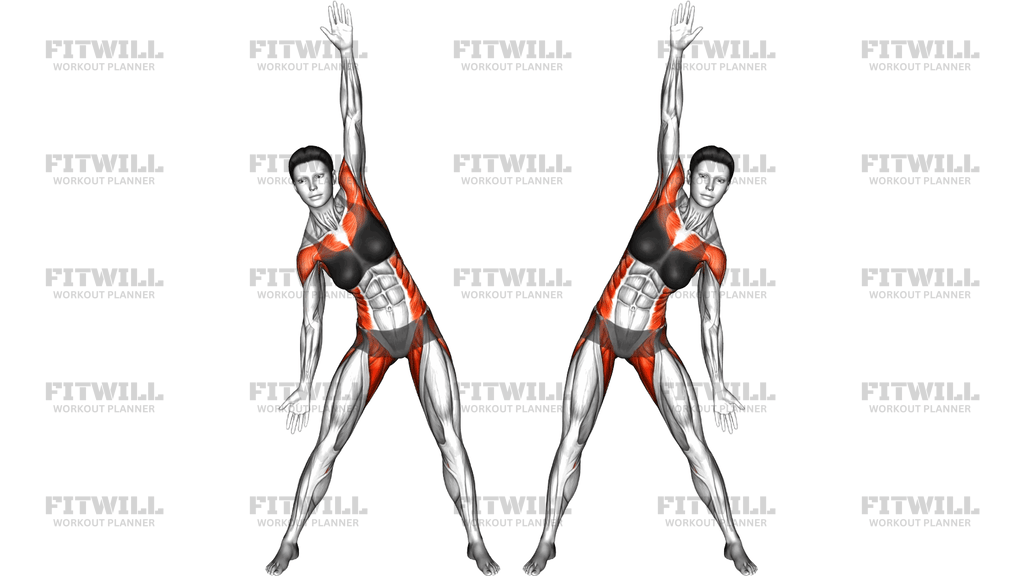
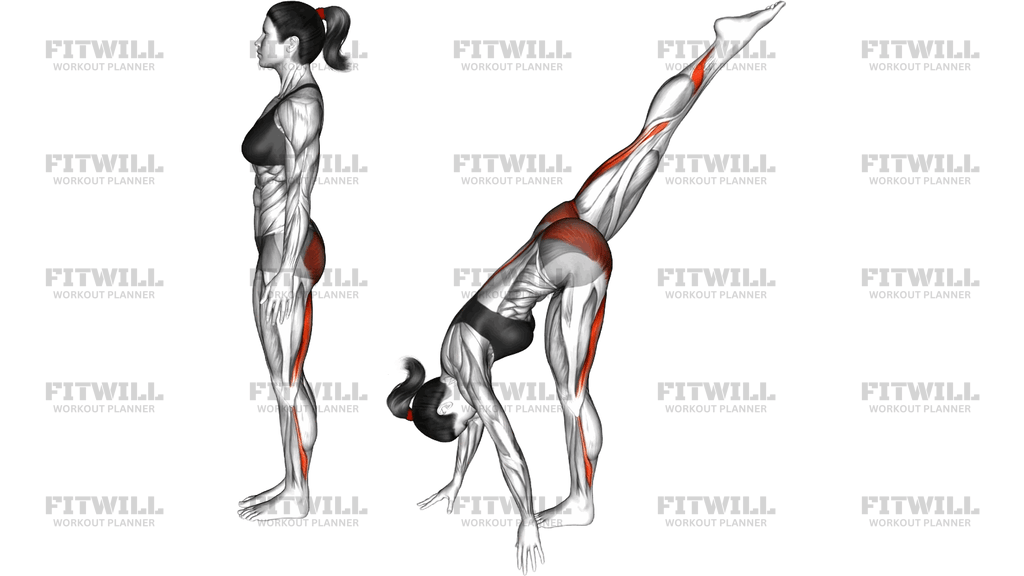
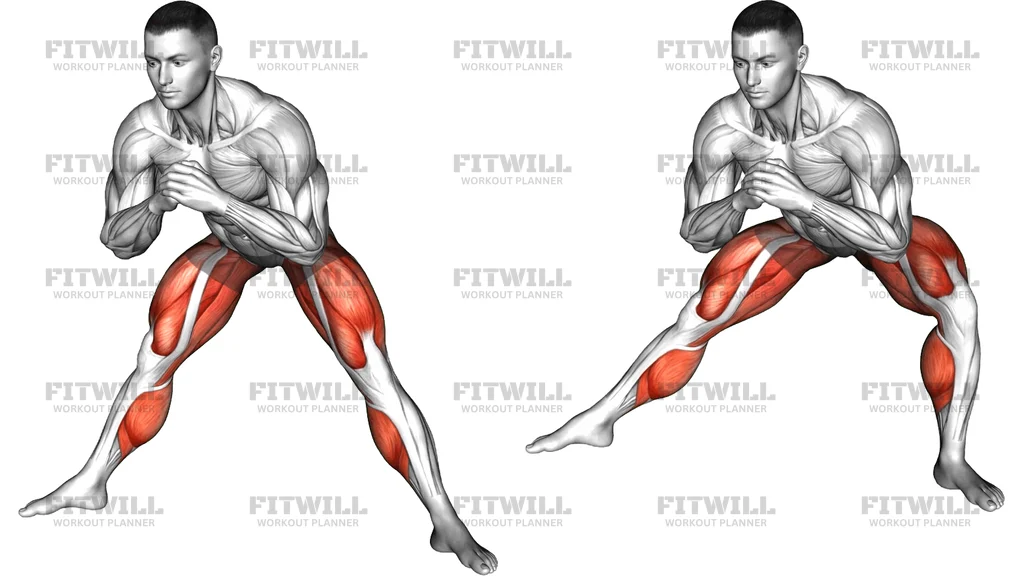
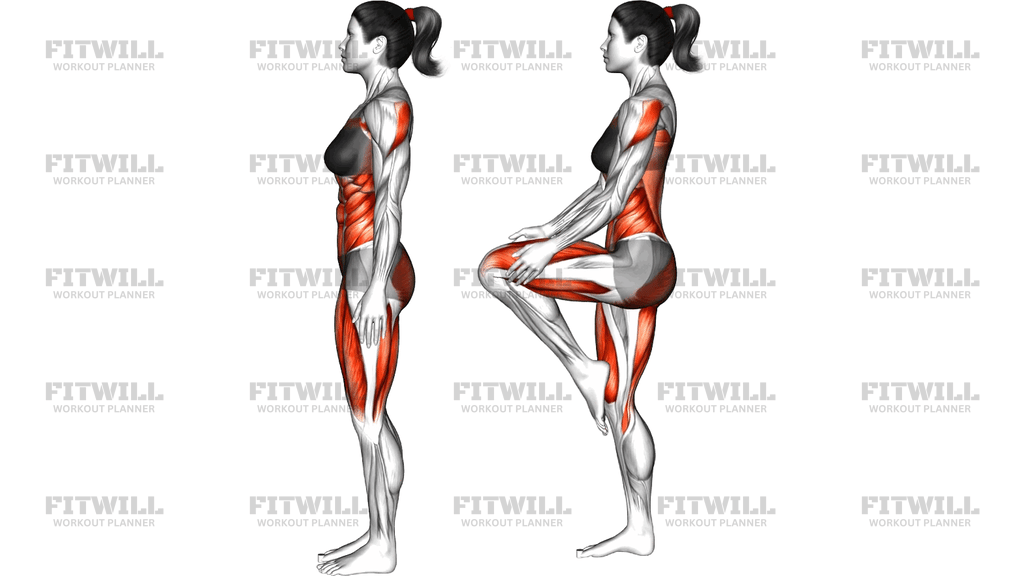
Revolved Triangle Pose
Revolved Triangle Pose is a standing yoga stretch that combines a long hamstring line with a strong spinal twist. It is most useful when you want to open the backs of the legs, challenge balance, and learn how to rotate the torso without collapsing the chest or overloading the lower back. Because the pose asks for length, rotation, and single-leg stability at the same time, the setup matters as much as the final shape.
The front leg and back leg create the base, while the hips, core, and shoulders organize the twist. You should feel a strong stretch through the hamstring and calf of the front leg, with the obliques and mid-back working to keep the torso from slumping. The reach of the top arm also asks the shoulders to stay active, so the pose becomes a full-body control drill rather than just a passive fold.
A good Revolved Triangle Pose starts with a long stance, a square and steady base, and a hinge from the hips before the twist deepens. The goal is to keep the spine long as you rotate, not to yank the chest open by rounding and forcing the hand farther down. If the floor is too low, place the lower hand on a block or the shin so you can keep both sides of the torso long and the pelvis organized.
As you settle into the position, breathe into the sides of the ribs and keep the standing-leg hip strong enough to prevent wobbling. The pose should feel demanding but controlled, with the twist coming from the torso and upper back rather than from collapsing into the lower back or overreaching with the top shoulder. A small bend in the front knee is fine if it helps you keep the pelvis level and the hamstring from tugging you out of position.
Revolved Triangle Pose works well as part of a yoga flow, a mobility session, or a cool-down when you want to restore length after lower-body training. It is also a useful teaching position for balance, hip control, and thoracic rotation, especially for people who sit a lot or feel stiff through the hamstrings and upper back. Keep the breath smooth, move slowly in and out of the shape, and treat the stretch as a precision position instead of a competition for depth.
[ Workout Log & Planner ]
Put your next workout in Fitwill
Keep your plan and training log ready when you are.


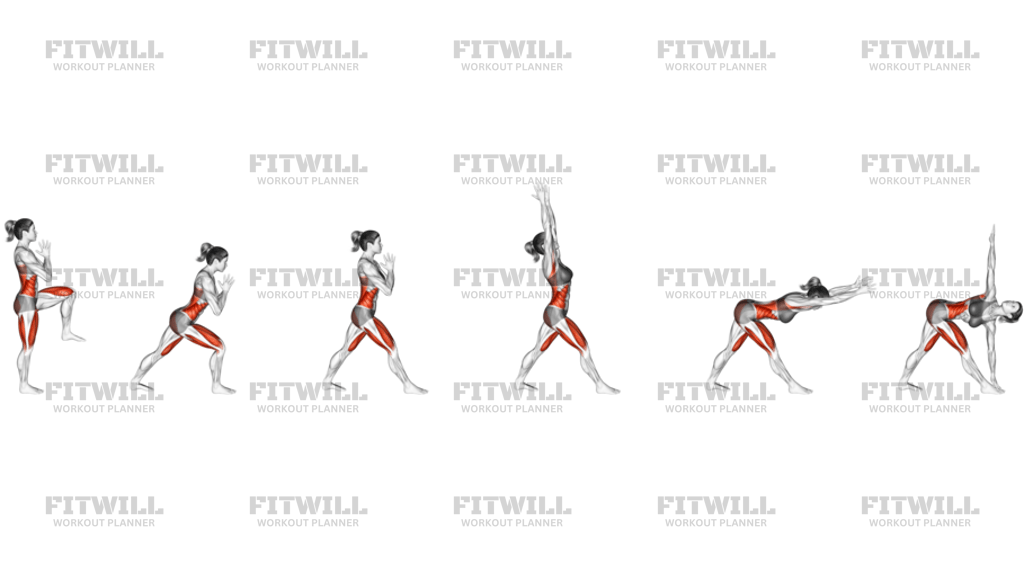
Instructions
- Step the front foot forward and the back foot well behind you, turning the back toes slightly out so you have a long staggered stance.
- Square the hips toward the long edge of the mat, then hinge forward over the front leg until your torso is long and level.
- Place the lower hand on the floor or a block beside the front foot, keeping the spine extended instead of rounding toward the shin.
- Press firmly through the front heel and the outer edge of the back foot so the legs stay active before you twist.
- Rotate the ribcage toward the ceiling and stack the top shoulder over the lower shoulder as the chest opens.
- Reach the top arm straight up, or keep it on the hip if the shoulder feels cramped or the balance is unstable.
- Breathe into the side ribs and keep the front leg steady while you hold the twist for a few slow breaths.
- Exit the pose by softening the twist, bringing the top hand down, and stepping back to standing with control before repeating on the other side.
Tips & Tricks
- Use a block under the lower hand if the floor forces your torso to round or the shoulder to collapse forward.
- Keep the front shin and thigh active; if the knee drifts inward, shorten the stance a little and re-square the hips.
- Think about lengthening the chest forward before rotating up, otherwise the twist tends to dump into the lower back.
- If the hamstring is very tight, bend the front knee slightly instead of forcing the leg straight and losing the hip hinge.
- Press the back heel heavy so the rear leg helps stabilize the pose instead of just hanging in space.
- Keep the top shoulder stacked; if it rolls forward, reduce the twist and open the chest more gradually.
- Use smooth nasal breathing to keep the ribs from bracing hard and the neck from tightening.
- Come out slowly if you feel dizziness from the head-down position or if the standing leg starts to shake.
- Treat both sides evenly even if one side feels much looser; the tighter side usually reveals the real limitation.
Frequently Asked Questions
What does Revolved Triangle Pose stretch the most?
It usually stretches the front-leg hamstring, calf, and inner thigh while also challenging the obliques, upper back, and shoulders during the twist.
Do I need to touch the floor in Revolved Triangle Pose?
No. If the floor pulls the chest closed, use a block or the shin so you can keep the spine long and the twist cleaner.
Why does my lower back feel this more than my torso?
That usually means the twist is coming from the lumbar spine instead of the ribcage. Shorten the stance, lift the chest slightly, and rotate from the mid-back.
Should the front leg stay completely straight?
A straight leg is common, but a small bend is fine if it keeps the pelvis level and protects a tight hamstring from pulling you out of position.
Can beginners do Revolved Triangle Pose?
Yes, but beginners should use a shorter stance, a block under the lower hand, and a smaller twist until balance and hamstring flexibility improve.
What is the most common mistake in Revolved Triangle Pose?
Rounding the spine to reach the floor is the biggest one. Keep the chest long, hinge from the hips, and let the rotation happen after the fold is set.
How long should I hold Revolved Triangle Pose?
Hold it for a few slow breaths per side, long enough to settle into the stretch without losing the shape of the torso or the stability of the legs.
Can I use this pose after leg training?
Yes. It works well as a cool-down stretch after squats, running, or cycling because it lengthens the hamstrings and gives the spine a controlled rotation.